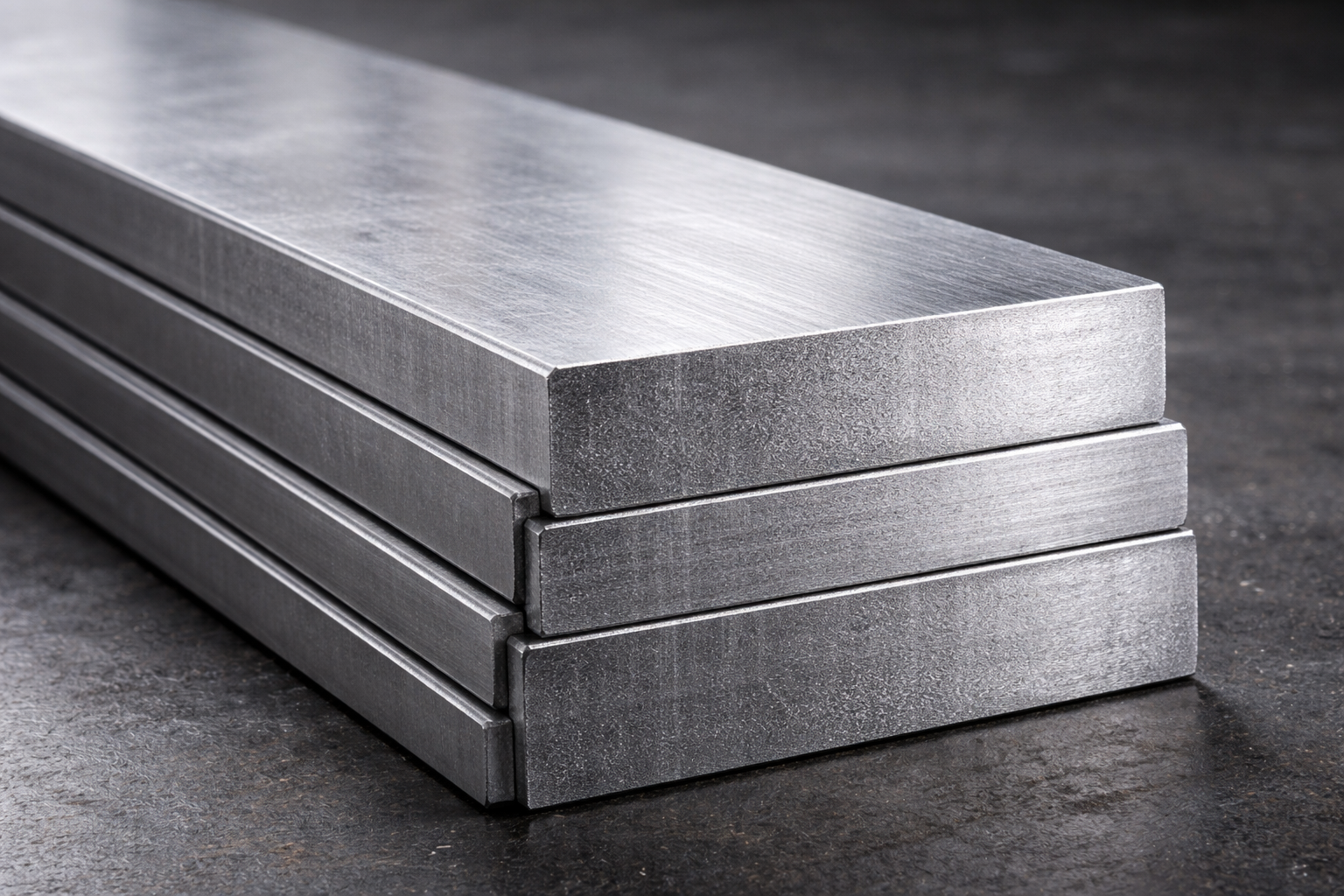
Die Steel H11, also known professionally as AISI H11 or 1.2343, is a classic chromium–molybdenum–vanadium alloy steel. As a commonly used type of hot work die steel, it has become one of the primary material choices for manufacturing heavy-duty, high-impact molds due to its well-balanced properties. In industrial fields like metalworking and automotive manufacturing, Die Steel H11 is widely recognized for its reliability.
Table of Contents
Chemical Composition
| C | Si | Mn | P | S | Cr | Mo | V |
| 0.33-0.41 | 0.8-1.2 | 0.25-0.5 | Max 0.03 | Max 0.02 | 4.8-5.5 | 1.1-1.5 | 0.3-0.5 |
Преимущества
The core advantages of Die Steel H11 are highly prominent on the shop floor. It exhibits excellent hardenability, enabling uniform hardness across the section after heat treatment—this is a lifesaver for manufacturing large, complex-shaped mold components. Its low heat treatment deformation rate effectively ensures your mold’s dimensional accuracy stays spot-on.
Mechanically, this steel offers a tensile strength of 900-1000 MPa and a yield strength of 600-800 MPa. This provides the plasticity and toughness needed to resist impact and thermal fatigue cracks. Furthermore, it supports conventional machining processes like milling, turning, and grinding without requiring special equipment. It also possesses good weldability, which makes later repairs or local modifications much more cost-effective.
Недостатки
However, Die Steel H11 does have certain limitations. Its high-temperature hardness and wear resistance are slightly inferior compared to high-end hot work die steels in the same series. Under extreme operating conditions involving extra-high temperatures and pressures, its performance is not as robust as specialized alloys. Furthermore, for molds requiring exceptionally high wear resistance, you’ll need additional optimization of the heat treatment process, which increases production steps to some extent.
Application Scenarios
The best application scenarios for Die Steel H11 are primarily focused on mold manufacturing fields that demand high machinability and toughness. This includes hot work dies subjected to heavy loads and impacts, such as hammer forging dies and hot forging dies for aluminum and magnesium alloys.
It is also a solid choice for die-casting molds, plastic injection tools, and cold stamping components. Whether you are in the design stage or mid-manufacturing, if you require a steel that balances plasticity with high precision, Die Steel H11 undoubtedly provides a cost-effective solution.
Заключение
Choosing the right material for high-stress industrial applications is a balance of mechanical endurance and long-term cost efficiency. By prioritizing superior toughness and thermal stability, Die Steel H11 stands out as a reliable foundation for high-precision tooling and heavy-duty forging operations. Investing in this high-performance alloy not only minimizes the risk of premature mold failure but also ensures consistent production quality in the most demanding environments.
Ready to optimize your next tooling project? Whether you need detailed technical specifications or a bulk procurement quote, our team is here to provide the metallurgical expertise your business deserves. Contact us today to discuss how we can support your manufacturing goals with premium material solutions.
ЧАСТО ЗАДАВАЕМЫЕ ВОПРОСЫ
What type of molds is Die Steel H11 primarily suitable for?
It is mainly suitable for molds requiring high machinability and toughness. Core applications include heavy-duty hot work dies, such as hammer forging dies for aluminum alloys, die-casting molds, and various industrial wear-resistant components.
What are the delivery conditions for Die Steel H11?
It is mainly available in two conditions: annealed and hardened and tempered. Die Steel H11 in the annealed condition offers good machinability for the initial forming of molds. For high-strength applications, H11 in the hardened and tempered condition provides the necessary wear resistance.
Is Die Steel H11 suitable for manufacturing large molds?
Yes, it is very suitable. Its high hardenability enables uniform hardening throughout the steel, and its low deformation rate effectively ensures the forming accuracy of large, complex-structured molds. This reduces the risk of warping during use.