
Welcome to My Blog!
Before we dive into the content, I’d love for you to join me on my social media platforms where I share more insights, engage with the community, and post updates. Here’s how you can connect with me:
Facebook:https://www.facebook.com/profile.php?id=100087990137347
LinkedIn:https://www.linkedin.com/company/89825762/admin/dashboard/
YouTube:www.youtube.com/@carbonsteelsupply-kj9lw
TikTok:www.tiktok.com/@carbonsteelsupply
Now, let’s get started on our journey together. I hope you find the content here insightful, engaging, and valuable.
Giriş
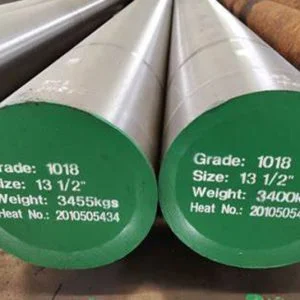
In the realm of metallurgy, understanding the chemical composition of different types of steel is essential for engineers, manufacturers, and anyone involved in material science. Among the myriad of steel grades, 1018 steel holds a significant place due to its versatile properties and wide-ranging applications. This article aims to delve into the chemical composition of 1018 steel properties, elucidating its significance in various industries and applications.
The Importance of 1018 Steel Properties
1018 steel, also known as low-carbon steel, is characterized by its excellent weldability, machinability, and strength. Its chemical composition plays a crucial role in determining these properties. By comprehending the chemical makeup of 1018 steel, engineers can predict its behavior under different conditions, enabling the precise selection of materials for specific applications.
Exploring the Chemical Composition of 1018 Steel
The chemical composition of 1018 steel primarily consists of iron (Fe) and carbon (C), with trace amounts of other elements. Here is a breakdown of its composition:
- Iron (Fe): The base element of 1018 steel, providing its structural integrity and strength.
- Carbon (C): Typically ranges from 0.15% to 0.20%, contributing to the steel’s hardness and strength while maintaining its weldability and machinability.
- Manganese (Mn): Present in small quantities, enhances the hardenability and strength of the steel.
- Phosphorus (P) and Sulfur (S): Impurities that are kept to a minimum to ensure good weldability and mechanical properties.
- Other Elements: Trace amounts of silicon (Si) and copper (Cu) may also be present, influencing specific properties of the steel.
Mechanical Properties of 1018 Steel
The chemical composition of 1018 steel directly influences its mechanical properties, including:
- Tensile Strength: Typically ranging from 400 to 550 MPa, making it suitable for various structural applications, such as beams, columns, and shafts.
- Yield Strength: Around 350 MPa, indicating its ability to withstand deformation under load without breaking.
- Hardness: With a Brinell hardness ranging from 126 to 183, 1018 steel offers a balance between hardness and machinability, making it easy to cut, drill, and shape.
- Ductility: Exhibits good ductility, allowing for easy forming and shaping processes, such as bending, drawing, and stamping.
Applications of 1018 Steel
The versatile properties of 1018 steel make it indispensable in numerous industries and applications, including:
- Automotive Manufacturing: 1018 steel is widely used in the production of shafts, gears, and other automotive components due to its excellent combination of strength, toughness, and machinability. Its ability to withstand high loads and maintain its shape under stress makes it ideal for critical automotive components.
- Construction: In the construction industry, 1018 steel is employed in structural beams, columns, and reinforcement bars. Its high tensile strength and yield strength ensure that structures can withstand heavy loads and maintain their integrity over time.
- Machinery: 1018 steel is also utilized in the manufacturing of machine parts, bolts, and fasteners. Its excellent machinability allows for precise and efficient production of these components, while its durability and wear resistance ensure that they can withstand the demands of industrial applications.
- Toolmaking: 1018 steel is an ideal choice for toolmaking due to its excellent machinability and wear resistance. It can be easily machined into complex shapes and tools, and its ability to maintain its sharpness and precision over time makes it a valuable material for tool manufacturing.
Analyzing the Versatility of 1018 Steel Properties
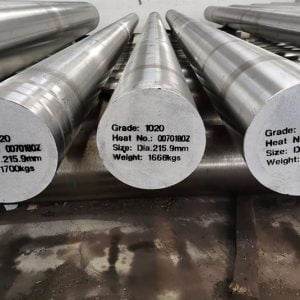


The chemical composition of 1018 steel underscores its versatility, making it a preferred choice for a wide range of applications. Its balanced combination of strength, weldability, and machinability makes it an invaluable material in various industries. By understanding its chemical composition and properties, engineers and manufacturers can harness the full potential of 1018 steel to meet diverse manufacturing needs.
1018 steel properties:
| Property | Description |
|---|---|
| Density | Moderate density, typically around 7.87 g/cm³ |
| Melting Point | Melts at approximately 1427-1538°C (2600-2800°F) |
| Young’s Modulus | 205 GPa (29.7 x 10^6 psi) |
| Poisson’s Ratio | 0.29 (in the elastic range) |
| Thermal Conductivity | Relatively low thermal conductivity, approximately 49.8 W/m·K (27.3 BTU·in/h·ft²·°F) |
| Electrical Conductivity | Fair electrical conductivity, around 64% IACS (International Annealed Copper Standard) |
Sonuç
In conclusion, the chemical composition of 1018 steel plays a pivotal role in determining its properties and applications. With its balanced composition of iron, carbon, and other elements, 1018 steel offers a unique combination of strength, weldability, and machinability. This makes it a versatile material that finds extensive use across industries ranging from automotive and construction to machinery and toolmaking. By comprehending the intricacies of 1018 steel properties, engineers can optimize its usage for diverse manufacturing requirements.
SSS
Q:What is the carbon content of 1018 steel?
A:The carbon content of 1018 steel typically ranges from 0.15% to 0.20%.
Q:What are the primary elements in the chemical composition of 1018 steel?
A:The primary elements in the chemical composition of 1018 steel are iron (Fe) and carbon (C), with trace amounts of manganese (Mn), phosphorus (P), sulfur (S), silicon (Si), and copper (Cu).
Q:What are the key mechanical properties of 1018 steel?
A:The key mechanical properties of 1018 steel include tensile strength, yield strength, hardness, and ductility.
Q:What are some common applications of 1018 steel?
A:1018 steel finds applications in automotive manufacturing, construction, machinery, and toolmaking due to its versatile properties.
Q:How does the chemical composition of 1018 steel affect its weldability?
A:The low carbon content and controlled impurities in 1018 steel contribute to its excellent weldability, making it suitable for welding processes.