
Table of Contents
Welcome to My Blog!
Before we dive into the content, I’d love for you to join me on my social media platforms where I share more insights, engage with the community, and post updates. Here’s how you can connect with me:
Facebook:https://www.facebook.com/profile.php?id=100087990137347
LinkedIn:https://www.linkedin.com/company/89825762/admin/dashboard/
YouTube:www.youtube.com/@carbonsteelsupply-kj9lw
TikTok:www.tiktok.com/@carbonsteelsupply
Now, let’s get started on our journey together. I hope you find the content here insightful, engaging, and valuable.
Introduction
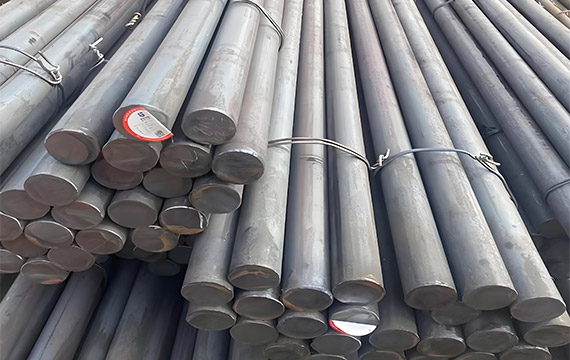

H13 steel
H13 steel is a commonly used hot work die steel, known for its excellent thermal strength, thermal stability and wear resistance. It contains high Cr and Mo contents, makes it to maintain good performance at high temperature, and is suitable for manufacturing mold that can withstand high temperature stress and wear, such as die casting molds, hot extrusion molds and forging molds. After proper heat treatment, it can achieve high hardness and good toughness, making it a popular steel material in mold manufacturing. In addition, H13 steel has good thermal fatigue resistance and tempering resistance stability, so it has a long service life under high temperature working condition.
P20 steel
P20 steel is a kind of pre-hardened plastic die steel with good mechanical and machinability. It is widely used in the manufacturing of plastic molds that require high hardness and wear resistance. This steel is pre-hardened to about 30-36 HRC at the time of shipment, which reduces the need for subsequent heat treatment process and enhances production efficiency. P20 steel also has excellent polishing characteristics, making it suitable for molds that require a mirror finish, such as those used in home appliances and automotive interior parts. Additionally, it has good corrosion resistance and impact toughness, making it an ideal material for molding a variety of plastic materials. Due to its balanced comprehensive performance, P20 steel is widely used in the mold manufacturing industry.
Chemical composition
H13
| C | Si | Mn | P | S | Cr | Mo | V |
| 0.32-0.45 | 0.90-1.25 | 0.20-0.60 | ≤0.030 | ≤0.030 | 4.75-5.50 | 1.10-1.75 | 0.80-1.25 |
P20
| C | Si | Mn | P | S | Cr | Mo |
| 0.28-0.40 | 0.20-0.80 | 0.60-1.00 | ≤0.030 | ≤0.030 | 1.40-2.00 | 0.30-0.55 |
Comparison of H13 and P20 steel
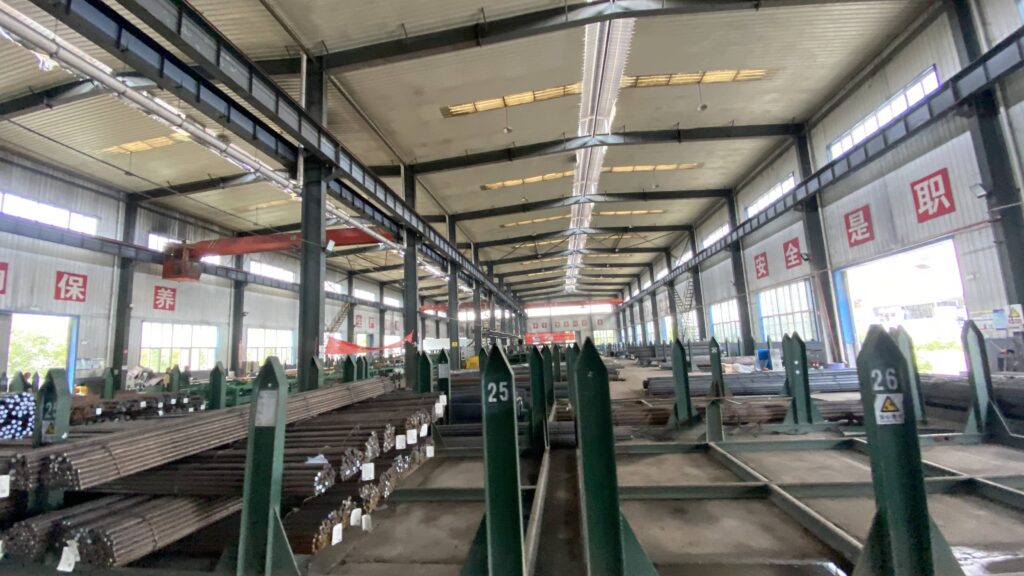

H13 and P20 is two different kind of die steel, they are different on the chemical components, mechanical properties and applications.
Chemical composition and properties: H13 is a high alloy hot-work die steel, contains Cr, Mo, V and other elements, these elements make H13 steel have good heat resistance, wear resistance and tempering resistance. H13 steel has low carbon content, making it with better stability and oxidation resistance. In comparison, P20 steel is a kind of pre-hardened plastic die steel, mainly has Cr, Ni, Mo these alloy elements, which make P20 steel have better through-hardening ability and toughness.
Mechanical properties: H13 steel can maintain high hardness and strength at high temperature, and has good thermal fatigue resistance, suitable for manufacturing mold that can withstand high temperature, high pressure and strong corrosion environment. However, after pre-hardening process, P20 steel has high hardness and strength, while maintaining good toughness and plasticity, suitable for manufacturing plastic molds and die casting molds.
Heat treatment characteristics: P20 steel has better through-hardening ability, could obtain required hardness and toughness through quenched and tempered, and has low deformation in the heat treatment process, could ensure the accurate and stability of the mold. H13 steel needs to strictly control the heating temperature and cooling speed to prevent excessive stress and deformation, and H13 has good dimensional stability during quenching and tempering, which is suitable for manufacturing precision molds.
Application scenario: Due to its good mechanical properties, P20 steel is widely used in thermal plastic injection molds and extrusion molds. With excellent high temperature performance, wear resistance and tempering softening resistance, H13 steel is mainly used in the manufacture of hot forging mold, die casting mold, hot extrusion die mold and other molds that can withstand high temperature and strong corrosion environment.
In general, H13 steel is more suitable for high temperature working environments, while P20 steel is more suitable for plastic mold manufacturing, especially in applications that require high hardness and good polishing properties.
FAQ
What’s the main difference between H13 and P20 steel?
H13 steel is a kind of electroslag remelting refined steel, with high hardenability and thermal cracking resistance, containing a high content of V, so the wear resistance is very good, H13 steel has good heat resistance, and has good strength and hardness at higher temperature, also has wear resistance and toughness. P20 steel is a kind of pre-hardened plastic die steel with good comprehensive mechanical properties and high hardenability, which can make the steel with a larger cross-section size obtain a more uniform hardness, has a good polishing performance, and a low surface roughness value of the mold.
What’s the difference between H13 and P20 on application?
H13 die steel is mainly used for manufacturing forging molds, hot extrusion molds, precision forging molds, and aluminum, copper, and their alloy die-casting molds.
P20 plastic mold steel is suitable for medium to large precision molds, designed for long-term production of high-quality plastic molds and large mold bases.
What is the difference between the heat treatment characteristic of H13 and P20?
H13 die steel has excellent comprehensive mechanical properties, high-tempering stability, hardenability and thermal cracking resistance. P20 steel has been pre-hardened to 28-34HRC at the factory, avoiding the deformation of the mold, and can be used directly after cold processing into a mold.
How is the corrosion resistance between H13 and P20 steel?
The Cr content makes P20 steel obtain good corrosion resistance, makes it suitable for using in the light corrosion environment. While H13 steel contains Cr and Si elements, makes H13 has better oxidation resistance.