Welcome to My Blog!
Before we dive into the content, I’d love for you to join me on my social media platforms where I share more insights, engage with the community, and post updates. Here’s how you can connect with me:
Facebook:https://www.facebook.com/profile.php?id=100087990137347
LinkedIn:https://www.linkedin.com/company/89825762/admin/dashboard/
YouTube:www.youtube.com/@carbonsteelsupply-kj9lw
TikTok:www.tiktok.com/@carbonsteelsupply
Now, let’s get started on our journey together. I hope you find the content here insightful, engaging, and valuable.
Table of Contents
Introduction to S355J2 & S355J2G3
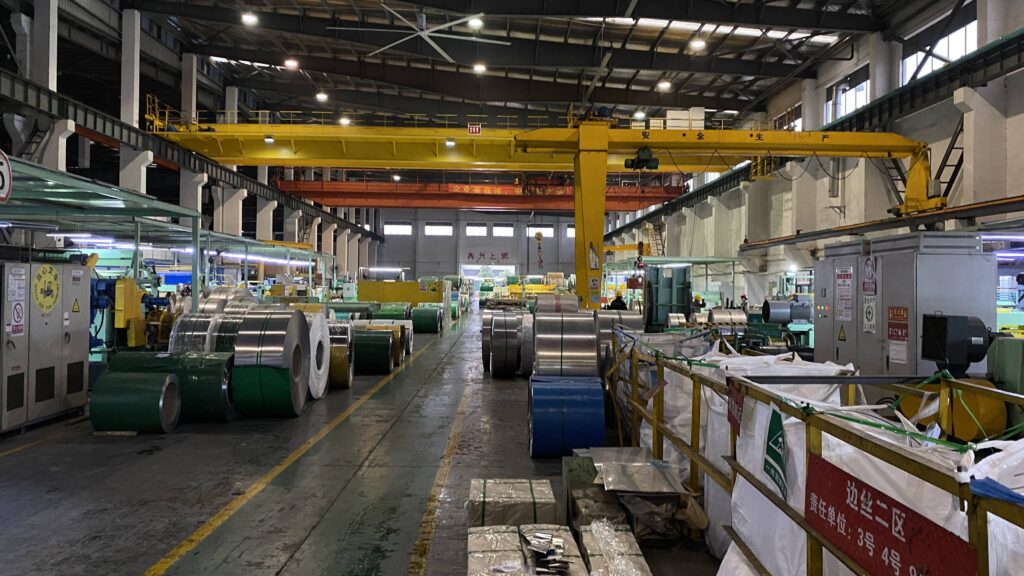

-S355J2 is a kind of low alloy high-strength structural steel, which belongs to the European standard hot rolled structural steel, and the executive standard is EN10025. It has high strength, good weldability, formability and corrosion resistance, and is widely used in the fields of construction, bridge, machinery, ship, marine engineering and so on.
-S355J2G3 is a common non-alloyed structural steel widely used in building and engineering structures, especially for welding and steel fabrication. Its high strength and good toughness make it very popular in bridges, building frames, heavy machinery, ships and other structural engineering.
Chemical Composition
| Grade | C | Si | Mn | P | S |
| S355J2 | ≤0.22 | ≤0.55 | ≤1.60 | ≤ 0.025 | ≤ 0.025 |
| Grade | C | Si | Mn | P | S |
| S355J2G3 | ≤0.22 | ≤0.55 | 1.0-1.7 | ≤ 0.045 | ≤ 0.045 |
S355J2 vs S355J2G3
Common Point
-Yield strength: both have high yield strength, S355 that the yield strength is not less than 355 MPa.
-Impact toughness: both steels are required to have a better impact toughness at low temperatures, S355J2 requirements at -20 ℃ under the impact work of 27J, and S355J2G3 is also at -20 ℃ under the impact work of 27J.
-Chemical composition: They have similar chemical composition, mainly including carbon, silicon, manganese, phosphorus, sulfur and other elements, the content of these elements are strictly controlled to ensure the performance of the steel.
-Applications: Both S355J2 and S355J2G3 are widely used in construction, bridges, machinery manufacturing, ships, pressure vessels and other structural components that require high strength and good toughness.
-Weldability: Both steels have good welding performance and are suitable for various welding processes.
-Formability: They both have good cold and hot forming properties and can be machined into various shapes and sizes.
-Heat Treatment: Both S355J2 and S355J2G3 can be heat treated as needed, such as normalized and annealed, to improve their mechanical properties.
-Standards: Both are produced in accordance with the European standard EN 10025-2:2004, which ensures their quality consistency and traceability.
-Environmental adaptability: thanks to their high strength and toughness, both steels can be used in harsh environmental conditions, such as low temperatures and corrosive environments.
-Economical: Both S355J2 and S355J2G3 are cost-effective materials that are widely used in a variety of industrial applications due to their excellent strength-to-cost ratio.
The difference between the two grades
S355J2 and S355J2G3 are both European standard low alloy high strength structural steel, but there are some differences between them:
1. Impact Work Requirement: S355J2 requires an impact work of 27J at -20°C, while the impact work requirement of S355J2G3 is also 27J, but S355J2G3 is delivered in normalized condition, which usually means better mechanical properties.
2. Deoxygenation: ‘G3’ of S355J2G3 indicates a specific deoxygenation method, which affects the microstructure and properties of the steel. G3 and G4 are identifiers characterising the deoxygenation method, with G3 indicating a semi-quenched steel and G4 indicating a fully quenched steel.
3. Chemical composition: The chemical compositions of the two are similar, except that S355J2G3 has a maximum content of 0.22 per cent carbon (C), 0.55 per cent silicon (Si), 1.60 per cent manganese (Mn), and 0.035 per cent both phosphorus (P) and sulphur (S).
4. Mechanical Properties: The yield strength and tensile strength of S355J2G3 varies according to the thickness of the steel plate, e.g. the yield strength of 63<d≦80mm is ≥325MPa and the tensile strength is between 450-680MPa.
5. Applications: Both are widely used in bridges, vehicles, ships, buildings and steel structures, but due to the delivery state and deoxidization method of S355J2G3, it may provide better performance in specific applications.
6. Heat treatment status: The heat treatment state of S355J2G3 is usually normalized, which helps to improve its yield strength and impact toughness, whereas the heat treatment state of S355J2 can be hot rolled, controlled tie or normalized rolled.
Overall, S355J2 and S355J2G3 are both high-strength structural steels, but S355J2G3 offers potentially superior mechanical properties and impact toughness through specific deoxidation methods and heat treatment states.
Application Scenarios for S355J2 and S355J2G3

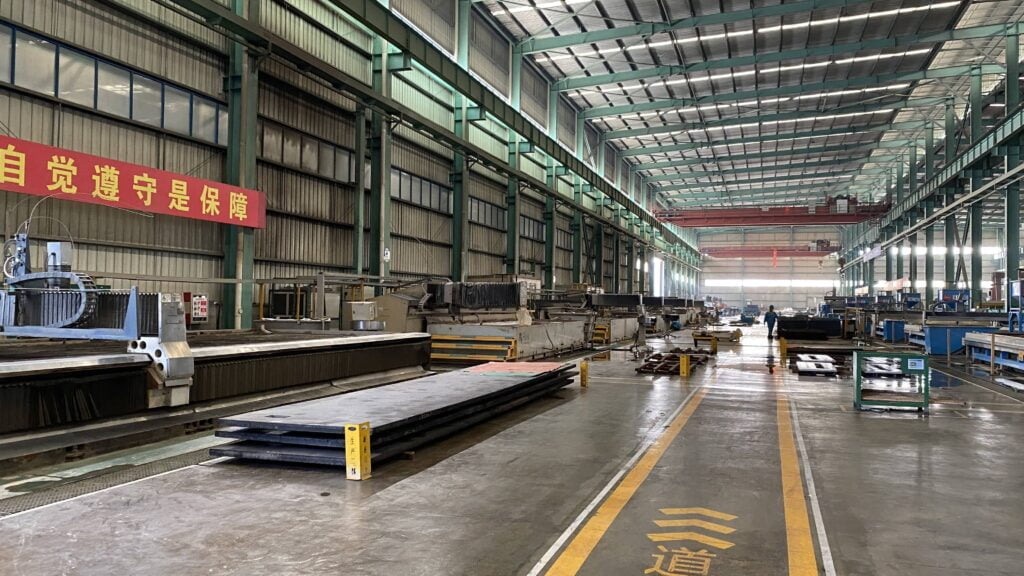
S355J2 and S355J2G3 are both low-alloy, high-strength structural steels, and they have a wide range of uses in several application scenarios. Below are some of the main application areas for these two steels:
-Bridge construction: In the field of bridges, these two steels are used to manufacture the main load-bearing parts of bridges, such as the steel girders and supporting structures of bridges. Their high strength and good toughness help to improve the load carrying capacity and service life of bridges.
-Machinery manufacturing: S355J2 and S355J2G3 are also widely used in the field of machinery manufacturing, for the manufacture of a variety of mechanical equipment and components, such as machine tools and pressure vessels. Their excellent mechanical properties and corrosion resistance make the equipment more reliable and able to withstand higher working intensity and pressure.
-Shipbuilding: These two steels are used in shipbuilding to provide the required corrosion resistance and strength to withstand the effects of the marine environment.
-Petrochemical: S355J2 and S355J2G3 are used in the manufacture of a wide range of petrochemical equipment, piping, etc., such as reactors and heat exchangers. Their corrosion resistance and high temperature performance enable the equipment to operate stably in high temperature, high pressure and corrosive environment, improving the safety and stability of the equipment .
-Automotive industry: In the automotive industry, S355J2 and S355J2G3 are used in the manufacture of automotive frames, bodies, chassis and other parts of the car, to improve the structural strength and safety performance of the car .
Which should I use, S355J2 or S355J2G3?
Whether you choose S355J2 or S355J2G3 depends on your specific application needs and project specifications.
When choosing a steel, you should consider the specific requirements of your project, such as the required strength, toughness, weldability, formability and corrosion resistance. If you need higher strength and toughness, or if the project specification calls for steel with a normalized finish, then S355J2G3 may be a better choice. If the project has more cost considerations or does not specifically require the steel to be in a heat-treated condition, S355J2 may be an affordable option.
Conclusion
-S355J2 and S355J2G3 are both low alloy high-strength structural steels, which are widely used in construction, bridges, machinery manufacturing and other fields. Their main difference lies in the deoxidation method and delivery state:
-S355J2: generally delivered in hot rolled, controlled tie or normalized rolled condition, with good weldability and impact toughness, suitable for -20℃ environment.
-S355J2G3: usually delivered in normalized state, with better mechanical properties and internal microstructure, suitable for more stringent application scenarios. When selecting, S355J2G3 is recommended if the project has higher requirements on material properties
Frequently Asked Questions
1.Which has better weldability, S355J2 or S355J2G3?
-When choosing between S355J2 and S355J2G3, if weldability is the main consideration, both steels will fulfil most welding requirements. However, if the project requires good impact toughness at low temperatures, S355J2 may be the more appropriate choice, as its standard requires an impact work of 27J at -20°C. S355J2G3, on the other hand, has the same impact work requirement, but it has a slightly higher phosphorus and sulphur content, which may affect the microstructure and performance during welding. Therefore, if welding performance is the key factor, it is recommended to select the most suitable material according to the specific welding process requirements and application environment.
2.Which is tougher, S355J2 or S355J2G3?
-Both S355J2 and S355J2G3 have good toughness, but S355J2G3 may have higher toughness in some cases. This is because S355J2G3 has a slightly higher phosphorus and sulphur content, which may affect its toughness performance in different directions. According to the study, manganese sulphide inclusions and banded organisation reduce the impact toughness of S355J2G3 steel plates in the transverse direction, but normalising significantly improves its transverse impact toughness. Therefore, if the application scenario specifically requires good transverse impact toughness at low temperatures, S355J2G3 may be a more suitable choice after appropriate heat treatment. However, the specific choice should be based on detailed engineering requirements and environmental conditions.
3.Which is more corrosion resistant, S355J2 or S355J2G3?
In terms of corrosion resistance, S355J2 and S355J2G3 are both low alloy high-strength structural steels, and they both have good corrosion resistance and can be used in general atmospheric conditions. However, when it comes to corrosion resistance specifically, there may be slight differences between these two steels.
S355J2 usually has better corrosion resistance and can maintain stable performance in a wide range of environments. Its surface is usually treated with shot blasting and polishing to improve its corrosion resistance. In addition, S355J2 undergoes heat treatment processes such as quenching and tempering during the manufacturing process to improve its hardness and corrosion resistance.
S355J2G3 may have slightly less corrosion resistance than S355J2, but it is more affordable and maintains stable performance in certain specific environments. Nonetheless, the corrosion resistance of S355J2G3 can still meet the requirements of most structural components, especially when it is properly surface treated and heat-treated.