Welcome to My Blog!
Before we dive into the content, I’d love for you to join me on my social media platforms where I share more insights, engage with the community, and post updates. Here’s how you can connect with me:
Facebook:https://www.facebook.com/profile.php?id=100087990137347
LinkedIn:https://www.linkedin.com/company/89825762/admin/dashboard/
YouTube:www.youtube.com/@carbonsteelsupply-kj9lw
TikTok:www.tiktok.com/@carbonsteelsupply
Now, let’s get started on our journey together. I hope you find the content here insightful, engaging, and valuable.
Profile:

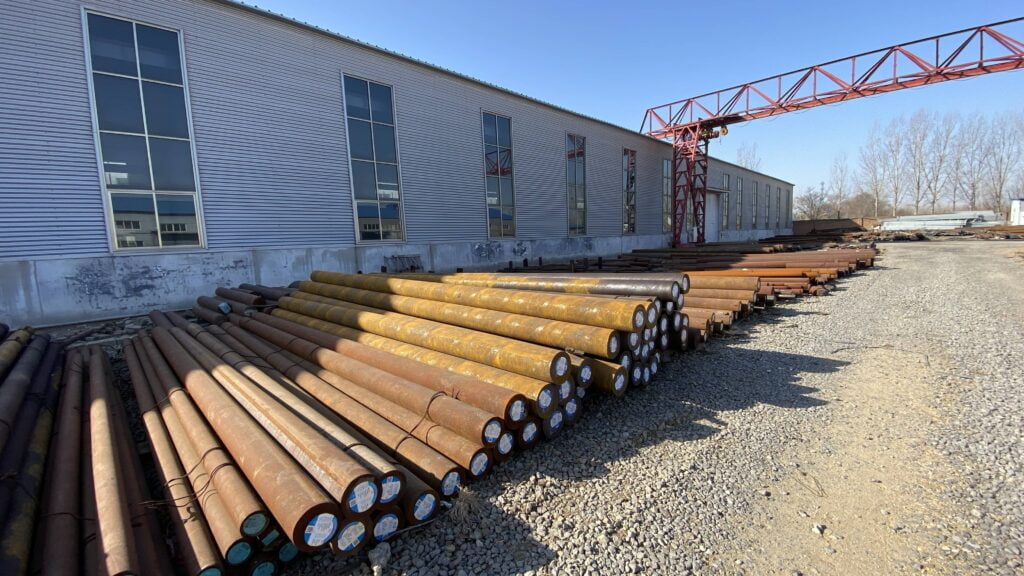
–1045 steel
AISI 1045 steel is a medium-carbon, high-quality structural steel that is known for its good strength, hardness and wear resistance.1045 steel has good hot workability and is easy to forge, roll and heat treat. However, due to its high carbon content, it has poor cold working properties and requires appropriate preheating and cooling measures to prevent cracking. In terms of weldability, 1045 steel is generally weldable and usually requires preheating before welding and stress relief after welding to prevent crack formation.
–1060 Steel
AISI 1060 steel is a high carbon steel with high strength, hardness and wear resistance that is widely used in applications where durable and robust materials are required. The wear resistance and strength of this steel make it particularly suitable for use in the manufacture of knives and cutting tools. In addition, due to its good mechanical properties, 1060 steel is also widely used in the manufacture of hand tools, agricultural tools, industrial machinery components and construction tools. It is often used in the automotive industry for the manufacture of leaf springs, suspension components and other parts that require high strength and fatigue resistance.
Chemical Composition:
| C | Si | Mn | P | S | Cr | Ni | Cu |
| 0.43-0.50 | 0.17-0.37 | 0.60-0.90 | ≤0.040 | ≤0.050 | ≤0.25 | ≤0.25 | ≤0.25 |
Comparison of 1045 and 1060 steel
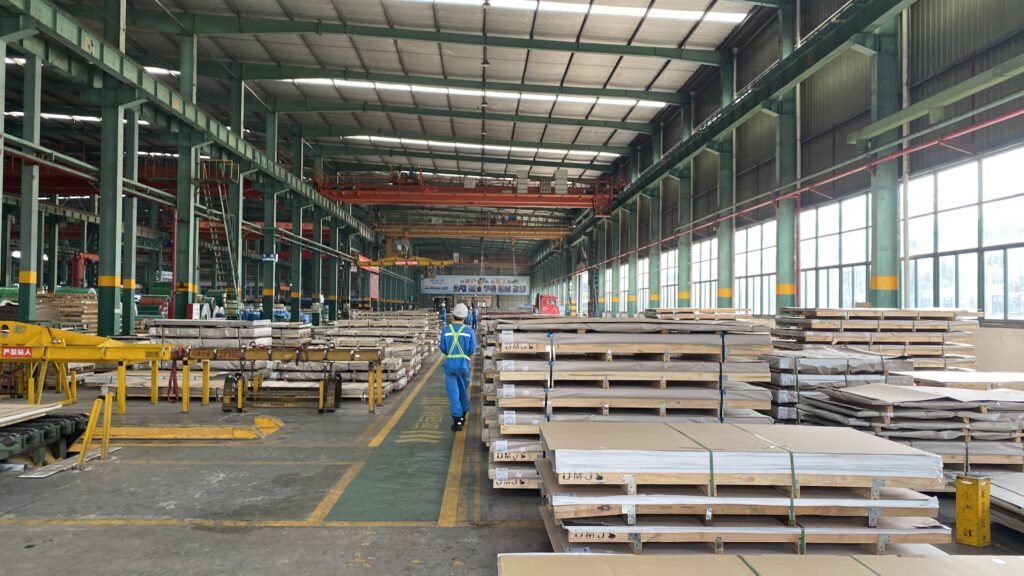
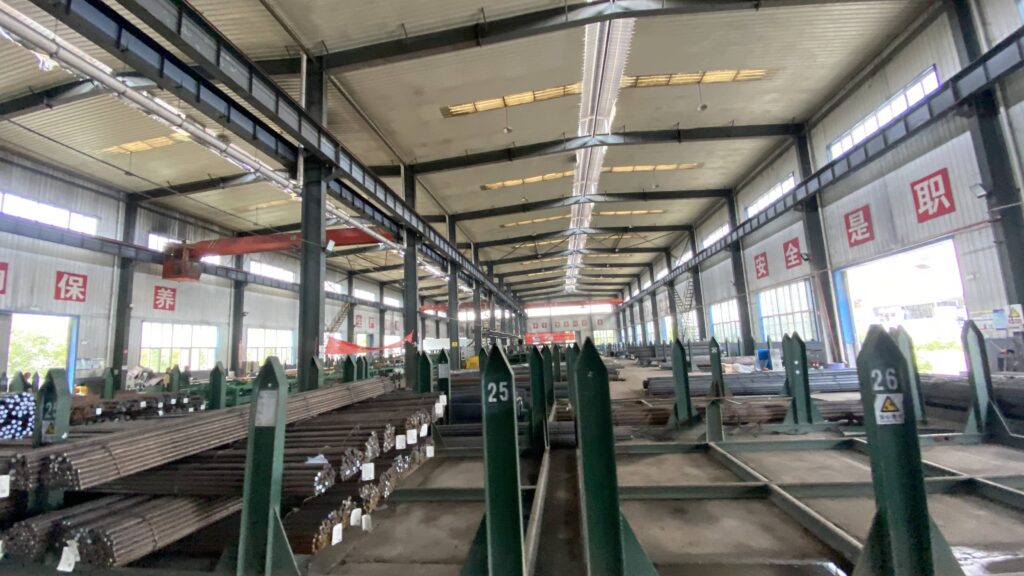
1045 and 1060 steels are both carbon structural steels, but they differ in chemical composition, mechanical properties and applications.
The carbon content is about 0.42-0.50 per cent, which gives it good strength, hardness and wear resistance.
It contains small amounts of manganese (Mn, usually not more than 0.90 per cent), silicon (Si, not more than 0.40 per cent) and other impurity elements, as well as traces of phosphorus (P) and sulphur (S).
After appropriate heat treatment, high yield strength, tensile strength and hardness can be obtained.
Has good hot workability, easy to forge, rolling and heat treatment, but poor cold workability.
Weldability in general, often need to preheat before welding, after welding need to be de-stressed to prevent the formation of cracks.
Poor corrosion resistance, susceptible to atmospheric agents, water and chemical media, so protective measures may be required in the process of use.
Commonly used in the manufacture of various mechanical components such as shafts, gears, pins, bolts and connecting rods, as well as engine crankshafts and camshafts in the automotive industry.
The carbon content is high, ranging from 0.57 per cent to 0.65 per cent, which makes 1060 steel harder and more wear resistant.
In addition to carbon, it also contains elements such as silicon, manganese and phosphorus, the content of which ensures the strength and toughness of 1060 steel, giving it better machinability and wear resistance.
Due to the increased carbon content, 1060 steel is less ductile and more brittle, which affects its machinability and welding characteristics.
It is commonly used in applications where excellent wear resistance is required, such as cutting tools, wear plates and some mechanical parts.
1060 steel is hardened by heat treatment or cold drawing to give high strength, hardness, elasticity and suitable toughness.
It is mainly used for making smaller size springs, such as pressure and speed regulating springs and force measuring springs.
To summarise, the main difference between 1045 steel and 1060 steel lies in the carbon content, mechanical properties and end use. 1045 steel has a medium carbon content, good strength, ductility and machinability, suitable for a wide range of industrial applications. 1060 steel, on the other hand, has a higher carbon content and higher hardness and wear resistance, making it ideal for applications that require superior wear resistance.
FAQ
-What is the main difference between 1045 and 1060 steel?
The main difference between 1045 and 1060 steel is their carbon content. 1045 steel has a carbon content of between 0.42 and 0.50 per cent, while 1060 steel has a carbon content of between 0.55 and 0.65 per cent. This gives 1060 steel higher strength and hardness than 1045 steel, but at the same time it has lower ductility and toughness. As a result, 1060 steel is more suitable for applications that require high wear resistance and high hardness, such as cutting tools and springs, while 1045 steel is suitable for applications that require a balance of strength and toughness, such as machine parts and forgings.
-What is the difference between the heat treatment of 1045 and 1060 steel?
Both steels can be heat treated to improve their properties. 1045 steel is usually austenitised at temperatures in the range of 850-950°C, followed by quenching and tempering. 1060 steel, on the other hand, is usually austenitised at higher temperatures, around 900-950°C, followed by quenching and tempering. Due to the higher carbon content of 1060 steel, it usually achieves higher hardness and strength after heat treatment. However, this also means that 1060 steel is more susceptible to cracking and distortion during heat treatment.
1045 steel is typically used to make mechanical parts such as shafts, gears, connecting rods, bolts and nuts due to its balanced mechanical properties. It is also suitable for the manufacture of moulds and cutting tools that are not particularly demanding. 1060 steel, on the other hand, is typically used for the manufacture of springs, knives, saw blades, drills and stamping tools due to its high hardness and wear resistance. It is also suitable for the manufacture of highly loaded automotive parts such as springs and suspension components.