Welcome to My Blog!
Before we dive into the content, I’d love for you to join me on my social media platforms where I share more insights, engage with the community, and post updates. Here’s how you can connect with me:
Facebook:https://www.facebook.com/profile.php?id=100087990137347
LinkedIn:https://www.linkedin.com/company/89825762/admin/dashboard/
YouTube:www.youtube.com/@carbonsteelsupply-kj9lw
TikTok:www.tiktok.com/@carbonsteelsupply
Now, let’s get started on our journey together. I hope you find the content here insightful, engaging, and valuable.
Table of Contents
Introduction
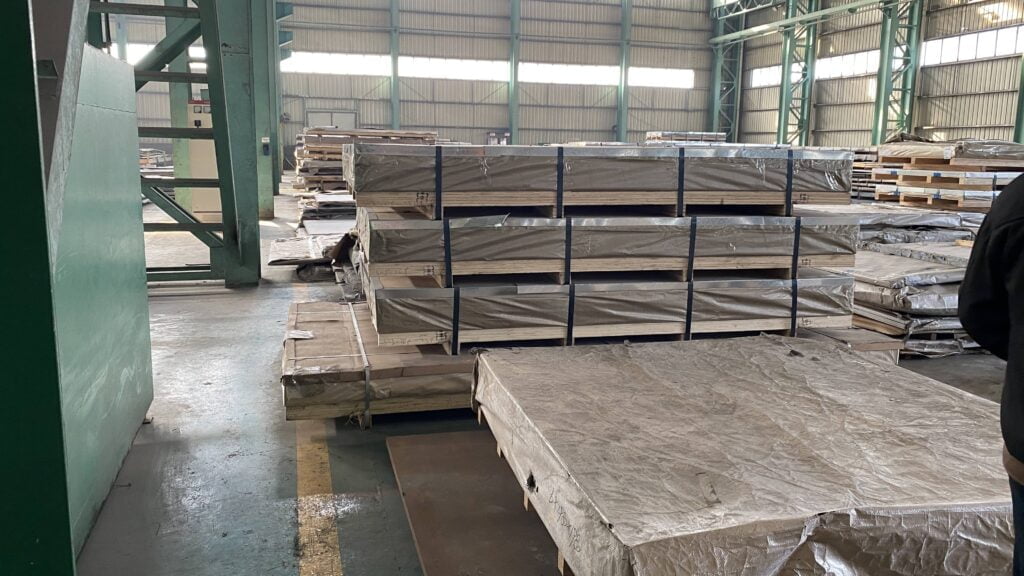

17CrNiMo6 is a premium alloyed carburized steel known for its high toughness, high strength and excellent wear resistance, and is widely used in the manufacture of mechanical components requiring high fatigue strength and wear resistance. Carburized, hardened and tempered, the material provides excellent surface hardness and core toughness for high performance applications.
30CrNiMo8
30CrNiMo8 is a high-quality alloy steel known for its excellent mechanical properties and widely used in engineering and mechanical engineering. It has excellent toughness, high strength and wear resistance and is particularly suitable for applications subject to dynamic loads and requiring high fatigue resistance.
Chemical Composition
| Grade | C | Si | Mn | P | S | Cr | Ni | Mo |
| 17CrNiMo6 | 0.14-0.19 | 0.15-0.40 | 0.40-0.60 | ≤ 0.035 | ≤ 0.035 | 1.50-1.80 | 1.40-1.70 | 0.25-0.35 |
| Grade | C | Si | Mn | P | S | Cr | Ni | Mo |
| 30CrNiMo8 | 0.26-0.34 | ≤ 0.40 | 0.50-0.80 | ≤ 0.025 | ≤ 0.035 | 1.8-2.2 | 1.8-2.2 | 0.30-0.50 |
Comparison of 17CrNiMo6 and 30CrNiMo8
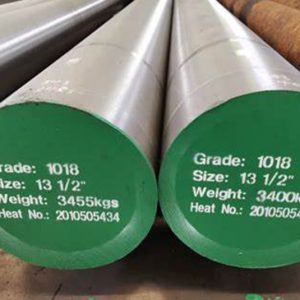
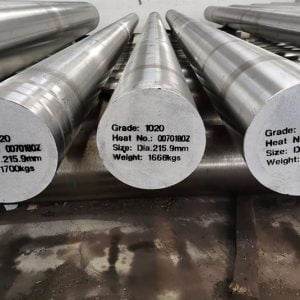


-Common points
The common points between 17CrNiMo6 and 30CrNiMo8 include the following:
High strength: both 17CrNiMo6 and 30CrNiMo8 have high yield strength and tensile strength, which can meet the load bearing requirements of most engineering structures.
Good toughness: both steels have good toughness, even at low temperatures can maintain high toughness, which is conducive to improving structural safety.
Heat treatment properties: Both 17CrNiMo6 and 30CrNiMo8 can be heat treated (e.g. quenching and tempering) to optimize their mechanical properties and obtain the required hardness and toughness.
Areas of application: Both are widely used in the manufacture of components subject to heavy loads, high loads and high fatigue strength, such as gears and bearings.
Wear resistance: Both steels have excellent wear resistance and are suitable for use in the manufacture of components requiring high wear resistance.
Good machinability: Both 17CrNiMo6 and 30CrNiMo8 have good cutting and machining properties, and can be machined with ordinary tools.
Welding performance: the two materials have good welding performance, can be connected by arc welding, gas welding and other common welding methods.
Difference
-Strength and hardness:
The yield and tensile strength of 30CrNiMo8 is usually higher than that of 17CrNiMo6 due to its higher carbon content.
Differences in application areas:
-17CrNiMo6 is widely used in transmission gears etc. due to its good toughness and comprehensive mechanical properties.
-30CrNiMo8 is suitable for the manufacture of high-load, high-strength mechanical parts, such as shafts, gears, bolts, etc., due to its higher strength and toughness.
-Heat treatment performance:
Both have good heat treatment properties, but the specific heat treatment process may vary depending on the material composition and intended use.
-Wear resistance and toughness:
17CrNiMo6 has good toughness while maintaining high hardness and wear resistance.
30CrNiMo8, on the other hand, provides good toughness at a higher strength level.
17CrNiMo6 and 30CrNiMo8 application scenarios
-Application Scenarios of 17CrNiMo6:
Gears and transmission components: 17CrNiMo6 is commonly used in the production of high-strength, high-toughness gears, shafts and other transmission components for automotive, marine, aerospace and industrial machinery.
Bearings and couplings: Due to its good fatigue resistance, 17CrNiMo6 is suitable for the manufacture of bearings and couplings subject to high speed rotation and heavy loads.
Forging parts: 17CrNiMo6 is suitable for the forging process and is used in the manufacture of forgings, such as forged shafts and forging dies.
Mechanical parts: Due to its high strength and toughness, 17CrNiMo6 is also widely used in the manufacture of various mechanical parts, such as crankshafts, crank handles and connecting rods.
-Application scenarios of 30CrNiMo8:
Gear manufacturing: 30CrNiMo8 has excellent toughness and high strength, and is often chosen in the manufacture of large gears. It is usually used in the manufacture of heavy-duty, high-speed and high-load working conditions of the gear, such as automobile differentials, engineering machinery transmission.
Bearing manufacturing: 30CrNiMo8 is also widely used in the manufacture of bearings and bearing parts. This steel has good wear resistance and high strength, can withstand large loads and shock loads, suitable for the manufacture of large and high-load bearings.
Pins and Connectors: 30CrNiMo8 is also often used to make pins and connectors such as bolts, pins, and pins. These parts usually need to have high strength and durability to ensure their reliability in engineering.
Mold Manufacturing: Due to its good toughness and wear resistance, 30CrNiMo8 is suitable for manufacturing molds and jigs. It is able to withstand high loads and shock loads, and at the same time has good wear resistance to meet the durability requirements during the use of molds.
17CrNiMo6 vs. 30CrNiMo8 which one should I use?

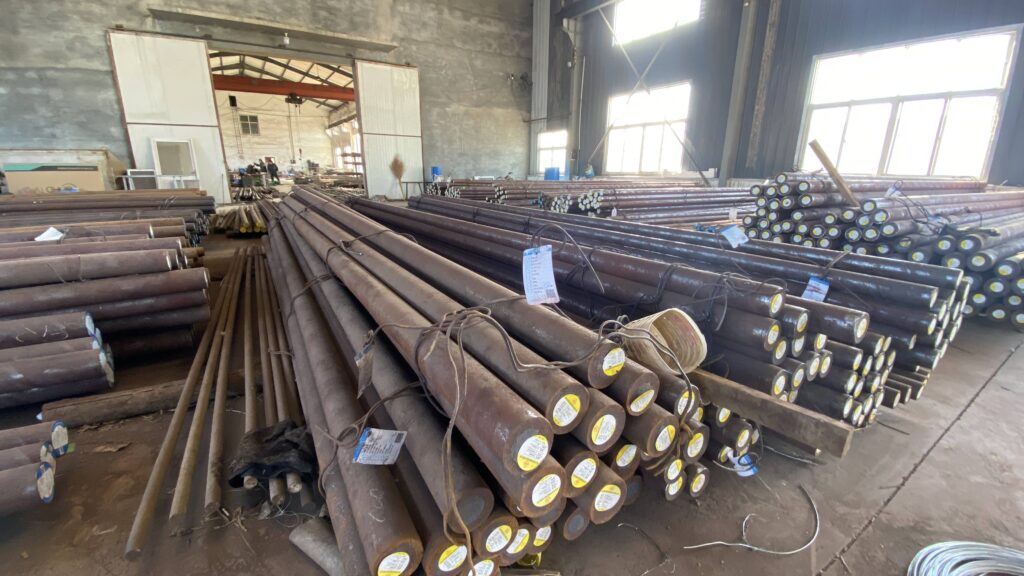
Choosing 17CrNiMo6 or 30CrNiMo8 depends on your specific application needs and performance requirements. Here are some key differences between the two materials to help you make your choice:
Strength and hardness: 30CrNiMo8 typically has higher yield and tensile strength due to its higher carbon content. If your application requires higher strength and hardness, 30CrNiMo8 may be the better choice.
Toughness: 17CrNiMo6 is known for its good toughness. If your application requires better toughness, especially when subjected to shock loads or dynamic loads, 17CrNiMo6 may be a better fit.
Wear Resistance: Both materials have good wear resistance, but 30CrNiMo8 may perform better in certain high load and high wear applications due to its higher strength.
Heat Treatment: 30CrNiMo8 can be heat treated to further increase its hardness and strength, and is suitable for parts that require heat treatment to optimize performance.
Machinability: 30CrNiMo8 is considered difficult to machine, especially when lower hardness levels are achieved. If machinability is a critical factor, you may want to consider 17CrNiMo6.
Heat resistance and weldability: 30CrNiMo8 has high heat resistance and good weldability, which makes it suitable for high-temperature environments and applications that require welding.
In summary, if you need high strength, high hardness and good machinability, 30CrNiMo8 may be a better choice. If your application is more focused on toughness, wear resistance and performance in specific environments, 17CrNiMo6 may be better suited to your needs. The final choice should be based on specific engineering requirements and performance objectives.
Conclusion
When choosing between 17CrNiMo6 and 30CrNiMo8, the decision should be based on specific needs. 17CrNiMo6 is suitable for applications subjected to shock loads, such as gearbox gears, due to its high toughness and good wear resistance. While 30CrNiMo8, with its higher strength and hardness, is suitable for applications with high loads and high wear resistance requirements, such as large gears and bearings. At the same time, 30CrNiMo8’s heat resistance and weldability make it more suitable for use in high-temperature environments and welded structures. Therefore, the choice of which material to use requires comprehensive consideration of mechanical properties, application environment and processing requirements.
Frequently Asked Questions
-What is the main difference between 17CrNiMo6 and 30CrNiMo8?
The main difference between 17CrNiMo6 and 30CrNiMo8 is their chemical composition and strength. 30CrNiMo8 has a higher carbon content, which gives it higher strength and hardness than 17CrNiMo6, which is known for its good toughness and wear resistance.
-What are the heat treatment properties of 17CrNiMo6 and 30CrNiMo8?
Both 17CrNiMo6 and 30CrNiMo8 can be heat-treated to optimize their properties. 17CrNiMo6 needs to be heat-treated to avoid overheating, underheating, quenching cracks, and heat-treatment distortion, etc. 30CrNiMo8 can be annealed, normalized, quenched, and tempered to increase its hardness and strength, while retaining good toughness.
-What is the weldability of 17CrNiMo6 and 30CrNiMo8?
The weldability of 17CrNiMo6 is mainly affected by its carbon content. Other elements such as silicon, nickel, vanadium, molybdenum, copper, manganese and chromium also affect its carbon equivalent (CE) and hence weldability. 30CrNiMo8 specific weldability data is not provided in the search results, but in general the weldability of a steel decreases as the carbon content increases.