Welcome to My Blog!
Before we dive into the content, I’d love for you to join me on my social media platforms where I share more insights, engage with the community, and post updates. Here’s how you can connect with me:
Facebook:https://www.facebook.com/profile.php?id=100087990137347
LinkedIn:https://www.linkedin.com/company/89825762/admin/dashboard/
YouTube:www.youtube.com/@carbonsteelsupply-kj9lw
TikTok:www.tiktok.com/@carbonsteelsupply
Now, let’s get started on our journey together. I hope you find the content here insightful, engaging, and valuable.
Table of Contents
Introduction
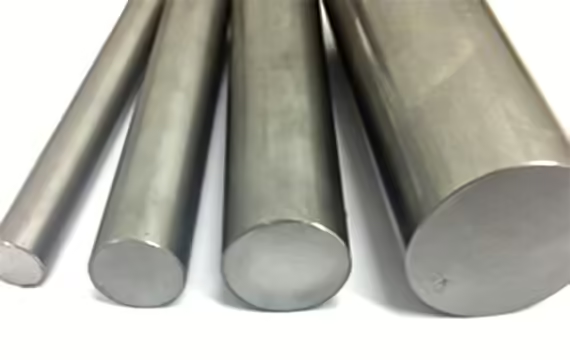
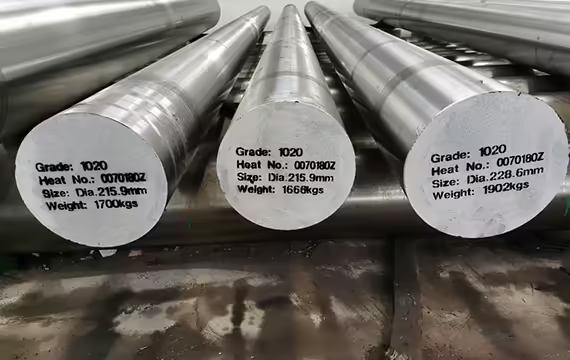
1020 low carbon steel, also known as AISI 1020 or SAE 1020, is a versatile and widely used type of steel in various industries. Its combination of good weldability, formability, and machinability, along with its relatively low cost, makes it a popular choice for numerous applications. This comprehensive guide delves into the properties, applications, and other important aspects of 1020 low carbon steel, providing a thorough understanding of this essential material. This blog aims to provide detailed information about 1020 low carbon steel, including its chemical composition, mechanical properties, heat treatment options, common applications, and advantages.
What is 1020 Carbon Steel?
1020 carbon steel belongs to the family of plain carbon steels, meaning its primary alloying element is carbon. The “1020” designation indicates its nominal carbon content: 0.20% carbon. The “10” prefix signifies that it is a plain carbon steel with no significant alloying additions. This relatively low carbon content gives it specific characteristics that distinguish it from other steel grades. 1020 carbon steel is a mild steel, meaning it has a lower carbon content compared to medium and high carbon steels. This low carbon content contributes to its excellent weldability, ductility, and machinability.
Chemical Composition of 1020 Low Carbon Steel
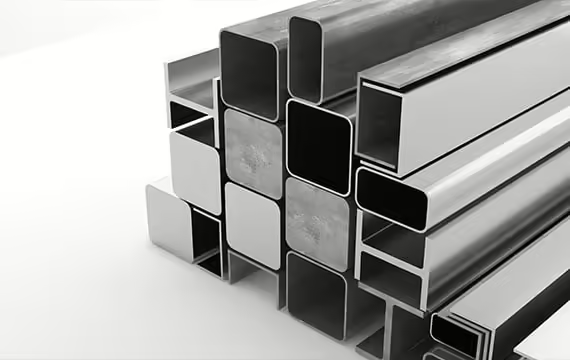
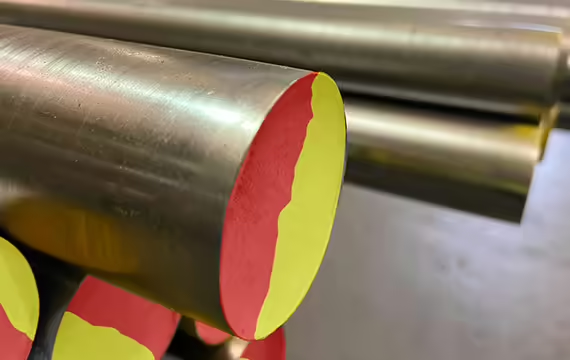
The chemical composition of 1020 low carbon steel is crucial in determining its properties. The typical composition is as follows:
- Carbon (C): 0.18 – 0.23%
- Manganese (Mn): 0.30 – 0.60%
- Phosphorus (P): ≤ 0.040%
- Sulfur (S): ≤ 0.050%
The carbon content is the primary factor influencing the steel’s strength and hardness. Manganese improves hardenability and reduces brittleness. Phosphorus and sulfur are considered impurities and are kept to minimal levels to avoid negative impacts on the steel’s properties. Understanding the 1020 low carbon steel chemical composition is key to predicting its behavior in different applications.
Mechanical Properties of 1020 Low Carbon Steel
1020 low carbon steel possesses a desirable combination of mechanical properties that make it suitable for a wide range of uses. Some key mechanical properties include:
- Tensile Strength: Approximately 440 MPa (64,000 psi)
- Yield Strength: Approximately 370 MPa (54,000 psi)
- Elongation: Approximately 25%
- Hardness: Approximately 126 HB (Brinell Hardness)
These properties indicate that 1020 carbon steel is relatively strong, ductile, and easily formed. Its lower hardness compared to higher carbon steels makes it readily machinable. The 1020 carbon steel mechanical properties make it a good choice for applications requiring formability and weldability.
Heat Treatment of 1020 Carbon Steel
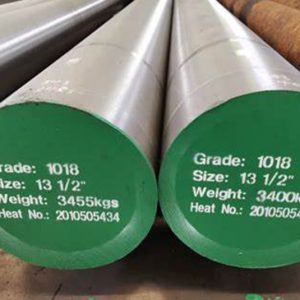
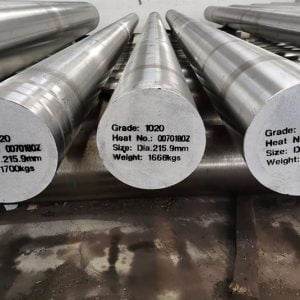


While 1020 carbon steel is not typically used in hardened conditions, it can be heat treated to modify its properties. Common heat treatments include:
- Annealing: This process softens the steel, improves machinability, and relieves internal stresses.
- Normalizing: This process refines the grain structure, improving strength and toughness.
- Carburizing: This process increases the surface hardness of the steel by diffusing carbon into the surface. This is a common practice for 1020 carbon steel when a hard wear-resistant surface is needed while maintaining a ductile core.
Understanding the 1020 carbon steel heat treatment options allows engineers to tailor the material’s properties to specific application requirements.
Applications of 1020 Low Carbon Steel
Due to its versatile properties and relatively low cost, 1020 low carbon steel finds extensive use in various industries. Some typical applications include:
- Automotive Components: Brackets, stampings, and other non-critical structural parts.
- Machinery Parts: Gears, shafts, and other components requiring good machinability.
- Structural Applications: General fabrication, light structural members, and brackets.
- Fasteners: Bolts, nuts, and other fastening elements.
- Sheet Metal Parts: Formed and stamped components.
The 1020 low carbon steel applications are diverse due to its balance of properties and cost-effectiveness.
Advantages of Using 1020 Low Carbon Steel
Several advantages contribute to the widespread use of 1020 carbon steel:
- Excellent Weldability: It can be readily welded using various welding processes.
- Good Machinability: Its low hardness makes it easy to machine and form.
- High Ductility and Formability: It can be easily bent, formed, and drawn into various shapes.
- Relatively Low Cost: It is a cost-effective material compared to higher-alloy steels.
- Availability: It is readily available in various forms and sizes.
These 1020 low carbon steel advantages make it an attractive choice for many engineering and manufacturing applications.
Comparison of 1020 Low Carbon Steel with Other Steels (Illustrative Example)
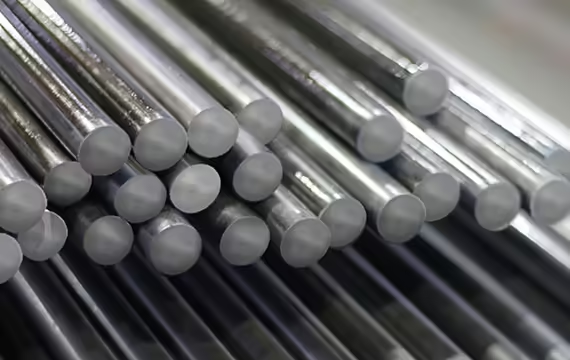
While a detailed brand comparison is outside the scope, this table provides a general comparison of 1020 low carbon steel with other common steel types based on general characteristics, not specific brands:
| Property | 1020 Low Carbon Steel | Medium Carbon Steel (e.g., 1045) | High Carbon Steel (e.g., 1095) | Alloy Steel (e.g., 4140) |
|---|---|---|---|---|
| Carbon Content (%) | 0.18-0.23 | 0.43-0.50 | 0.90-1.03 | Varies |
| Strength | Lower | Medium | High | High |
| Hardness | Lower | Medium | High | High |
| Weldability | Excellent | Fair | Poor | Good to Fair |
| Machinability | Excellent | Good | Fair | Good |
| Cost | Low | Medium | Medium to High | High |
| Typical Use Case | General Fabrication | Gears, Shafts | Cutting Tools, Springs | High-Stress Applications |
This table illustrates the relative properties of different steel types, highlighting the balance of properties offered by 1020 low carbon steel.
Conclusion
1020 low carbon steel is a versatile and widely used material due to its combination of desirable properties, including good weldability, machinability, and formability, along with its relatively low cost. Its applications span various industries, from automotive to general fabrication. Understanding its chemical composition, mechanical properties, and heat treatment options is crucial for selecting the appropriate material for specific engineering applications. While not suitable for high-strength or high-hardness applications, 1020 low carbon steel offers an excellent balance of properties for numerous general-purpose uses. This guide has provided a comprehensive overview of 1020 carbon steel, equipping readers with the knowledge needed to make informed decisions regarding its use. The advantages of 1020 low carbon steel like its cost effectiveness and ease of use ensure its continued popularity in various manufacturing and engineering sectors. This comprehensive exploration of 1020 carbon steel reinforces its importance in the world of materials science and engineering.
FAQ
Is 1020 low carbon steel heat treatable?
Yes, it can be heat treated, most commonly through carburizing to increase surface hardness. Annealing and normalizing are also common heat treatments.
Is 1020 low carbon steel suitable for high-strength applications?
No, it is not ideal for high-strength applications. Higher carbon or alloy steels are more suitable for those uses.
What is the difference between 1018 and 1020 steel?
The main difference is the carbon content. 1018 has slightly lower carbon (around 0.15-0.20%) and often better machinability than 1020, but slightly lower strength.