Welcome to My Blog!
Before we dive into the content, I’d love for you to join me on my social media platforms where I share more insights, engage with the community, and post updates. Here’s how you can connect with me:
Facebook:https://www.facebook.com/profile.php?id=100087990137347
LinkedIn:https://www.linkedin.com/company/89825762/admin/dashboard/
YouTube:www.youtube.com/@carbonsteelsupply-kj9lw
TikTok:www.tiktok.com/@carbonsteelsupply
Now, let’s get started on our journey together. I hope you find the content here insightful, engaging, and valuable.
Table of Contents
Introduction
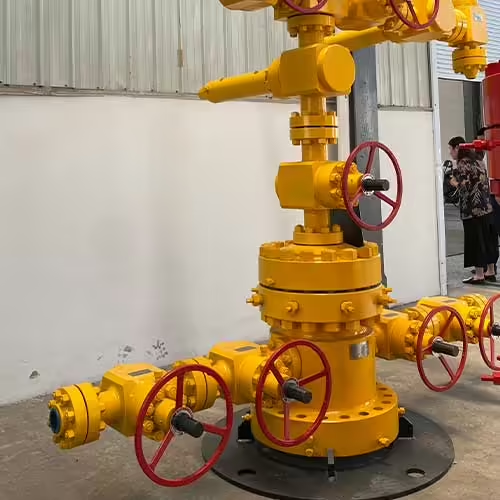
The term “Christmas tree” might conjure images of festive decorations, but in the oil and gas industry, it refers to a critical piece of equipment—the Christmas tree in oil well operations—that plays a vital role in controlling and monitoring oil and gas wells. This complex assembly of valves, pipes, and fittings sits atop the wellhead, resembling a decorated tree with its various components branching out. Understanding the function and intricacies of this equipment is crucial for safe and efficient oil and gas production. In this blog post, we’ll delve into the intricacies of the Christmas tree in oil well, exploring its functions, types, and significance in oil well operations, shedding light on its essential role in the energy sector.
What is a Christmas Tree in Oil Well?
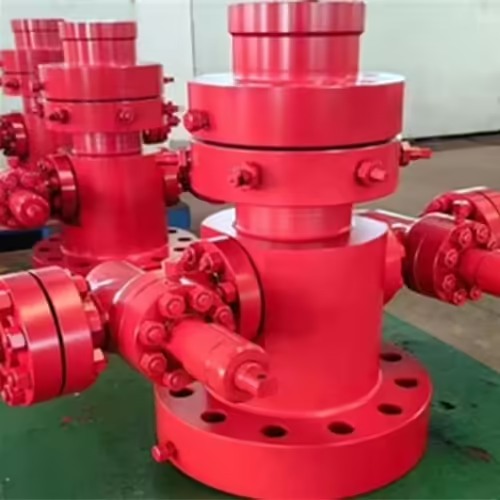
A Christmas tree in oil well, also known as a wellhead assembly, is a crucial piece of equipment used to control the flow of hydrocarbons (oil and gas) from a well. It’s installed at the surface after drilling and completion operations are finished, serving as the primary interface for well intervention and production activities. It acts as the gateway between the reservoir and the surface processing facilities. The Christmas tree in oil well design and configuration are tailored to the specific characteristics of the well and the produced fluids.
Key Functions of a Christmas Tree in Oil Well
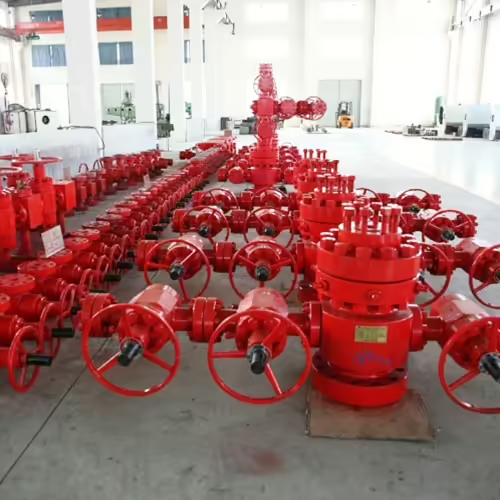
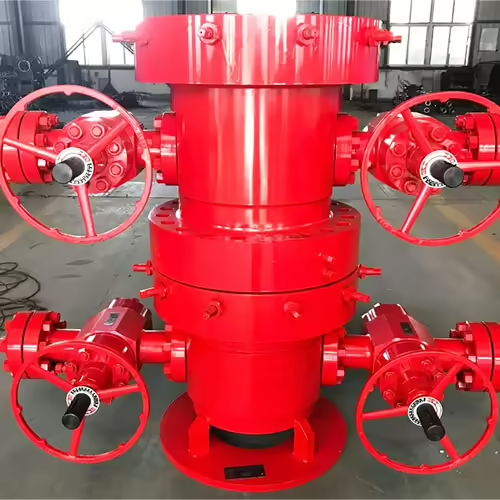
The Christmas tree in oil well performs several essential functions:
- Flow Control: It regulates the flow of oil and gas from the well, allowing operators to adjust production rates and manage reservoir pressure. This control is essential for optimizing production and preventing damage to the reservoir. Chokes and valves within the Christmas tree in oil well enable precise adjustments to flow rates.
- Well Shut-in: In emergencies or during maintenance, the Christmas tree in oil well can quickly shut off the well, preventing uncontrolled releases of hydrocarbons. This rapid shut-in capability is a critical safety feature, minimizing the risk of blowouts and environmental damage. The master valve is the primary component responsible for this crucial function.
- Pressure Monitoring: The Christmas tree in oil well provides access points for monitoring well pressure and temperature, crucial parameters for safe and efficient operations. Accurate pressure and temperature data are essential for understanding reservoir behavior and making informed decisions about production strategies. These measurements are often transmitted to surface control systems for real-time monitoring.
- Well Intervention: The Christmas tree in oil well facilitates various well interventions, such as workovers, stimulations, and artificial lift installations. These interventions are necessary to maintain or enhance production from the well. The Christmas tree in oil well provides access points for specialized equipment used in these operations.
- Safety: The Christmas tree in oil well acts as a critical safety barrier, preventing blowouts and protecting personnel and the environment. The robust design and multiple safety features of the Christmas tree in oil well contribute to overall well safety. Regular inspections and maintenance are crucial to ensure its continued integrity.
Types of Christmas Trees in Oil Well
Christmas tree in oil well configurations vary, each designed for specific applications and well conditions:
- Conventional Land Trees: These are the most common type, used in onshore oil and gas wells. They are typically simpler in design and easier to access for maintenance. Conventional land Christmas trees in oil well are often manually operated, although remote operation is becoming increasingly common.
- Subsea Trees: Designed for underwater operations, subsea Christmas trees in oil well are more complex and require remote operation capabilities. These trees must withstand the harsh marine environment and are often located in deep water. Subsea Christmas trees in oil well are crucial for offshore oil and gas production.
- Horizontal Trees: Used in wells with a horizontal or deviated trajectory. These Christmas trees in oil well are designed to accommodate the unique challenges posed by horizontal wells, such as the need for specialized downhole tools. Horizontal Christmas trees in oil well often incorporate features that allow for selective production from different zones within the wellbore.
- High-Pressure/High-Temperature (HPHT) Trees: Engineered to withstand extreme pressures and temperatures found in some deep wells. HPHT Christmas trees in oil well are constructed from specialized materials and incorporate advanced sealing technologies to ensure safe operation in these challenging environments. These Christmas trees in oil well are essential for unlocking the potential of high-pressure, high-temperature reservoirs.
Components of a Christmas Tree in Oil Well
A Christmas tree comprises several key components:
- Wellhead Adapter: Connects the Christmas tree to the wellhead. This adapter provides a secure and pressure-tight connection between the two pieces of equipment. It ensures the integrity of the well system.
- Master Valve: The primary shut-off valve, providing a secure barrier against well pressure. This valve is crucial for preventing uncontrolled flow from the well. It is typically the first valve closed in an emergency situation.
- Wing Valves: Control flow through the production wing (for oil and gas production) and the kill wing (for well intervention). These valves allow operators to isolate different sections of the Christmas tree for maintenance or testing. They also provide flexibility in managing production flow.
- Swab Valve: Allows access for well sampling and fluid level measurements. This valve is used to collect samples of produced fluids for analysis. It also provides a means of measuring the fluid level in the well.
- Choke: Restricts flow to control production rates and prevent erosion. The choke is a critical component for managing reservoir pressure and optimizing production. Adjusting the choke size allows operators to fine-tune the flow rate from the well.
- Pressure Gauges: Monitor well pressure and provide critical data for operations. These gauges provide real-time information on well conditions. The pressure data is often transmitted to surface control systems for monitoring and analysis.
Christmas Tree in Oil Well Operations: A Table of Common Configurations
| Feature | Conventional Land Tree | Subsea Tree |
|---|---|---|
| Location | Onshore | Underwater |
| Operation | Manual or remote | Remote |
| Complexity | Simpler | More complex |
| Maintenance | Easier | More challenging |
| Cost | Lower | Higher |
| Applications | Most land wells | Offshore, deepwater |
| Typical Depth | Shallow to medium | Deepwater, ultra-deepwater |
| Materials | Standard steel alloys | Corrosion-resistant alloys |
The Importance of Christmas Tree Integrity

The integrity of a Christmas tree is paramount for safe and efficient well operations. Regular inspection, maintenance, and testing are essential to ensure its reliability. Any damage or malfunction can lead to serious consequences, including environmental pollution, production losses, and potential safety hazards. Proper maintenance and testing help to prevent failures and ensure the long-term reliability of the Christmas tree.
Conclusion
The Christmas tree is far more than just a symbol in the oil and gas industry. It’s a critical piece of equipment that ensures the safe and controlled production of hydrocarbons. Understanding its functions, types, and components is essential for anyone involved in oil well operations. Its reliable operation is crucial for maximizing production and minimizing environmental risk.
FAQ
Q: How often should a Christmas tree be inspected?
A: Inspection frequency depends on various factors, including well conditions, regulatory requirements, and company policies. Typically, inspections are conducted regularly, with more frequent checks for high-risk wells. API (American Petroleum Institute) standards provide guidelines for inspection and maintenance schedules.
Q: What is a “wet Christmas tree”?
A: A wet Christmas tree is a subsea tree designed for underwater use. It’s called “wet” because its components are exposed to the surrounding seawater. These trees are designed to operate reliably in the challenging subsea environment.
Q: How is a Christmas tree different from a wellhead?
A: The wellhead is the structure at the surface that provides a connection point for the drilling equipment and casing. The Christmas tree sits on top of the wellhead, controlling flow and providing access for well interventions. Think of the wellhead as the foundation and the Christmas tree as the control center.