Welcome to My Blog!
Before we dive into the content, I’d love for you to join me on my social media platforms where I share more insights, engage with the community, and post updates. Here’s how you can connect with me:
Facebook:https://www.facebook.com/profile.php?id=100087990137347
LinkedIn:https://www.linkedin.com/company/89825762/admin/dashboard/
YouTube:www.youtube.com/@carbonsteelsupply-kj9lw
TikTok:www.tiktok.com/@carbonsteelsupply
Now, let’s get started on our journey together. I hope you find the content here insightful, engaging, and valuable.
Introduction
16MnCr5 has good hardenability and machinability, for larger cross-section parts, heat treatment can get high surface hardness and wear resistance, low-temperature impact toughness is also higher. The 16MnCr5 gear steel by carburising quenching use, mainly used in the manufacture of gears, worm gears, sealing bushings and other parts.
20MnCr5 is an alloy structural steel, belongs to the carburised steel, widely used in the manufacture of high-strength and high-toughness mechanical parts. This steel can obtain high surface hardness and wear resistance through carburising and heat treatment processes, while maintaining the toughness of the core.
Chemical Composition
-16MnCr5
(C): 0.14~0.19%
(Si): ≤0.40%
(Mn): 1.00~1.30%
(S): 0.010~0.035%
(P): ≤0.035%
(Cr): 0.80~1.10%
-20MnCr5
(C): 0.17~0.22%
(Si): ≤0.25%
(Mn): 1.10~1.50%
(S): 0.010~0.035%
(P): ≤0.035%
(Cr): 1.00~1.30%
Comparison of steel grades 16MnCr5 and 20MnCr5

– Common Characteristic:
16MnCr5 and 20MnCr5 are both introduced carburised steel from German, which have a great hardenability and machinability. The two steel materials can reach a high surface hardness, abradability and low temperature impact toughness through heat-treatment. They are commonly used in manufacturing the gear, worm, sealing sleeve and other parts.
– The difference between 16MnCr5 and 20MnCr5
16MnCr5 is a low alloy steel with a carbon content between 0.14 and 0.19% and a chromium content between 0.80 and 1.10%. It has excellent strength and toughness and is often used to manufacture gears, bearings and other mechanical parts. It has good hardening and grinding properties and is suitable for parts that require high strength and wear resistance.
16MnCr5 and 20MnCr5 application scenarios
-16MnCr5 is widely used in:
- Automobile industry: used to manufacture gears, worms, sealing sleeves, etc.
- Machinery manufacturing: used to manufacture various mechanical parts, such as bearings, gears, etc.
- Petrochemical industry: used to manufacture equipment and parts that withstand high temperatures and corrosive media
-20MnCr5 is widely used in:
20MnCr5 is more used to manufacture heavy-loaded large-section quenched and tempered parts and small-section carburized parts, such as gears, shafts, spindles, friction wheels of speed change equipment, worms, sleeves of speed regulators, etc.
How to choose between 16MnCr5 and 20MnCr5
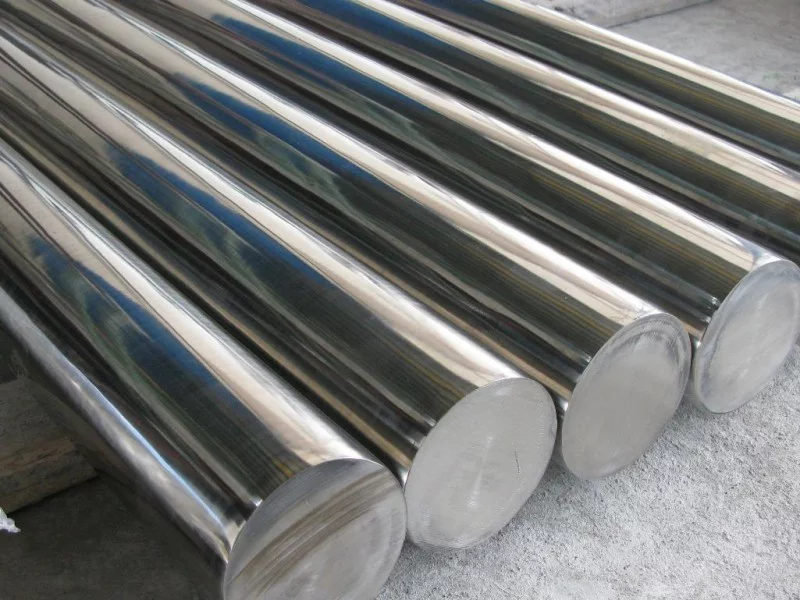
– It depends on the specific requirements. If high toughness and relatively low strength are required, 16MnCr5 may be a better choice. For parts that are subjected to higher loads and require higher strength, 20MnCr5 may be more appropriate.
Conclusion
– 16MnCr5 and 20MnCr5 are both brilliant alloy structural steels, but their differences in chemical composition and mechanical properties make them suitable for different application scenarios. Understanding these differences is critical to selecting the right material.
FAQs
What is the heat treatment process of 20MnCr5 steel?
The heat treatment of 20MnCr5 usually includes annealing, carburising, quenching and tempering. The annealing temperature is usually at 860-880°C, the carburising temperature is at 900-950°C, the quenching temperature is at 850-950°C and the tempering temperature is at 150-200°C.
16MnCr5 and 20MnCr5 steel mechanical properties?
Both steel has good mechanical properties. 16MnCr5 tensile strength of 880-1180 MPa, hardness ≤ 297HB; 20MnCr5 tensile strength of 1482 MPa, hardness of 357HB.
What factors should be considered when selecting 16MnCr5 or 20MnCr5 steel?
Consideration should be given to the working conditions of the part (e.g. load, speed, temperature), expected surface hardness and wear resistance, heat treatment conditions and equipment.
Are 16MnCr5 and 20MnCr5 steels easy to weld?
Both steels have good weldability, but welding may affect the hardness and toughness of the heat affected zone, so the welding process needs to be carefully selected.
Is there a big price difference between 16MnCr5 and 20MnCr5 steel?
The price is affected by many factors such as market supply and demand, raw material cost and processing difficulty, but usually 20MnCr5 may be slightly higher than 16MnCr5 due to its higher alloy content.