
Welcome to My Blog!
Before we dive into the content, I’d love for you to join me on my social media platforms where I share more insights, engage with the community, and post updates. Here’s how you can connect with me:
Facebook:https://www.facebook.com/profile.php?id=100087990137347
LinkedIn:https://www.linkedin.com/company/89825762/admin/dashboard/
YouTube:www.youtube.com/@carbonsteelsupply-kj9lw
TikTok:www.tiktok.com/@carbonsteelsupply
Now, let’s get started on our journey together. I hope you find the content here insightful, engaging, and valuable.
Introducción
In the world of modern manufacturing, tool steel material stands out as one of the most reliable and versatile choices for engineers, machinists, and production managers. Whether you’re shaping, cutting, stamping, or forming, your tool’s performance depends heavily on the material it’s made from.
This blog explores how tool steel material plays a foundational role in shaping manufacturing quality, cost-efficiency, and innovation.

The Fundamentals of Tool Steel Material
Tool steel refers to a group of carbon and alloy steels specially formulated for toolmaking. What sets tool steel apart is its unique combination of hardness, toughness, abrasion resistance, and resistance to deformation at elevated temperatures. These properties make it ideal for producing tools that must cut, shape, or mold other materials.
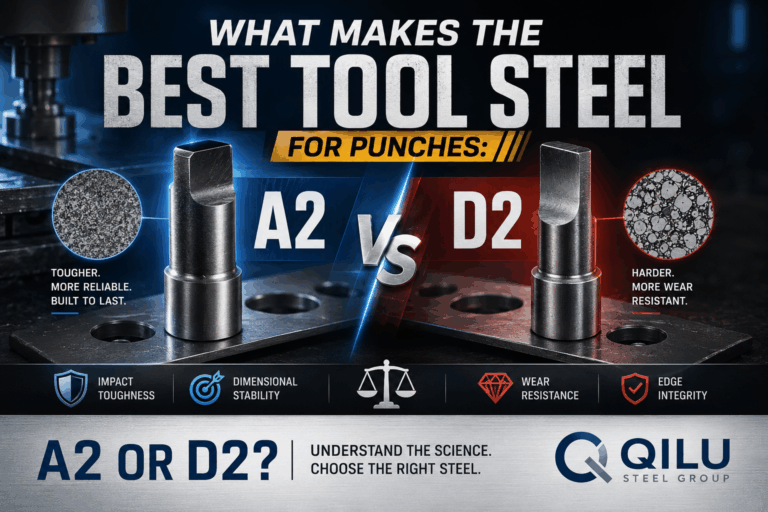
Unlike general-purpose steel, tool steel is optimized for wear-heavy and heat-intensive tasks. Common types include water-hardening, cold-work, hot-work, high-speed, and shock-resistant steels. Each type has its own application niche, balancing different performance metrics to suit specific tasks. For example, H13 is a hot-work steel prized for its thermal fatigue resistance, while D2 is known for its hardness and edge retention in cold forming.
Mechanical Properties That Define Performance
When selecting tool steel material, engineers evaluate several key mechanical properties to match the steel to the task. Hardness is often measured on the Rockwell scale (typically between 55 and 70 HRC), offering a snapshot of a material’s resistance to deformation. Toughness, another crucial trait, ensures the steel can absorb energy without cracking—essential in impact-heavy applications. Wear resistance is critical in abrasive settings like stamping and cutting, where edge longevity determines productivity. Heat resistance is vital in operations like die casting, where metals are subjected to cyclical thermal loads. Dimensional stability during heat treatment and machining also determines whether components will retain tight tolerances. All these properties come into play when choosing a steel grade.
Comparison Table: Tool Steel Material Performance Metrics
| Propiedad | Importance | Notes |
|---|---|---|
| Hardness (HRC) | Resistance to wear and deformation | Ranges from 55–70 HRC depending on steel type |
| Dureza | Resistance to cracking and chipping | Shock-resistant types like S7 are high in toughness |
| Resistencia al desgaste | Tool longevity in abrasive tasks | Cold-work types like D2 offer excellent wear life |
| Thermal Stability | Performance under heat and cooling cycles | Hot-work steels such as H13 excel here |
| Machinability | Ease of shaping and production | Varies by alloy; W-series is easier, M-series harder |
Real-World Applications of Tool Steel Material
Tool steel isn’t just theoretical—it’s applied daily across countless industries. In die casting and extrusion, hot-work steels like H13 and H11 maintain strength under repeated heating and cooling. Their resistance to thermal fatigue significantly increases tooling lifespan, reducing maintenance and changeovers. In injection molding, P20 and similar grades are often used to shape plastics. Their polishability and dimensional stability make them ideal for complex geometries. For cold forming, materials like A2 and D2 resist wear and retain sharp edges longer, making them top picks for stamping dies and shearing blades. Shock-resistant steels such as S7 shine in chisels and punches, absorbing impact forces without cracking. Even in aerospace or automotive industries, where precision and durability are paramount, high-speed steels like M2 play a central role in cutting operations.
Choosing the Right Tool Steel Material
Choosing the best steel for your application isn’t just about maximum hardness. It’s about balancing trade-offs. Start by analyzing your process: Will your tool be exposed to high temperatures? Is it forming or cutting abrasive materials? Does the application involve high shock loads? From there, consider wear resistance, toughness, and ease of machining. For example, if you need long wear life and excellent dimensional stability at high temperatures, H13 is often the go-to. If your application involves cold forming or cutting thin metal sheets, D2 provides edge retention and hardness. Budget constraints also play a role. While premium alloys offer high performance, they may require more complex heat treatment or be harder to machine, affecting overall cost.
Case Study: Tool Steel Material in High-Volume Production
A global automotive parts manufacturer transitioned from a general-purpose steel to D2 tool steel for a high-speed stamping operation. As a result, the average tool life increased by 45%, reducing line downtime and increasing batch consistency. The initial material cost rose by 20%, but the return on investment was achieved within six months due to lower replacement frequency and reduced labor interruptions. Similar outcomes have been observed in aerospace tooling, where high-speed steels like M4 retain hardness even under elevated operating temperatures—minimizing tool sharpening cycles.
Maximizing Performance Through Heat Treatment
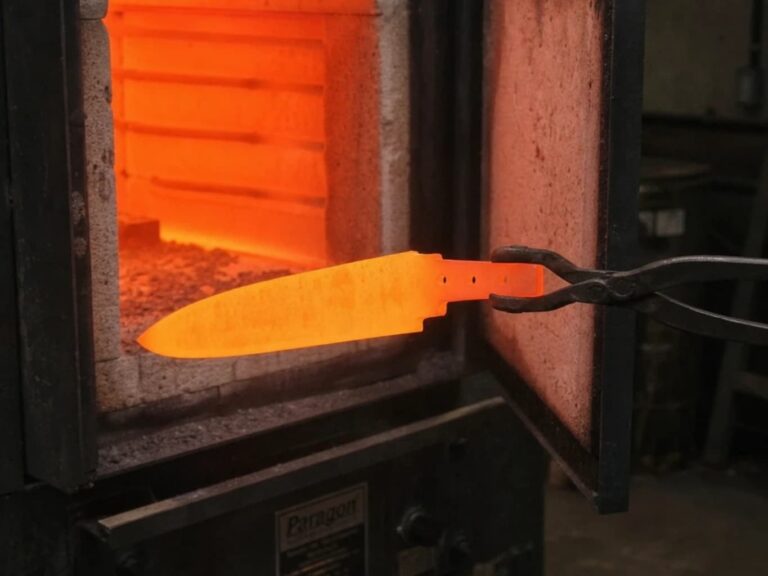
Tool steel’s performance isn’t fully realized until it’s heat-treated. This critical process modifies the microstructure to achieve desired hardness, toughness, and wear resistance. Heat treatment typically includes hardening (heating followed by rapid cooling), tempering (reheating to a moderate temperature), and sometimes cryogenic treatment to refine grain structure and increase dimensional stability. Incorrect heat treatment can lead to cracking, brittleness, or soft spots that compromise tool life. That’s why it’s essential to work with experienced metallurgical experts when planning tool steel heat treatment strategies.
Surface Treatments That Enhance Tool Steel Material
Even the best tool steel benefits from surface treatments. Nitriding, for example, adds a thin layer of hard nitrogen-rich compounds to improve surface hardness and wear resistance. PVD coatings like TiN or TiCN reduce friction and enhance cutting tool performance. Surface treatments can also improve corrosion resistance, especially important in humid or chemically reactive environments. When combined with the right tool steel base, these enhancements further extend operational life and performance reliability.


Cost-Benefit Analysis of Tool Steel Selection
While high-grade tool steel may come at a premium, it often yields cost savings over the long term. Increased tool life means fewer changeovers, less unplanned downtime, and more consistent part output. Better wear resistance reduces quality defects, which saves rework and scrap costs. Additionally, the right steel reduces labor costs through fewer adjustments and maintenance events. When you add in surface treatments and correct heat treatment, the total lifetime value of the tool increases significantly. For manufacturers committed to lean operations and quality assurance, investing in quality tool steel material is a smart strategy.
Conclusión
Tool steel material is more than just metal—it’s a performance asset. In modern manufacturing, where precision, uptime, and repeatability define success, choosing the right tool steel is a critical decision. Whether you’re producing high-volume automotive components, delicate electronics, or high-temperature castings, the right material selection shapes every outcome. Remember to evaluate your application conditions, engage with trusted suppliers, and consult metallurgical experts to make informed choices.
If you’re looking for guidance on selecting or sourcing tool steel materials, heat treatment strategies, or performance enhancement, contact us today. Our experienced engineers and technical advisors are here to help you elevate your manufacturing processes.
FAQ: Tool Steel Material Explained
Q: What is tool steel primarily used for?
Tool steel is used to manufacture cutting tools, dies, molds, and other components subjected to high stress and wear in manufacturing.
Q: How is tool steel different from stainless steel?
Tool steel is optimized for hardness and wear resistance, while stainless steel focuses on corrosion resistance and ductility.
Q: Can tool steel rust?
Yes, unless coated or alloyed for corrosion resistance, most tool steels can rust, especially if not properly stored.
Q: Is heat treatment always required for tool steel?
Yes, most tool steels need precise heat treatment to unlock their performance potential. Improper treatment can lead to poor performance.
Q: How do I know which tool steel to choose?
Evaluate your application’s needs: heat, shock, wear, and budget. Consulting a material expert can simplify the decision process.