Bem-vindo ao Meu Blog!
Antes de mergulharmos no conteúdo, EU adoraria que você se juntasse a mim em minhas plataformas de mídia social, onde compartilho mais insights, me envolva com a comunidade e publique atualizações. Veja como você pode se conectar comigo:
Facebook:https://www.facebook.com/profile.php?id=100087990137347
LinkedIn:https://www.linkedin.com/company/89825762/admin/dashboard/
YouTube:www.youtube.com/@carbonsteelsupply-kj9lw
TikTok:www.tiktok.com/@carbonsteelsupply
Agora, vamos começar nossa jornada juntos Espero que você ache o conteúdo aqui perspicaz, envolvente e valioso.
Índice
Introdução
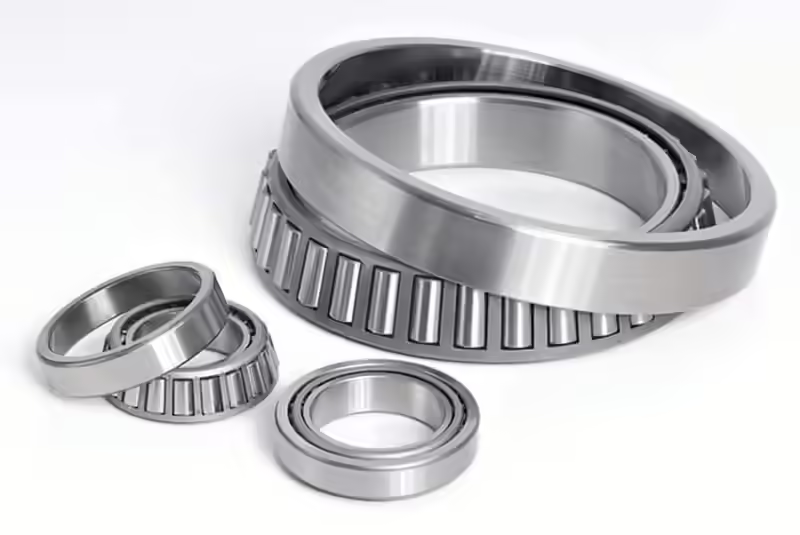
Bearing steel is a specialized type of steel designed for use in bearings, where high durability, wear resistance, and hardness are essential. Bearings are critical components in numerous industrial applications, including automotive, aerospace, machinery, and manufacturing. The effectiveness of bearings directly depends on the bearing steel properties, which determine their performance under extreme conditions such as high loads, friction, and temperature variations.
Understanding bearing steel properties is crucial for selecting the right grade for specific applications. Different grades of bearing steel exhibit variations in hardness, toughness, corrosion resistance, and load-bearing capacity. Choosing the right type of bearing steel ensures longevity, efficiency, and reliability in mechanical systems.
This guide explores the key bearing steel properties, compares different grades, and discusses their industrial applications. Whether you are in the automotive sector or heavy machinery manufacturing, knowing the right bearing steel grade can significantly impact operational efficiency and equipment lifespan.
Key Bearing Steel Properties
Hardness and wear resistance
One of the most important bearing steel properties is hardness. High hardness ensures that the bearing surface resists wear and maintains its structural integrity under constant friction and load. This is particularly important in high-speed applications where rolling elements continuously move against raceways.
Toughness and impact resistance
While hardness is essential, bearing steel must also have sufficient toughness to prevent cracking or breaking under impact. Toughness helps the material absorb shocks and sudden load changes, making it suitable for heavy industrial applications such as mining and construction machinery.
Corrosion resistance
Bearings exposed to moisture, chemicals, or extreme environmental conditions require corrosion-resistant steel. Some bearing steel grades include chromium or other alloying elements that enhance their resistance to rust and oxidation, ensuring longer service life.
Fatigue strength
Bearings operate under repeated stress cycles, making fatigue strength another critical property of bearing steel. High fatigue strength prevents premature failure due to material fatigue, which can occur in high-speed and heavy-load applications.
Thermal stability
In high-temperature environments, bearing steel must maintain its mechanical properties without excessive expansion, softening, or structural changes. Thermal stability ensures the reliability of bearings used in industries such as aerospace, automotive engines, and power generation.
Common Grades of Bearing Steel and Their Uses
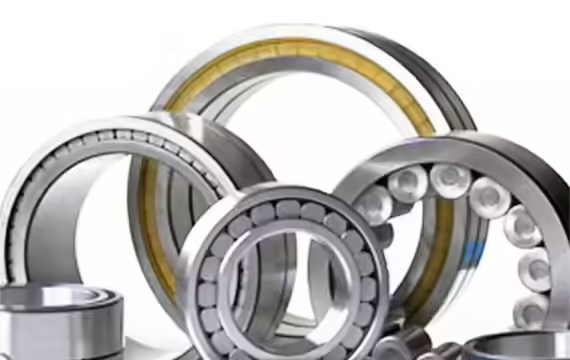

Bearing steels are classified into different grades based on their chemical composition and mechanical properties. Some of the most commonly used grades include high-carbon chromium steels, stainless bearing steels, and case-hardened bearing steels.
High-carbon chromium bearing steel (e.g., 52100)
This is the most widely used bearing steel type, known for its high hardness, wear resistance, and good fatigue strength. It is ideal for rolling-element bearings and is commonly used in automotive and industrial applications.
Stainless bearing steel (e.g., 440C)
Stainless bearing steels offer excellent corrosion resistance while maintaining good hardness and wear resistance. These steels are used in applications where exposure to moisture or chemicals is a concern, such as marine and food processing industries.
Case-hardened bearing steel (e.g., 8620)
This type of bearing steel undergoes a case-hardening process to achieve a tough core with a hard outer surface. It is ideal for bearings subjected to high impact and heavy loads, such as construction machinery and aerospace components.
Comparison of Bearing Steel Properties by Grade
| Bearing Steel Grade | Dureza | Wear Resistance | Resistência à corrosão | Fatigue Strength | Aplicações Comuns |
|---|---|---|---|---|---|
| 52100 (High-Carbon Chromium) | Alto | Excelente | Baixo | Alto | Automotive, industrial machinery |
| 440C (Stainless) | Medium-High | Good | Excelente | Médio | Marine, food processing, medical equipment |
| 8620 (Case-Hardened) | Médio | Good | Moderado | Alto | Aerospace, heavy machinery |
| M50 (High-Speed Bearing Steel) | Alto | Excelente | Baixo | Very High | Aerospace, turbine engines |
| 630 (Martensitic Stainless) | Médio | Good | Very High | Médio | Chemical processing, marine applications |
Industrial Applications of Different Bearing Steel Grades
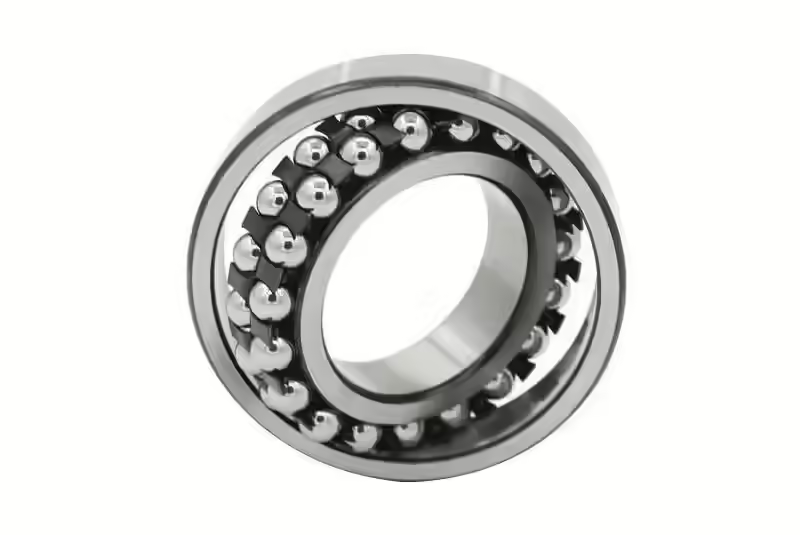
Indústria automóvel
In the automotive sector, bearing steel properties play a critical role in ensuring the durability and performance of engine components, wheel hubs, and transmission systems. High-carbon chromium steel is widely used due to its excellent hardness and fatigue resistance.
Aerospace industry
Aircraft engines and landing gear systems require high-performance bearings that can withstand extreme temperatures and mechanical stress. High-speed bearing steels like M50 are preferred for their superior thermal stability and fatigue resistance.
Heavy machinery and construction
Excavators, cranes, and other heavy equipment rely on durable bearings made from case-hardened or high-carbon chromium steel. These materials provide the necessary strength to handle extreme loads and rough operating conditions.
Marine and food processing
For applications where corrosion resistance is essential, stainless bearing steels like 440C and 630 are commonly used. These grades prevent rust formation in marine environments and maintain hygiene in food processing equipment.
Conclusão
Selecting the right bearing steel grade is essential for ensuring optimal performance in industrial applications. The bearing steel properties, including hardness, wear resistance, corrosion resistance, and fatigue strength, determine the lifespan and reliability of bearings in various sectors.
High-carbon chromium steels like 52100 are ideal for general industrial applications, while stainless bearing steels provide corrosion resistance for marine and food processing industries. Case-hardened and high-speed bearing steels cater to extreme load and temperature conditions in aerospace and heavy machinery.
By understanding the key bearing steel properties and their applications, industries can make informed decisions when selecting materials for their specific needs. Choosing the right grade enhances efficiency, reduces maintenance costs, and ensures the longevity of critical mechanical components.
FAQ
What are the most important bearing steel properties to consider?
The most important bearing steel properties to consider are hardness, wear resistance, corrosion resistance, fatigue strength, and thermal stability. These properties ensure the bearing can handle mechanical stress, high-speed rotation, and harsh environmental conditions.
How does corrosion resistance affect bearing steel performance?
Corrosion resistance is crucial for applications where bearings are exposed to moisture, chemicals, or extreme environmental conditions. Stainless bearing steels, such as 440C and 630, offer excellent protection against rust and oxidation, ensuring a longer lifespan in harsh environments.
Which bearing steel grade is best for high-temperature applications?
For high-temperature applications, M50 high-speed bearing steel is commonly used due to its superior thermal stability and fatigue resistance. This makes it suitable for aerospace engines, turbine bearings, and other extreme-temperature environments.
Can case-hardened bearing steel handle heavy loads?
Yes, case-hardened bearing steel, such as 8620, is designed to handle heavy loads and high-impact applications. Its tough core and hard outer layer make it suitable for construction equipment, heavy machinery, and aerospace components.