
Bem-vindo ao Meu Blog!
Before we dive into the content, I’d love for you to join me on my social media platforms, where I share more insights, engage with the community, and post updates. Here’s how you can connect with me:
Facebook: https://www.facebook.com/profile.php?id=100087990137347
LinkedIn: https://www.linkedin.com/company/89825762/admin/dashboard/
YouTube: www.youtube.com/@carbonsteelsupply-kj9lw
TikTok: www.tiktok.com/@carbonsteelsupply
Agora, vamos começar nossa jornada juntos Espero que você ache o conteúdo aqui perspicaz, envolvente e valioso.
Índice
What is steel angle?
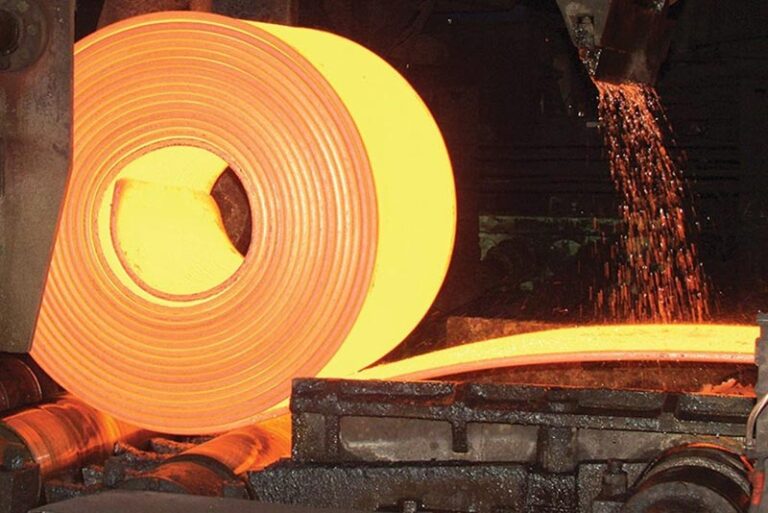
Angle steel is a long steel bar with a right-angle “L”-shaped cross-section, a type of angle steel (structural profile). It consists of two perpendicular sides (called “legs” or “wings”) and is typically produced by hot rolling or cold bending. It is widely used for structural support, connection, and reinforcement in construction, machinery, power generation, bridges, warehousing, and other fields.

Classification of steel angles
By side length–Equal angle steel/Unequal angle steel
By process–Hot rolled angle/cold-bent steel angle
By material—carbon steel/alloy steel/stainless steel/weathering steel
By surface treatment—black surface/Galvanized/Paint spraying
By usage—structure/machinery/electricity/decoration, etc.
Vantagens de steel angle
High structural strength: The L-shaped cross-section has good bending and compression resistance and is suitable for load-bearing structures.
Convenient connection: The right-angle design facilitates welding, bolting, or riveting and is suitable for a variety of installation methods.
Low cost: Mature production technology, low raw material price, economical, and practical.
Flexible processing: Can be cut, drilled, and bent to meet different engineering needs.
Wide range of uses: Applicable to many fields such as construction, machinery, electricity, warehousing, home, etc.
Good stability: The L-shaped structure enhances overall rigidity and reduces the risk of deformation.
Various specifications: equilateral/unequal side and various thicknesses are available to meet different force requirements.
Optional corrosion resistance: Galvanized or stainless steel materials provide extra corrosion resistance to adapt to harsh environments.
Quick installation: Standardized size and shape simplify the construction process and improve efficiency.
Lightweight design (cold-bent angle steel): Lighter than solid steel, easier to transport and handle.
Limitations of Angle Steel
Limited load-bearing capacity: Compared with I-beams and H-beams, it has weaker bending and torsional properties and is not suitable for super-large span or heavy-load structures.
Insufficient stability: It is prone to lateral bending when used alone and requires additional support or connection reinforcement.
Low cross-section efficiency: The L-section material is unevenly distributed, and its strength is lower than that of closed-section profiles (such as square tubes) at the same weight.
Complex connection: When multiple components intersect (such as tee connections), node processing is more complicated and may require additional welded steel plates.
Poor aesthetics: The exposed corners are not clean enough and often require additional covering in decorative situations.
Corrosion-prone (carbon steel): Ordinary carbon steel angles need to be galvanized or painted; otherwise, they will easily rust in a humid environment.
Low strength of cold-bent angle steel: The bearing capacity of angle steel produced by the cold rolling/cold bending process is significantly lower than that of hot-rolled angle steel.
Large space occupation: The L-shaped convex structure may affect the equipment layout or space utilization.
Noise transmission: Direct metal contact is prone to vibration and noise, so anti-vibration washers are required.
Standard restrictions: Special sizes or materials need to be customized, which increases costs and delivery cycles.
Application scenarios of angle steel
Building structures: Used for beam-column connections, roof trusses and temporary support structures in factories and warehouses
Mechanical equipment: As support parts for equipment bases, racks, guardrails, and conveyor frames.
Power communication: Building support structures for transmission towers, communication base stations, and cable trays.
Warehouse shelves: Upright and crossbar connectors for heavy and medium duty racking.
Bridge engineering: Used for auxiliary support, maintenance platform, and connection reinforcement of bridges.
Municipal facilities: Make street light pole bases, traffic sign brackets, and guardrail fixings.
Home DIY: Assemble practical furniture such as shelves, bookcases, workbenches, and flower stands.
Vehicles and ships: As a reinforcement structure for truck compartment frames and ship bulkheads.
Agricultural facilities: Building greenhouse frames, breeding pens, and agricultural machinery brackets.
Decoration and renovation: Used for ceiling keels, partition wall frames, and supporting structures for art installations.

Conclusão
Angle steel is the basic structural profile with an L-shaped cross-section, which has the characteristics of convenient connection and high cost performance. It is divided into equilateral/unequal-sided and hot-rolled/cold-bent types and is suitable for load-bearing structures such as building frames, equipment supports, and shelves.
Although it has some shortcomings, such as limited load-bearing capacity and easy rust, it is still widely used in industrial and civil fields through reasonable selection and is one of the most commonly used engineering materials.
FAQ
What is the difference between angle steel and square tube?
Angle steel: L-shaped open section, easy to connect but weak torsion resistance.
Square tube: Closed section, stronger bending and torsion resistance, but higher cost.
Will angle steel rust? How to prevent rust?
Carbon steel angle is easy to rust and needs to be galvanized, painted, or replaced with stainless steel.
Angle steel or channel steel, which is stronger?
Channel steel (U-shaped) has better bending resistance, and it is suitable for lateral force. Angle steel is lighter and easier to connect, suitable for support and reinforcement.