
Bem-vindo ao Meu Blog!
Antes de mergulharmos no conteúdo, EU adoraria que você se juntasse a mim em minhas plataformas de mídia social, onde compartilho mais insights, me envolva com a comunidade e publique atualizações. Veja como você pode se conectar comigo:
Facebook:https://www.facebook.com/profile.php?id=100087990137347
LinkedIn:https://www.linkedin.com/company/89825762/admin/dashboard/
YouTube:www.youtube.com/@carbonsteelsupply-kj9lw
TikTok:www.tiktok.com/@carbonsteelsupply
Agora, vamos começar nossa jornada juntos Espero que você ache o conteúdo aqui perspicaz, envolvente e valioso.
Introdução
Mould steel plays a crucial role in various manufacturing industries, serving as the backbone for creating molds used in the production of everything from automotive parts to household goods. Understanding the manufacturing processes behind mould steel is essential for ensuring high-quality production, durability, and precision in your operations.
In this guide, we will explore the different stages of mould steel manufacture, covering material selection, refining processes, heat treatments, and more. By the end, you will have a comprehensive understanding of how mould steel is made, the various types available, and their applications in modern manufacturing. Whether you’re a manufacturer looking to optimize production or a business owner seeking insights, this guide offers valuable knowledge on mould steel manufacturing processes.
The Importance of Mould Steel in Manufacturing
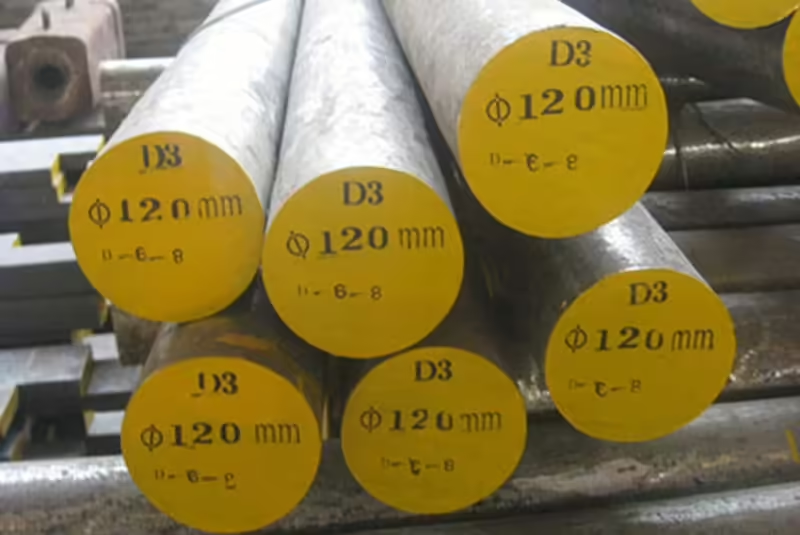
1. What is Mould Steel and Why is it Essential?
Mould steel is a special category of steel used to create molds that form metal, plastic, rubber, or other materials into specific shapes. These molds must withstand high pressure, heat, and wear, making the selection of mould steel critical to a successful manufacturing process. The material must exhibit properties such as hardness, toughness, and resistance to deformation to maintain long-term precision in production.
The most common uses of mould steel include:
- Injection molds: Used in plastic manufacturing.
- Die casting molds: Essential for shaping molten metals.
- Extrusion molds: For forming products with a fixed cross-sectional profile.
- Compression molds: Widely used in automotive and aerospace industries.
2. Types of Mould Steel Used in Manufacturing
Several types of steel are used in mould manufacturing, each chosen based on specific applications. The most common types of mould steel include:
- P20 Steel: A versatile material often used in plastic injection molds.
- H13 Steel: Known for its high-temperature resistance, ideal for die-casting molds.
- 420 Stainless Steel: Offers excellent corrosion resistance, making it suitable for medical and food packaging molds.
- S7 Tool Steel: Combines impact resistance and toughness, often used in blow molding and die-casting molds.
The Manufacturing Process of Mould Steel
Melting and Refining
The first step in the manufacture of mould steel is melting the raw materials, which typically include iron ore, chromium, manganese, and other alloying elements. This process can be done using various methods such as Electric Arc Furnace (EAF), Electro-Slag Remelting (ESR), Vacuum Induction Melting (VIM), and Continuous Casting System (CCS) .
Forging and Hot Working
Once the steel has reached its liquid state, it is poured into molds to cool and solidify into ingots. These ingots are then forged and hot worked to achieve the desired shape and mechanical properties. Hot working improves the steel’s grain structure and helps to break down any large carbides that could affect the material’s performance .
Tratamento Térmico
Heat treatment is a critical step in the manufacture of mould steel. It involves heating the steel to a specific temperature and then cooling it at a controlled rate. This process alters the steel’s microstructure, resulting in improved hardness, strength, and toughness .
Machining and Finishing
After heat treatment, the mould steel is machined to the precise dimensions required for its intended application. This may involve turning, milling, drilling, and grinding operations. The final step is to finish the surface to a high standard, ensuring that the mould or die will function effectively during use .
Types of Mould Steel and Their Applications


Cold Work Die Steel
Cold work die steel is used in applications where the material being formed is at room temperature. These steels are known for their high hardness, wear resistance, and compressive strength. They are commonly used in the manufacturing of automotive components, electronics, and other precision parts .
Hot Work Die Steel
Hot work die steel is designed for applications where the material being formed is heated. These steels have excellent heat resistance and toughness, making them suitable for forging, die casting, and heat treating processes .
Plastic Mould Steel
Plastic mould steel is used in the production of plastic parts and components. It offers high corrosion resistance and is ideal for high-volume production environments. This type of mould steel is commonly used in the automotive, aerospace, and consumer goods industries .
Aço Molde Manufacturing Standards and Grades
International Standards
Mould steel manufacturing is governed by international standards that ensure the quality and consistency of the material. These standards define the chemical composition, mechanical properties, and heat treatment requirements for different types of mould steel .
Common Grades
Some of the most common grades of mould steel include P20, H13, 1.2311, 1.2738, and 1.2083. Each grade has its own unique properties and is suitable for specific applications .
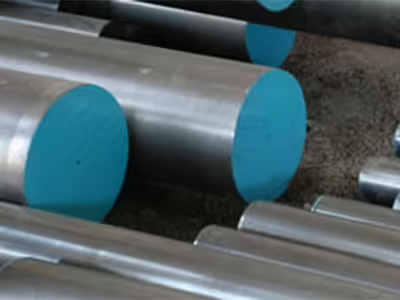
A Comparative Analysis of Mould Steel Grades
| Grau | Dureza | Toughness | Wear Resistance | Thermal Fatigue Resistance | Maquinabilidade |
|---|---|---|---|---|---|
| P20 | Médio | Alto | Good | Fair | Good |
| H13 | Alto | Very High | Excelente | Good | Fair |
| 1.2311 | Médio | Alto | Very Good | Excelente | Good |
| 1.2738 | Alto | Very High | Excelente | Excelente | Fair |
| 1.2083 | Médio | Alto | Good | Fair | Excelente |
Conclusão
Mould steel manufacture is a complex process that involves melting, forging, heat treatment, and machining to produce a material with exceptional properties for mould making. The different types of mould steel, such as cold work, hot work, and plastic mould steel, serve various industries and applications, demonstrating the versatility and importance of this material in modern manufacturing. As the industry continues to evolve, advancements in technology and processes will further enhance the quality and performance of mould steel.
FAQ
What is mould steel manufacture?
Mould steel manufacture refers to the process of producing specialized steel used to create molds for shaping materials such as plastics, metals, and rubber. The process involves selecting high-quality raw materials, refining, casting, forging, and heat treating the steel to ensure it has the necessary strength, hardness, and durability for molding applications.
What types of steel are used in mould steel manufacture?
Several types of steel are commonly used in mould steel manufacture, including P20 steel, H13 steel, 420 stainless steel, and S7 tool steel. The choice of steel depends on the specific requirements of the mold, such as its ability to withstand heat, pressure, and wear during the production process.
How does heat treatment affect mould steel manufacture?
Heat treatment is a crucial step in mould steel manufacture. Processes like hardening and tempering significantly improve the steel’s properties, enhancing its hardness, toughness, and resistance to wear. Proper heat treatment ensures that the mould steel can perform under the high-pressure and high-temperature conditions found in many manufacturing environments.
Why is quality control important in mould steel manufacture?
Quality control is essential in mould steel manufacture to ensure that the steel meets the required specifications for strength, durability, and precision. Factors such as chemical composition, grain structure, hardness, and surface finish are closely monitored throughout the manufacturing process to produce high-quality mould steel that can perform reliably in industrial applications.
What industries benefit from mould steel manufacture?
Many industries benefit from mould steel manufacture, including automotive, aerospace, medical device production, packaging, and consumer goods. Mould steel is critical for creating high-precision molds used in injection molding, die casting, and extrusion processes, which are key to producing a wide variety of products.