Welcome to My Blog!
Before we dive into the content, I’d love for you to join me on my social media platforms where I share more insights, engage with the community, and post updates. Here’s how you can connect with me:
Facebook:https://www.facebook.com/profile.php?id=100087990137347
LinkedIn:https://www.linkedin.com/company/89825762/admin/dashboard/
YouTube:www.youtube.com/@carbonsteelsupply-kj9lw
TikTok:www.tiktok.com/@carbonsteelsupply
Now, let’s get started on our journey together. I hope you find the content here insightful, engaging, and valuable.
Table of Contents
Introduction
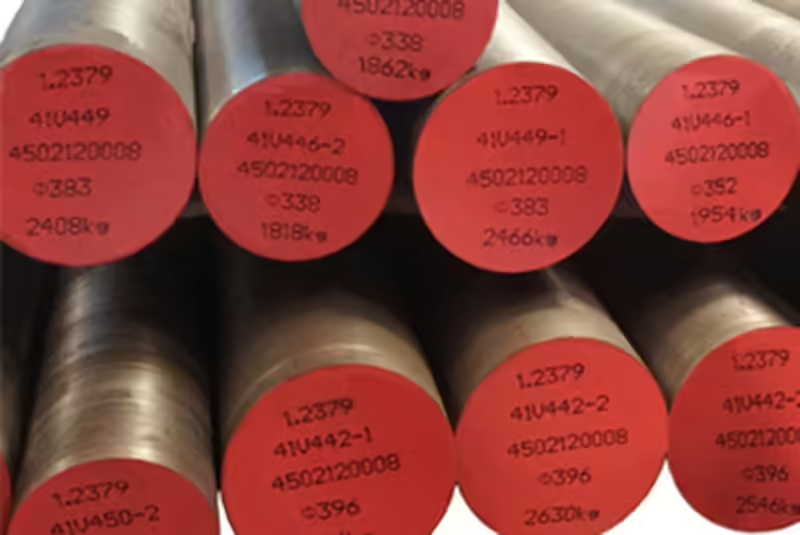
Tool steel is a crucial material used in manufacturing, machining, and engineering applications due to its hardness, resistance to wear, and ability to retain a sharp cutting edge. Different types of tool steel are designed for specific applications, but some grades are more widely used than others.
This guide explores the most common tool steel, including its properties, applications, and advantages. Whether you’re involved in manufacturing, machining, or industrial toolmaking, understanding the most common tool steel will help you select the right material for your needs.
Understanding Tool Steel
What Is Tool Steel?
Tool steel is a type of carbon and alloy steel designed to be used for cutting, shaping, and forming materials. It is characterized by:
- High hardness and wear resistance
- Excellent toughness
- Good heat resistance and ability to maintain hardness at high temperatures
- Resistance to deformation and abrasion
Tool steel is commonly used in tools such as drills, saws, dies, punches, and cutting instruments. Different grades and classifications are available depending on the intended application.
Classification of Tool Steel
Tool steel is categorized into different groups based on its composition and application. The main categories include:
- High-Speed Steel (HSS): Used for cutting tools and machining applications
- Cold-Work Tool Steel: Used for tools operating at room temperature
- Hot-Work Tool Steel: Designed for tools that withstand high temperatures
- Shock-Resistant Tool Steel: Ideal for impact-resistant tools
- Water-Hardening Tool Steel: A cost-effective option for general-purpose tools
- Oil-Hardening and Air-Hardening Tool Steel: Designed for enhanced toughness and minimal distortion during heat treatment
Among these, some tool steel grades stand out as the most commonly used due to their versatility, performance, and cost-effectiveness.
The Most Common Tool Steel and Its Properties

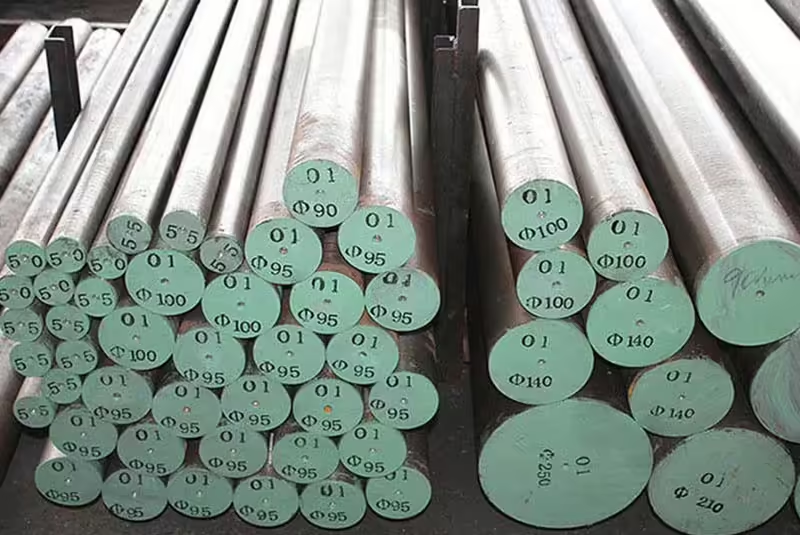
AISI D2: The Most Common Cold-Work Tool Steel
AISI D2 is one of the most common tool steel grades used in cold-work applications. It is a high-carbon, high-chromium tool steel that offers excellent wear resistance and durability.
Properties of AISI D2:
- High hardness and wear resistance
- Good toughness and durability
- Air-hardening capability, reducing distortion
- Suitable for dies, punches, and cutting tools
AISI D2 is widely used in industries that require high precision and resistance to abrasion, making it a popular choice for toolmakers.
AISI H13: The Most Common Hot-Work Tool Steel
AISI H13 is the most widely used tool steel for high-temperature applications. It offers excellent heat resistance, toughness, and thermal fatigue resistance.
Properties of AISI H13:
- High-temperature stability
- Good impact resistance
- Excellent toughness and ductility
- Ideal for forging and die-casting applications
H13 is commonly used in the aerospace, automotive, and manufacturing industries for dies, molds, and high-temperature cutting tools.
AISI O1: The Most Common Oil-Hardening Tool Steel
AISI O1 is a widely used oil-hardening tool steel known for its excellent machinability and toughness. It is ideal for general-purpose tools and precision machining.
Properties of AISI O1:
- Good wear resistance
- Easy to machine and sharpen
- Oil-hardening capability
- Ideal for knives, punches, and dies
O1 tool steel is a preferred choice for small tool manufacturers and precision toolmakers.
AISI S7: The Most Common Shock-Resistant Tool Steel
AISI S7 is a shock-resistant tool steel used for applications that require high impact resistance and durability. It is often used for punches, chisels, and hammers.
Properties of AISI S7:
- Excellent impact resistance
- High toughness and durability
- Good heat resistance
- Ideal for tools subjected to heavy stress
S7 is commonly used in industrial and construction settings where tools must endure extreme forces.
Table: Comparison of the Most Common Tool Steel
| Tool Steel Grade | Type | Hardness (HRC) | Wear Resistance | Toughness | Common Applications |
|---|---|---|---|---|---|
| AISI D2 | Cold-Work | 58-62 | High | Moderate | Dies, punches, cutting tools |
| AISI H13 | Hot-Work | 48-52 | Moderate | High | Forging dies, molds, extrusion tools |
| AISI O1 | Oil-Hardening | 57-62 | Moderate | High | Knives, punches, precision tools |
| AISI S7 | Shock-Resistant | 52-56 | Moderate | Very High | Hammers, chisels, impact tools |
This table highlights the key properties of the most common tool steel grades and their best-use scenarios.
Choosing the Right Tool Steel for Your Application
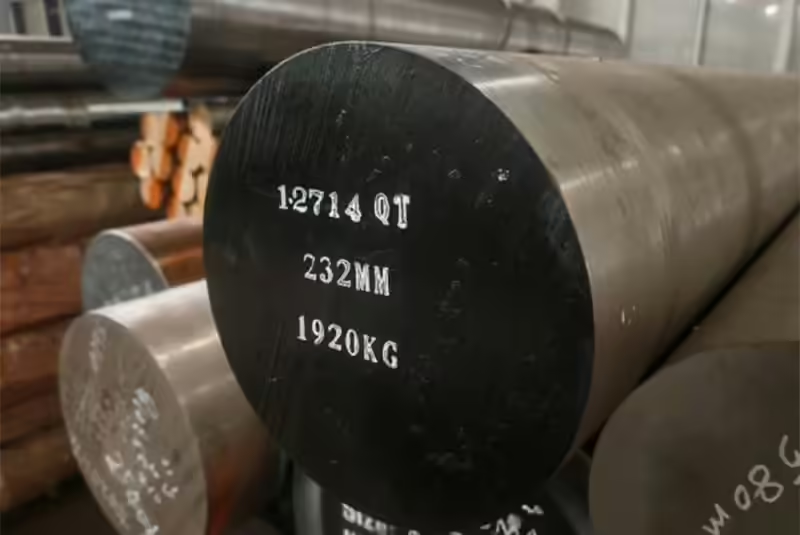
When selecting the most common tool steel for your project, consider the following factors:
Application Requirements
Different tool steel grades are suited for specific applications. For example, if you need a tool that withstands high temperatures, H13 is the best choice, whereas D2 is ideal for abrasion resistance.
Wear Resistance vs. Toughness
If your tools experience high wear, D2 or O1 may be the best options. However, for impact resistance, S7 is the superior choice.
Heat Treatment and Machinability
Some tool steels require complex heat treatment, while others, like O1, are easier to machine and harden.
Cost and Availability
While high-performance tool steels exist, selecting a commonly available and cost-effective option like O1 or D2 may be more practical for many applications.
Conclusion
The most common tool steel grades—AISI D2, H13, O1, and S7—are widely used due to their durability, performance, and versatility. Each grade serves a specific purpose, from cold-work applications to high-temperature forging and shock-resistant tools.
Understanding the properties and applications of these tool steel grades can help manufacturers, machinists, and engineers choose the best material for their needs. Whether you require wear resistance, toughness, or machinability, selecting the right tool steel will enhance the efficiency and longevity of your tools.
FAQ
What is the most common tool steel for knives?
AISI D2 is one of the most popular tool steels for knives due to its high wear resistance and ability to maintain a sharp edge.
Which tool steel is best for high-temperature applications?
AISI H13 is the best tool steel for high-temperature applications, making it ideal for forging, die-casting, and extrusion tools.
What tool steel is easiest to machine?
AISI O1 is one of the easiest tool steels to machine and is widely used for precision tools and general machining applications.
Can tool steel be hardened at home?
Yes, some tool steels like O1 and W1 can be hardened at home using simple oil or water quenching methods. However, professional heat treatment is recommended for optimal results.
How do I prevent tool steel from rusting?
To prevent rust, store tool steel in a dry environment, apply protective coatings, and regularly oil the surface if exposed to moisture.