Welcome to My Blog!
Before we dive into the content, I’d love for you to join me on my social media platforms where I share more insights, engage with the community, and post updates. Here’s how you can connect with me:
Facebook:https://www.facebook.com/profile.php?id=100087990137347
LinkedIn:https://www.linkedin.com/company/89825762/admin/dashboard/
YouTube:www.youtube.com/@carbonsteelsupply-kj9lw
TikTok:www.tiktok.com/@carbonsteelsupply
Now, let’s get started on our journey together. I hope you find the content here insightful, engaging, and valuable.
Table of Contents
Introduction
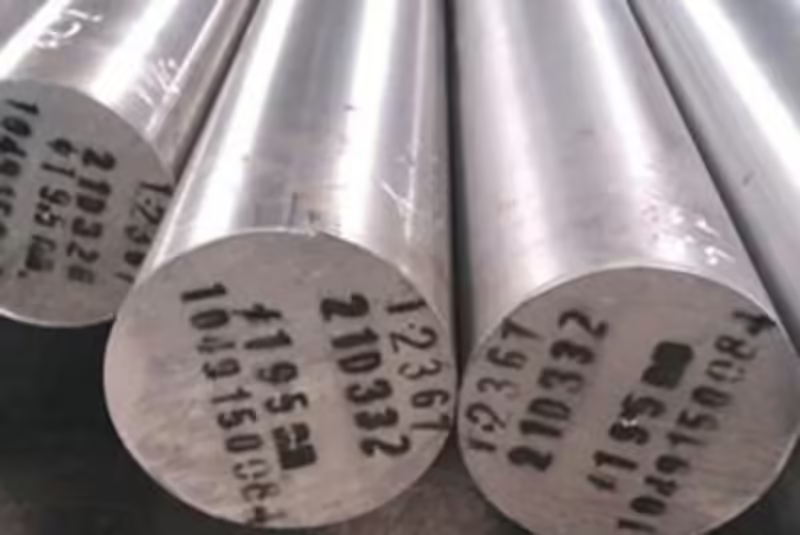
Tool steel is a type of steel that is used to make tools. It is known for its high hardness, strength, and wear resistance. Tool steel hardness is a critical property that determines the performance of a tool. The hardness of tool steel is measured using a variety of methods, including the Rockwell hardness test, the Vickers hardness test, and the Brinell hardness test.
Tool steel hardness is affected by a number of factors, including the chemical composition of the steel, the heat treatment process, and the microstructure of the steel. The chemical composition of tool steel can be adjusted to achieve different levels of hardness. For example, tool steels with higher carbon content tend to be harder.
The heat treatment process can also be used to increase the hardness of tool steel. This is typically done by heating the steel to a high temperature and then cooling it rapidly. This process is known as quenching. After quenching, the steel is often tempered to reduce its brittleness.
The microstructure of tool steel can also affect its hardness. The microstructure of steel is determined by the size and shape of the grains that make up the steel. Tool steels with finer grain sizes tend to be harder.
The Importance of Tool Steel Hardness
Tool steel hardness is important because it affects the performance of a tool in a number of ways. Harder tools are more resistant to wear and deformation. This means that they will last longer and perform better.
Tool steel hardness also affects the cutting ability of a tool. Harder tools can cut more material and can cut at higher speeds. This is important for machining applications where productivity is important.
However, tool steel hardness is not the only important property of a tool. Other important properties include toughness, strength, and wear resistance. The best tool steel for a particular application will depend on the specific requirements of the application.
Factors Affecting Tool Steel Hardness
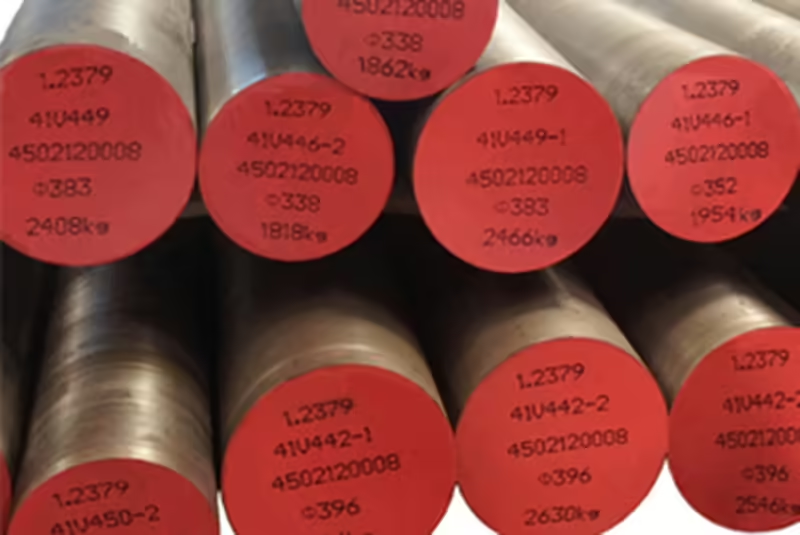

Chemical Composition and Tool Steel Hardness
The chemical composition of tool steel has a significant impact on its hardness. The main alloying elements that affect hardness are carbon, chromium, molybdenum, vanadium, and tungsten.
- Carbon: Carbon is the most important alloying element in tool steel. It increases the hardness and strength of the steel.
- Chromium: Chromium increases the hardenability and wear resistance of the steel.
- Molybdenum: Molybdenum increases the hardenability, toughness, and high-temperature strength of the steel.
- Vanadium: Vanadium increases the wear resistance and toughness of the steel.
- Tungsten: Tungsten increases the hardness and high-temperature strength of the steel.
Heat Treatment and Tool Steel Hardness
Heat treatment is a critical process that is used to achieve the desired hardness in tool steel. The heat treatment process typically involves heating the steel to a high temperature, holding it at that temperature for a period of time, and then cooling it rapidly. This process is known as quenching.
After quenching, the steel is often tempered to reduce its brittleness. Tempering is a process of heating the steel to a lower temperature and holding it at that temperature for a period of time.
Microstructure and Tool Steel Hardness
The microstructure of tool steel also affects its hardness. The microstructure of steel is determined by the size and shape of the grains that make up the steel. Tool steels with finer grain sizes tend to be harder.
The microstructure of tool steel can be controlled by the heat treatment process. By carefully controlling the heating and cooling rates, it is possible to produce tool steels with a variety of microstructures.
Tool Steel Hardness Testing Methods


There are a number of different methods for testing the hardness of tool steel. The most common methods are:
- Rockwell hardness test: The Rockwell hardness test is a widely used method for measuring the hardness of tool steel. The test involves pressing a hardened steel ball or diamond cone into the surface of the steel and measuring the depth of the indentation.
- Vickers hardness test: The Vickers hardness test is another common method for measuring the hardness of tool steel. The test involves pressing a diamond pyramid into the surface of the steel and measuring the size of the indentation.
- Brinell hardness test: The Brinell hardness test is a less common method for measuring the hardness of tool steel. The test involves pressing a hardened steel ball into the surface of the steel and measuring the diameter of the indentation.
Tool Steel Hardness Conversion Table
The following table provides a conversion between different tool steel hardness scales:
| Rockwell C (HRC) | Vickers (HV) | Brinell (HB) |
|---|---|---|
| 20 | 230 | 220 |
| 30 | 300 | 280 |
| 40 | 380 | 360 |
| 50 | 480 | 450 |
| 60 | 600 | 570 |
| 65 | 700 | 670 |
Applications of Tool Steel Based on Hardness

Tool steel is used in a wide variety of applications, depending on the specific hardness requirements. Some common applications include:
- Cutting tools: Tool steel is used to make a variety of cutting tools, such as drills, taps, dies, and milling cutters.
- Dies and molds: Tool steel is used to make dies and molds for a variety of manufacturing processes, such as forging, casting, and plastic injection molding.
- Wear parts: Tool steel is used to make wear parts for a variety of applications, such as gears, bearings, and cams.
- High-strength structural components: Tool steel is used to make high-strength structural components for a variety of applications, such as aircraft landing gear and automotive suspension components.
Conclusion
Tool steel hardness is a critical property that affects the performance of a tool. The hardness of tool steel is affected by a number of factors, including the chemical composition of the steel, the heat treatment process, and the microstructure of the steel. There are a number of different methods for testing the hardness of tool steel. Tool steel is used in a wide variety of applications, depending on the specific hardness requirements.
FAQ
What is the hardest tool steel?
The hardest tool steel is typically considered to be high-speed steel (HSS). HSS can achieve hardness levels of up to 70 HRC.
How is tool steel hardness measured?
Tool steel hardness is measured using a variety of methods, including the Rockwell hardness test, the Vickers hardness test, and the Brinell hardness test.
What factors affect tool steel hardness?
Tool steel hardness is affected by a number of factors, including the chemical composition of the steel, the heat treatment process, and the microstructure of the steel.
Why is tool steel hardness important?
Tool steel hardness is important because it affects the performance of a tool in a number of ways. Harder tools are more resistant to wear and deformation. This means that they will last longer and perform better.