Walk into any fabrication shop, structural steel yard, or heavy equipment manufacturing facility, and you will find stacks of mild carbon steel waiting for processing. Among the dozens of available metal designations, one standard ASTM specification constantly dominates project blueprints. Because of its exceptional balance of affordability, strength, and workability, this structural grade has become the industry’s default choice for thousands of structural projects worldwide.
However, its immense popularity often leads to a dangerous assumption on the job site: that it is suitable for every single engineering project. When specifying materials for critical load-bearing assemblies, procurement managers and engineers must move beyond basic assumptions. Understanding the boundaries of the material ensures structural safety while optimizing production budgets. Before reviewing where this metal fits best on the shop floor, establishing a baseline understanding of its core metallurgy through a comprehensive A36 steel properties guide is an essential step for any engineering team. Armed with this knowledge, evaluating the most successful A36 steel applications becomes a matter of balancing structural requirements with manufacturing efficiency.
Table of Contents
Common A36 Steel Applications
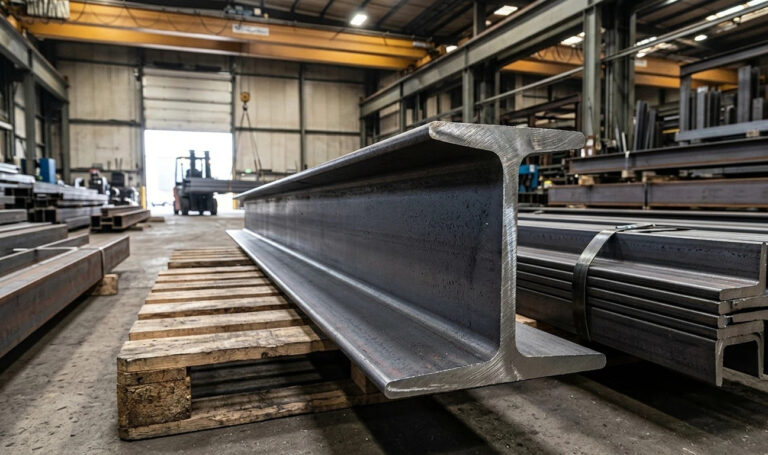
Civil engineering projects require a thorough understanding of where these A36 steel applications yield the highest return on investment. When asking what is A36 steel used for in modern infrastructure, the answer lies in the skeleton of our built environment. This low-carbon grade is the primary material used for manufacturing I-beams, wide-flange beams, structural channels, and steel angles.
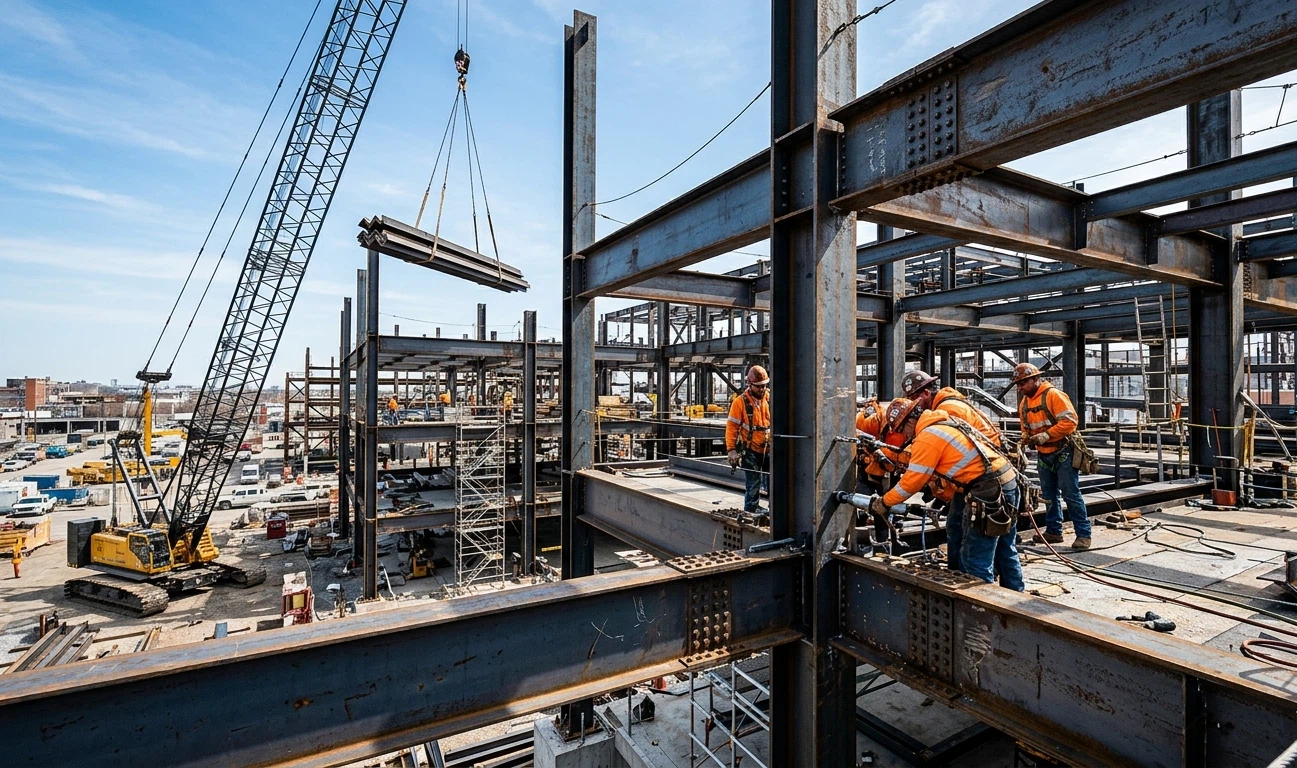
The commercial building sector consumes an enormous percentage of global production for good reason. Why is A36 steel preferred for structural framing? The answer is a mix of economic efficiency and structural predictability. Because it contains less than 0.26% carbon by weight, it provides a highly stable yielding behavior under static loads. When designers calculate dead loads for multistory warehouses, industrial manufacturing plants, and retail complexes, this structural grade offers the exact load-bearing capacity required without adding unnecessary material costs,fully aligning with standard AISC structural steel design specifications for safety margins.
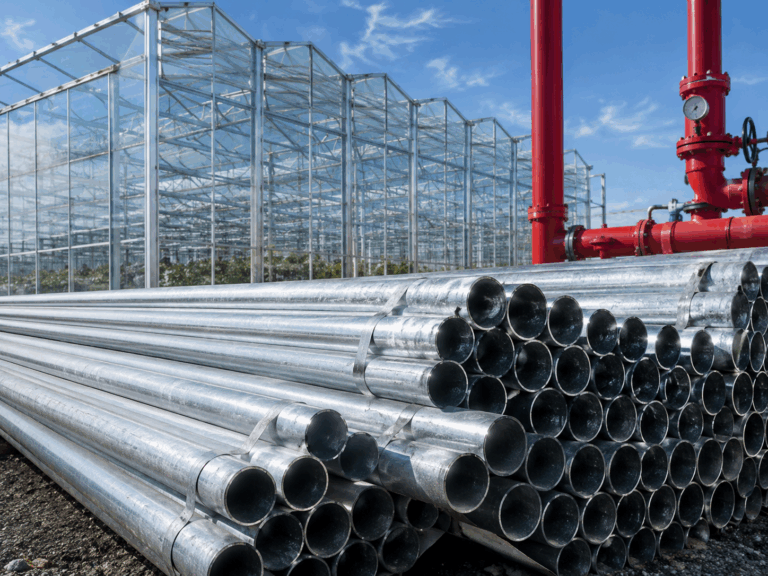
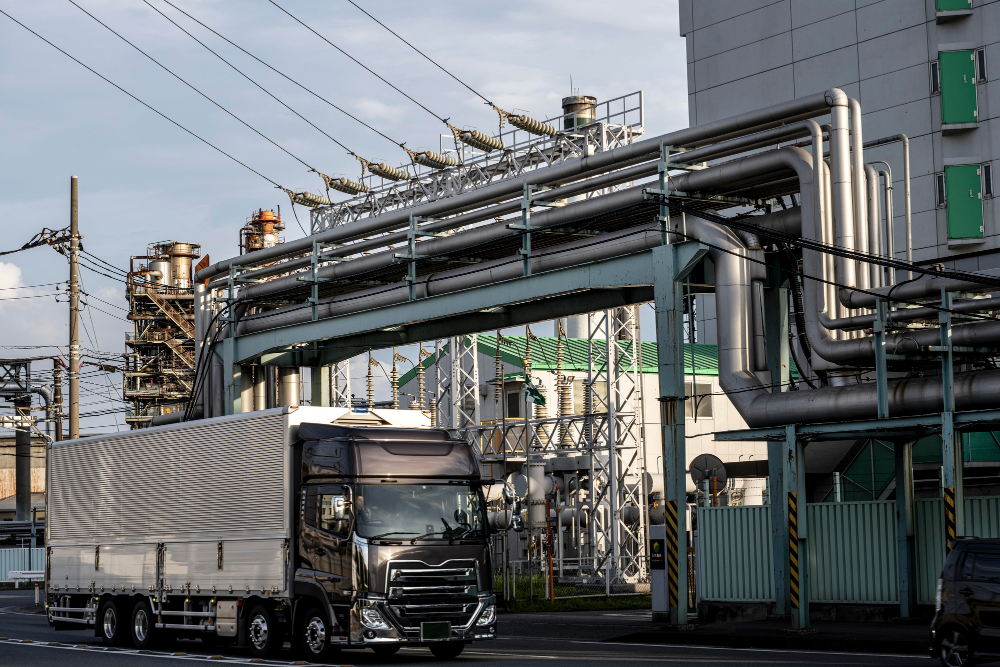
Beyond vertical building columns, A36 in construction and machinery projects extends deep into transport infrastructure. Highway bridge girders, pedestrian walkways, coffer dams, and structural pilings frequently utilize this carbon steel grade. It performs exceptionally well in environments where the primary stress vectors are constant and predictable. However, because the material lacks corrosion resistance, the long-term viability of these structural A36 steel applications depends on industrial coatings, primers, or hot-dip galvanization to resist atmospheric moisture.
Moving away from massive civil infrastructure, the fabrication shop floor reveals a completely different set of manufacturing requirements. In this environment, raw material plates are cut, bent, machined, and assembled into heavy equipment components. When setting up a manufacturing line, mapping out your heavy A36 steel applications helps avoid tool wear while maximizing the output of the shop.
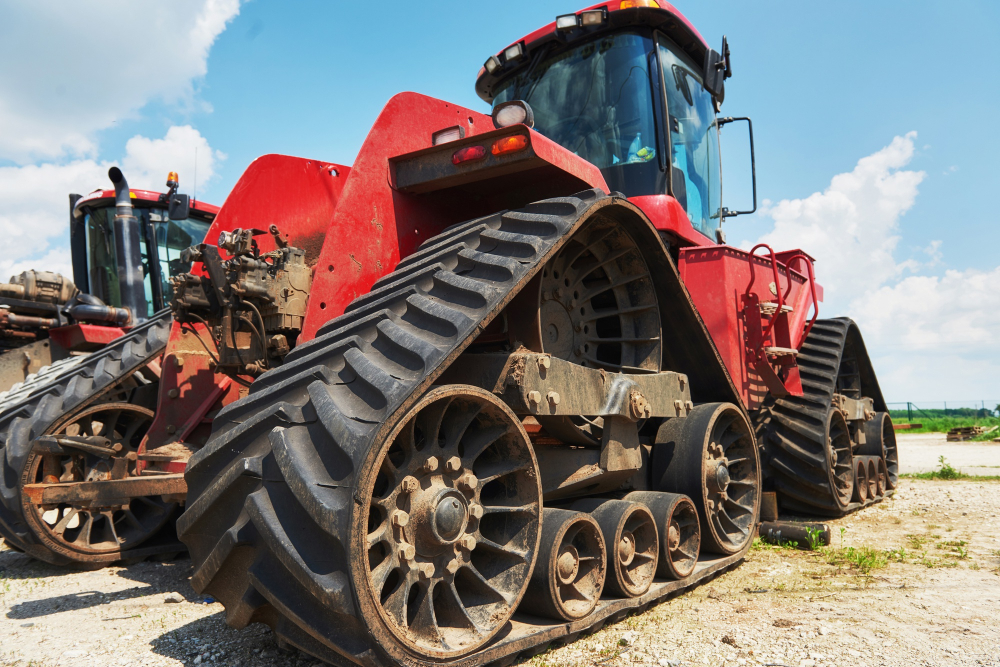
For heavy equipment builders, selecting the right A36 steel plate thickness for heavy machinery frames, mounting pads, and protective enclosures is critical. Thick-gauge plates are routinely used to construct heavy-duty industrial press beds, machine tool foundations, and hydraulic crane bases. These components require substantial mass to dampen operational vibrations and resist torsional stresses during high-tonnage cycles. The excellent machinability of A36 allows technicians to drill large-diameter mounting holes, mill precise indexing surfaces, and tap threads without causing premature wear on expensive high-speed steel or carbide cutting tools.
Furthermore, general industrial fabrication uses include the production of storage tanks, industrial hoppers, bins, and agricultural equipment chassis. Custom fabricators often rely on these standardized A36 steel applications because the material doesn’t surprise the operator during automated cutting or hydraulic forming. Because the material can be easily formed via hydraulic press brakes and rolled into cylindrical shells without cracking, it is the premier choice for custom job shops producing non-pressure vessel components.
From small bracket assemblies to massive industrial fixtures, the sheer variety of factory-floor A36 steel applications highlights its dominance in mass production. Its structural predictability ensures that components maintain their geometric tolerances long after leaving the assembly line, providing reliable service life across diverse operating environments.

Mechanical Limitations of High-Stress A36 Steel Applications
Every material choice involves a technical compromise. While the versatility of this metal makes it highly attractive, successful execution requires a strict adherence to its mechanical limits. Every material has its breaking point, and evaluating critical A36 steel applications requires deep calculations rather than guesswork. If an engineer exceeds these design limits, the structural safety of the entire assembly is compromised.
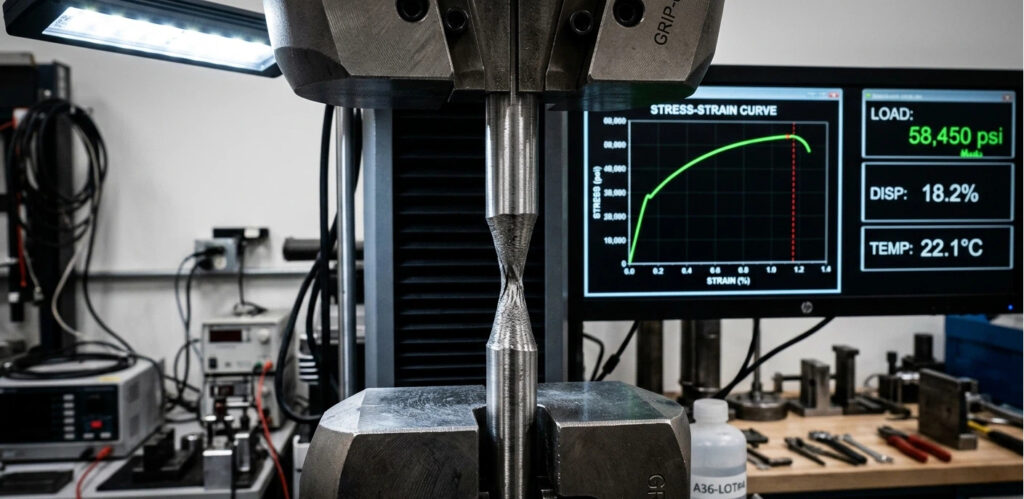
A common point of confusion among junior designers involves material deformation under load. Is A36 steel ductile or brittle? This grade is highly ductile. Its low carbon content allows the crystal lattice of the iron to slide smoothly under excessive stress, causing the material to elongate significantly before reaching its breaking point. This high ductility acts as a vital safety feature,quantified under industry-recognized A36 mechanical testing standards; instead of snapping unexpectedly under an extreme overload, providing a clear warning sign to maintenance crews before catastrophic failure occurs.
To quantify these limits, engineers analyze the stress-strain curve of the material. The A36steel ultimate strength ranges between 58, 000 and 80, 000 psi (400 – 550 MPa), whileits minimum yield strength is fixed at 36, 000 psi (250 MPa). For a definitive engineeringbreakdown of how these forces interact within structural elements, reviewing an in-depthanalysis of A36 steel mechanical properties explained provides the necessary data sheets.When designing structural columns or heavy machine links, calculating the exact A36 tensilestrength psi values using standard engineering equations is essential:
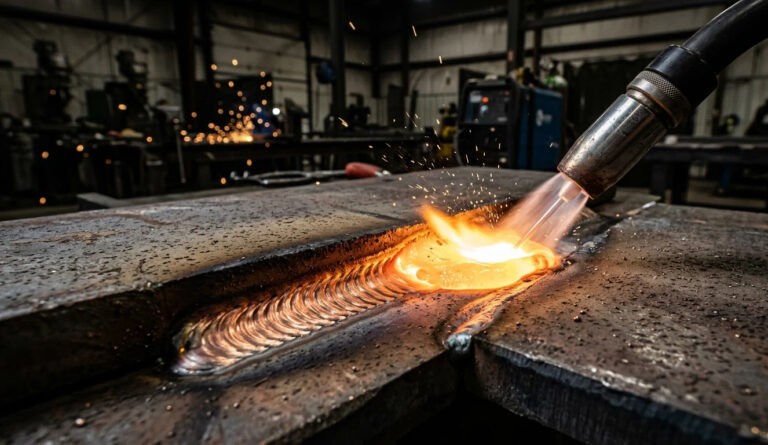
Another major benefit on the shop floor is its superior carbon steel weldability. Unlike high-strength alloy steels that require complex pre-heating and post-weld heat treatment (PWHT) schedules to prevent hydrogen-induced cracking, welding technicians prefer these low-carbon A36 steel applications due to the low risk of cold cracking. easily meeting the structural criteria outlined in the AISC 360 Specification for Structural Steel Buildings.
Optimizing Your A36 Steel Applications
To help procurement managers catalog potential A36 steel applications, we compiled a practical checklist based on operational environments. This ensures that the material is specified only where its mechanical properties match the operational demands of the application. This matrix prevents over-spending while keeping core A36 steel applications safely within operational thresholds.
| Application Type | Suitable for A36? | Engineering Justification | Recommended Replacement (If Unsuitable) |
| Warehouse Frameworks | Yes | Low cost, high predictable yield for columns and girts. | None required |
| Heavy Marine Pilings | Conditional | Excellent structural strength but requires coating or cathodic protection against saltwater corrosion. | Marine-grade galvanized steel |
| High-Wear Excavator Buckets | No | Lacks the surface hardness required to resist severe soil and rock abrasion. | AR400 or AR500 Wear Plate |
| Precision Aerospace Brackets | No | Power-to-weight ratio is too low; mild steel adds excessive weight to flight components. | 6061-T6 Aluminum or Titanium |
Conclusion
Selecting the right metal grade is always an exercise in balancing structural safety with corporate cost control. The ongoing popularity of ASTM A36 across global supply chains proves that mild carbon steel remains an indispensable asset for modern industry. From custom welding shops to massive civil construction zones, its incredible versatility delivers predictable results without inflating raw material costs.
By recognizing the clear mechanical limits of the material, avoiding its use in high-abrasion or extreme high-load environments, and capitalizing on its excellent weldability, manufacturing teams can execute their designs with total confidence. A clear understanding of your specific A36 steel applications ensures a successful balance between safety, budget, and project longevity.
FAQ
Can A36 steel plates be heat treated to increase their hardness?
carbon content, it cannot be effectively hardened through traditional quench-and-temper thermal processing. While standard A36 steel applications focus on structural loading, high-wear zones require surface case hardening (carburizing) or an upgrade to a higher carbon alloy like 1045 or 4140.
How does A36 steel perform in outdoor, unpainted environments?
It has no native corrosion resistance. Without a protective barrier—such as industrial primers, polyurethane topcoats, or hot-dip galvanization—it will rust quickly when exposed to atmospheric moisture and oxygen, leading to a reduction in structural cross-sectional area over time.
Is it possible to interchange A36 with European S235JR or Chinese Q235B?
In manygeneral structural steel uses, yes. They share a very similar minimum yield strength ofapproximately 235 – 250 MPa. However, minor variations in chemical composition andimpact testing requirements mean that a certified structural engineer must review the swap forregulated projects.