Q235B steel is a widely used low-carbon structural steel known for its good weldability, reliable formability, and cost efficiency. It is often chosen for general construction and fabrication projects where moderate strength and practical processing performance matter more than high load-bearing capacity. This guide explains Q235B steel properties, typical applications, equivalent grades, and the key differences between Q235B, A36, and Q345 so you can make a more informed material choice.
Table of Contents
What is Q235B Steel?

This low-carbon steel grade is commonly used for structural and general-purpose applications. It falls under the Chinese national standard GB/T 700, which defines the material’s chemical composition and mechanical properties. This steel grade contains a small amount of carbon, typically between 0.14% and 0.20%, making it highly versatile for different types of engineering projects.
The primary components of this material include carbon, manganese, silicon, sulfur, and phosphorus. The carbon content is low, which ensures good ductility and formability. This makes it suitable for use in both welded and non-welded structures. It can be easily shaped, bent, and welded, making it ideal for complex and large-scale industrial projects.
This low-carbon structural steel provides excellent stability and consistent mechanical performance for a wide range of applications, including bridges, buildings, machinery frames, and transportation equipment. Its compatibility with various surface treatments, such as painting or galvanizing, enhances corrosion resistance and extends service life. The material combines strength, affordability, and ease of fabrication, making it a reliable choice for engineers and manufacturers. When properly handled, it maintains durability and performance even in demanding industrial environments, ensuring long-term functionality across diverse engineering projects.
While Q235B is the most popular choice, understanding the critical differences in impact toughness and chemical purity among Q235A vs Q235B vs Q235C vs Q235D is essential for high-standard engineering projects.
Q235B Steel Properties
Q235B is a low-carbon structural steel widely recognized for its balanced mechanical performance and practical processing advantages. Its most notable property is a typical yield strength of around 235 MPa, which makes it suitable for general structural applications that require reliable strength without unnecessary material cost. Because of its low carbon content, Q235B offers good weldability, decent formability, and stable machinability, allowing it to be easily cut, shaped, and assembled during fabrication.
Another important advantage of Q235B steel is its cost efficiency. Compared with higher-strength grades, it provides enough performance for many common construction and fabrication projects while helping control overall material and processing expenses. This is one of the reasons Q235B remains a popular choice for steel frames, supports, welded structures, and other light to medium-duty applications.
In practical use, Q235B is valued not because it is the strongest steel available, but because it delivers a dependable combination of strength, workability, and affordability. For projects that do not require high load-bearing performance, it is often a practical and economical solution.

Q235B Steel Chemical Composition (GB/T 700 Standard)
When evaluating structural materials for engineering projects, understanding the Q235B steel chemical composition is crucial. Classified as a typical low-carbon steel (also known as mild steel) under the Chinese GB/T 700 standard, Q235B is highly regarded for its perfect balance of strength, ductility, and exceptional weldability.
The secret to its wide application lies in its strictly controlled carbon (C) content, which is kept at or below 0.20%. This ensures that the steel can be easily welded and formed without the risk of cracking, while the addition of Manganese (Mn) enhances its overall hardness and durability.
Below is the precise chemical composition of Q235B steel based on the GB/T 700 standard:
| Elemento | Symbol | Content (%) | Effect on Material |
|---|---|---|---|
| Carbon | C | ≤0.20 | Provides strength, affects hardness and ductility |
| Manganese | Mn | 0.30–0.65 | Improves toughness, strength, and hardenability |
| Silicon | Si | ≤0.30 | Increases strength and elasticity |
| Sulfur | S | ≤0.050 | Reduces toughness if excessive; improves machinability in small amounts |
| Phosphorus | P | ≤0.045 | Can increase strength but may reduce ductility if excessive |
Q235B chemical composition plays a key role in determining its strength, weldability, and overall performance.
To better understand how each element influences strength, weldability, and durability, please refer to our detailed article on Q235B chemical composition.
Q235B Material Equivalent
Finding the right Q235B equivalent material is essential for international engineering projects. While Q235B follows the Chinese GB/T 700 standard, it is highly comparable to other global structural steel grades like ASTM A36, S235JR, and SS400. These equivalents offer similar yield strength and weldability for construction and manufacturing.
Q235B Steel Equivalent Standards
| Standard | Country/Region | Equivalent Grade | Comparison Summary |
| GB/T 700 | China | Q235B | Base Standard. Excellent balance of cost and performance. |
| ASTM | USA | A36 | Most common equivalent; slightly higher carbon, very similar strength. |
| EN 10025 | European Union | S235JR (1.0038) | Direct match for yield strength (235 MPa) and 20°C impact test. |
| JIS G3101 | Japan | SS400 | Widely used in Asia; similar mechanical properties to Q235B. |
| ISO 630 | International | E235B | The international standardized version of mild structural steel. |
| DIN 17100 | Germany (Old) | St37-2 | Legacy German standard often cited in older technical drawings. |
Wondering how Q235B stacks up against American standards in real-world engineering? Read our detailed [comparison between Q235B vs. ASTM A36 Steel] for a deep dive into strength and weldability.
Key Properties of Q235B Steel
Strength and Durability
This low-carbon steel offers a tensile strength ranging from 370 MPa to 500 MPa, providing good structural integrity for most general-purpose applications. While it is not as strong as high-alloy steels, it delivers sufficient strength for medium-stress structures and projects. With a yield strength of 235 MPa, it is commonly used in beams, columns, and other structural elements.
Weldability and Formability
One of the most significant advantages of this material is its excellent weldability. The low carbon content ensures that it can be welded easily without the risk of cracking or other defects. This is critical for construction projects and heavy manufacturing, where large steel structures need to be fabricated with precision. Additionally, it is highly formable, meaning it can be shaped into various profiles without significant difficulty.
Resistencia a la corrosión
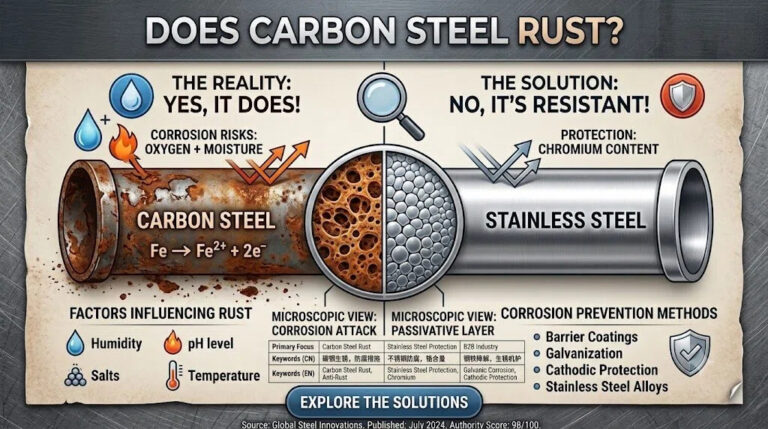
Q235B Steel has moderate corrosion resistance, which makes it suitable for a variety of indoor and outdoor applications. However, in highly corrosive environments such as marine or chemical industries, additional protective coatings or surface treatments may be necessary to extend the material’s lifespan.
How Long Does Q235B Steel Last in Different Environments?
In practice, Q235B performs best in applications where the structural demands are moderate, the environment is not highly aggressive, and cost efficiency is an important consideration. Its service life can vary significantly depending on environmental exposure and surface protection.
In indoor environments with low humidity and minimal exposure to corrosive elements, Q235B can last for decades with little to no structural degradation. This makes it a reliable choice for indoor frameworks, equipment structures, and general fabrication.
In outdoor environments, the lifespan of Q235B depends heavily on protective measures. Without coating, it may begin to develop surface rust relatively quickly when exposed to moisture and air. However, with proper treatments such as painting or galvanizing, its durability can be significantly extended, often meeting long-term project requirements.
In urban environments with moderate pollution, Q235B can still perform well if basic corrosion protection is applied. Regular maintenance and inspection can further help extend its service life.
However, in highly corrosive environments such as coastal areas, marine conditions, or chemical exposure settings, Q235B may experience accelerated degradation if not properly protected. In such cases, additional coatings or alternative materials with higher corrosion resistance should be considered.
Ultimately, the lifespan of Q235B steel is not fixed. It is determined by how well the material is matched to the environment and how effectively it is protected during use.
To better understand how long Q235B Steel can perform under different environmental conditions, please refer to our detailed blog.
Applications of Q235B Steel
Q235B Steel is widely used in the construction industry, particularly for building infrastructure and creating steel structures. It is often used in the construction of buildings, bridges, and other large structures. Its good balance of strength, workability, and cost-effectiveness makes it ideal for use in structural steel beams, columns, and reinforcement bars.
For structural projects exposed to coastal air or industrial pollution, selecting the right finish is critical—see our expert analysis on Q235B steel corrosion protection strategies to ensure a 50-year service life.


Heavy Machinery and Equipment Manufacturing
Q235B Steel is used extensively in the manufacturing of heavy machinery and equipment. The steel’s excellent weldability and durability make it a great choice for fabricating components such as frames, axles, and chassis for construction machinery, vehicles, and industrial machines. The material’s ability to withstand mechanical stresses without cracking or deforming makes it highly suitable for heavy-duty applications.
Industria del automóvil
In the automotive industry, Q235B Steel is often used for non-critical components such as body frames, structural supports, and components that require moderate strength and low cost. While more advanced alloys may be used for high-performance parts, Q235B remains an economic and reliable option for standard automotive parts.


Q235B vs Other Steel Grades Comparison
Q345 Steel is another widely used steel grade, and it has a higher tensile strength than Q235B, typically ranging from 470 MPa to 630 MPa. This makes Q345 Steel more suitable for high-strength structural applications, particularly in heavy industries. However, Q235B Steel is more cost-effective and is often chosen for less demanding projects where strength is not the most critical factor.
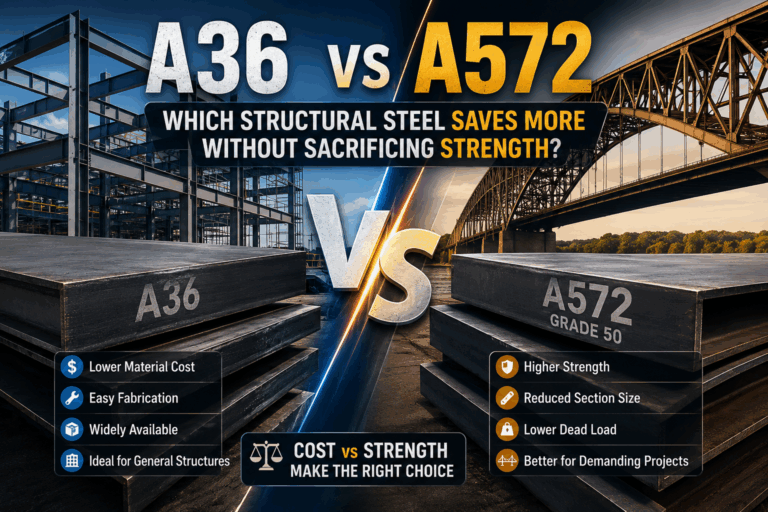
A36 Steel is another commonly used carbon steel, particularly in the United States. Both Q235B and A36 have similar chemical compositions and mechanical properties, with tensile strength ranging from 400 MPa to 550 MPa. However, A36 Steel is more widely recognized and used in North America, while Q235B Steel is more prevalent in China and other parts of Asia. The primary difference lies in the regional availability and standardization of each material.

How to Choose Between Q235B, A36, and Q345
Selecting the right steel grade is not only a technical decision, but also a balance between performance requirements, design standards, and project economics. Q235B, A36, and Q345 are commonly used structural steels, but they serve different engineering purposes.
Choose Q235B when you need a cost-effective solution for general fabrication and construction projects. It is widely used in structural components where moderate strength, good weldability, and low material cost are the main priorities.
Choose A36 if your project must comply with ASTM standards or international procurement specifications. It is commonly selected for export-oriented projects or engineering designs based on U.S. construction codes.
Choose Q345 when higher strength and better load-bearing capacity are required. It is suitable for more demanding structural applications where improved mechanical performance is essential.
The final decision should not be based on strength alone. Factors such as design codes, welding performance, material availability, corrosion protection requirements, and overall project budget all play a critical role in material selection.
In engineering practice, the most suitable steel grade is the one that achieves the best balance between safety, performance, and cost efficiency under real working conditions.

Benefits of Using Q235B Steel
1.Cost-Effective: Q235B Steel is relatively inexpensive compared to high-strength steels, making it a cost-effective solution for many industrial and construction applications.
2.Versatility: The material is highly versatile and can be used in various forms, including plates, beams, and structural elements, making it suitable for a wide range of engineering projects.
3.Ease of Fabrication: Q235B Steel is easy to fabricate, weld, and shape, which simplifies the manufacturing process and reduces costs for construction and machinery manufacturing projects.
4.Global Availability: As one of the most widely used steel grades, Q235B Steel is readily available in most global markets, especially in Asia, which makes it accessible for large-scale projects.
Drawbacks of Using Q235B Steel
1.Limited tensile strength: Its relatively low carbon content provides good ductility but restricts maximum tensile strength compared to higher-strength steels. This makes it less suitable for applications requiring extreme load-bearing capacity or high wear resistance.
2.Limited corrosion resistance: Without proper surface treatment, it can rust in humid or marine environments, reducing long-term durability.
3.Not ideal for extreme conditions: For projects demanding high hardness, impact resistance, or long-term exposure to harsh environments, engineers often choose alloy or stainless steels instead.
When to Use This Steel Grade Q235B Steel?
Q235B is an excellent choice for a wide range of general structural and fabrication applications where balanced performance and cost efficiency are required. It is particularly suitable for projects that do not demand high strength but still require reliable mechanical properties and consistent processing behavior.
It is commonly used in building structures, steel frames, support brackets, and machinery components where moderate load-bearing capacity is sufficient. In these scenarios, Q235B provides adequate strength while keeping material costs under control.
Q235B is also well-suited for projects that require good weldability and ease of fabrication. Its stable chemical composition allows for efficient cutting, welding, and forming, making it a practical option for manufacturing environments that prioritize productivity and simplicity.
For indoor applications or outdoor environments with proper surface protection, Q235B can deliver a satisfactory service life. When combined with treatments such as painting or galvanizing, its durability can be significantly improved.
In addition, Q235B is often preferred in projects where local standards are based on Chinese GB specifications, or where material availability and cost advantages play a key role in procurement decisions.
In practice, Q235B performs best in applications where the structural demands are moderate, the environment is not highly aggressive, and cost efficiency is an important consideration.
When Should You NOT Use Q235B Steel?
Although Q235B is widely used in general structural applications, it is not suitable for every engineering scenario. Choosing it in the wrong conditions may lead to performance limitations, safety risks, or increased long-term costs.
Q235B should generally be avoided in high-strength structural applications where greater yield strength and load-bearing capacity are required. For heavy-duty frameworks, large-span structures, or critical load components, higher-grade steels such as Q345 are typically more appropriate.
It is also not recommended for environments with severe corrosion exposure, such as coastal, marine, or chemical processing conditions, unless proper surface protection (e.g., galvanizing or coating) is applied. Without adequate protection, Q235B may experience accelerated corrosion and reduced service life.
In addition, Q235B may not be the best choice for low-temperature environments where improved toughness and resistance to brittle fracture are required. Specialized steels designed for cold conditions are generally preferred in such cases.
Finally, projects that must comply with specific international standards (such as ASTM or EN) may require alternative materials like A36 or S235JR to meet design codes and certification requirements.
In practice, Q235B should be selected only when its mechanical performance, environmental suitability, and compliance requirements align with the project’s actual conditions.
Successful Application: Using Q235B Steel in the Right Conditions
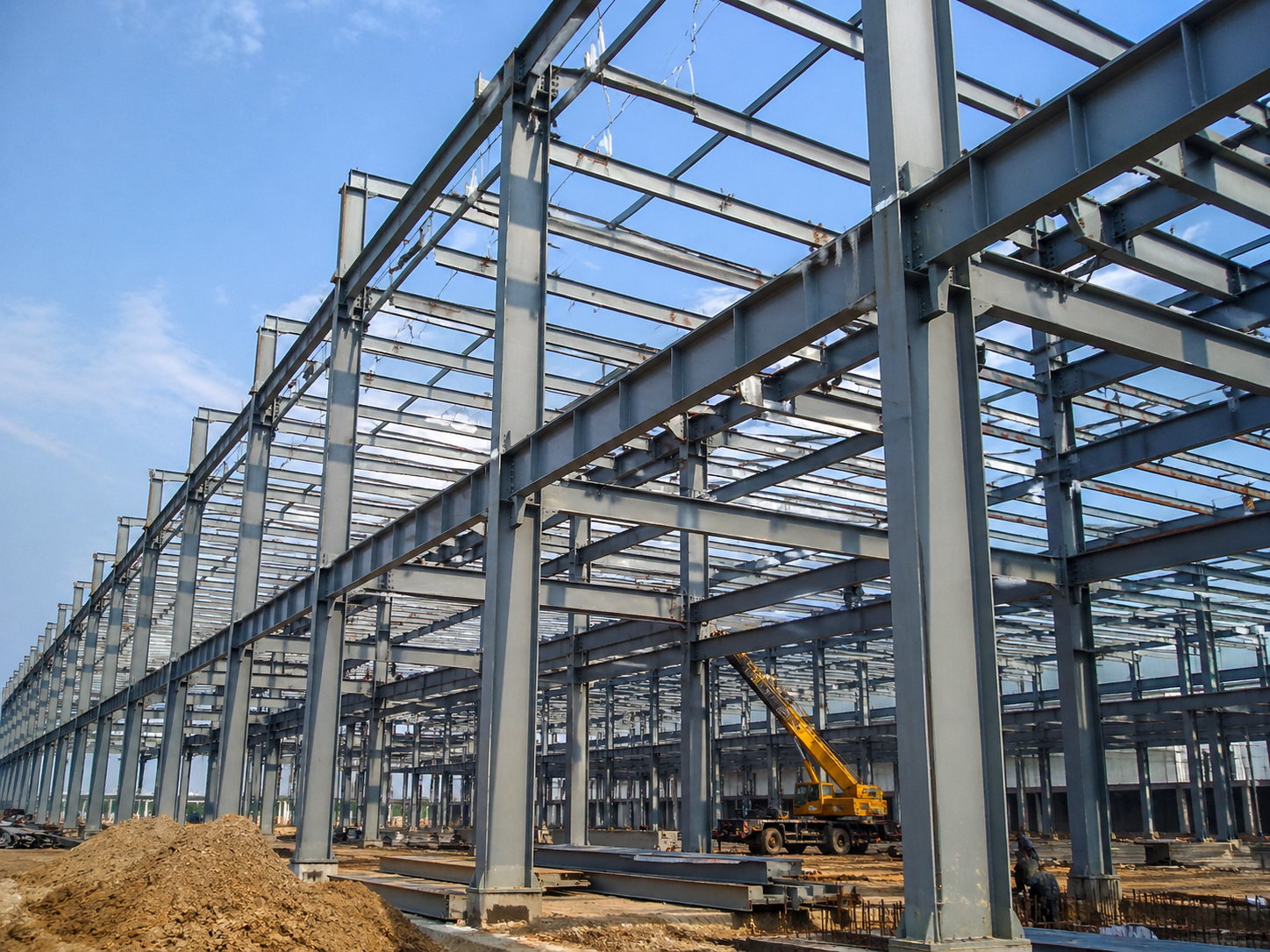
In a warehouse construction project, Q235B steel was selected for the main structural framework, including columns, beams, and support components. The project required a balance between structural reliability and cost efficiency, making Q235B a suitable choice.
The structure was installed in an inland urban environment with relatively low humidity and minimal exposure to corrosive elements. In addition, all steel components were treated with standard anti-corrosion coatings before installation.
Under these conditions, Q235B performed as expected. The material provided sufficient strength for the structural load requirements, while its good weldability and processing characteristics helped streamline fabrication and installation.
Over years of operation, the structure has maintained stable performance with no significant signs of corrosion or mechanical degradation. Routine inspections and basic maintenance have been sufficient to ensure long-term reliability.
Why Q235B Worked Well in This Case
- The structural load requirements were moderate and within Q235B’s capability
- The environment was not highly corrosive
- Proper surface protection was applied
- The project prioritized cost efficiency without compromising safety
Failure Case: When Q235B Steel Was Used in the Wrong Environment
In one project involving outdoor structural supports for industrial equipment, Q235B steel was selected due to its cost advantage and ease of fabrication. Initially, the material met all basic structural requirements, and the installation was completed without issues.
However, the project site was located in a coastal area with high humidity and salt exposure. Within a relatively short period, visible corrosion began to appear on the surface of the steel components. Over time, the corrosion progressed, leading to material thinning and reduced structural reliability.
The root cause of the failure was not the material itself, but the mismatch between the material properties and the environmental conditions. Q235B, while suitable for general structural use, does not offer strong inherent corrosion resistance in aggressive environments without proper protection.
In this case, the absence of adequate surface treatment—such as galvanizing or advanced coating systems—accelerated the degradation process. As a result, the structure required earlier-than-expected maintenance and partial replacement, increasing the overall lifecycle cost.
Key Takeaways
- Q235B is not suitable for coastal or highly corrosive environments without protection
- Environmental conditions must be considered alongside mechanical requirements
- Surface treatment is critical for extending service life
- Choosing a higher-grade or corrosion-resistant material may reduce long-term costs
In similar conditions, materials with improved corrosion resistance or higher strength grades such as Q345, combined with proper surface protection, are typically recommended.
These two cases highlight a key principle in material selection: performance depends not only on the material itself, but on how well it matches the application environment.
Is Q235B Still a Good Choice in 2026?
Q235B remains a practical and widely used structural steel in 2026. Despite the availability of higher-grade alternatives, it continues to play an important role in general construction and fabrication projects due to its cost efficiency, reliable weldability, and stable processing performance.
It is still especially suitable for projects where budget control, manufacturing simplicity, and standard structural strength are the main priorities. In many conventional engineering applications, Q235B continues to deliver a balanced combination of performance and affordability.
However, it is not always the optimal choice. For high-strength structural systems, heavy load-bearing components, or environments with stricter mechanical or safety requirements, engineers increasingly evaluate Q235B alongside higher-grade steels before final material selection.
This shift reflects a broader trend in modern engineering: material selection is becoming more performance-driven and application-specific rather than purely cost-driven.
Conclusión
Q235B is not outdated. It remains relevant in 2026, but its value is maximized only when it is applied in the right engineering context..This material is essential in the construction and manufacturing industries, providing a reliable, cost-effective, and versatile solution for a variety of applications. Its excellent weldability, moderate strength, and formability make it suitable for use in structural and non-structural projects. Whether used in the construction of buildings, bridges, machinery, or automotive components, it remains a preferred choice for engineers and manufacturers worldwide.
Understanding the limits of Q235B is critical for ensuring structural safety. If you want to know more about how this material fits your specific industrial project, please [click here] to consult with our technical specialists.
PREGUNTAS FRECUENTES
What does Q235B mean?
Q235B refers to a Chinese standard carbon structural steel grade, where “Q” stands for yield strength, “235” indicates a minimum yield strength of 235 MPa, and “B” represents the quality grade.
What is Q235B steel used for?
Q235B steel is widely used in construction, machinery manufacturing, steel structures, pipes, and general engineering applications due to its good strength and weldability.
What is the chemical composition of Q235B steel?
The chemical composition of Q235B steel mainly includes carbon, manganese, and silicon, which provide a balance of strength, ductility, and weldability according to the GB/T 700 standard.
What are the mechanical properties of Q235B steel?
Q235B steel has a minimum yield strength of 235 MPa and a tensile strength ranging from 370 to 500 MPa, offering reliable performance for structural applications.
Is Q235B the same as A36 steel?
Q235B is similar to ASTM A36 steel in terms of strength and application, but they follow different standards and may have slight differences in chemical composition and mechanical properties.
Q235B vs Q345: what’s the difference?
The main difference is strength: Q345 has a higher yield strength (≥345 MPa) compared to Q235B (≥235 MPa), making Q345 more suitable for heavy load-bearing structures.
What Is the Difference Between Q235 Steel and S355 Steel?
Q235 steel and S355 steel are both common use structural steel, but they are differ from the chemical components and mechanical properties.
Can Q235B steel be welded and galvanized?
Yes, Q235B steel has excellent weldability and can also be galvanized to improve its corrosion resistance for outdoor or humid environments.
Is Q235B the same as A36?
Not exactly. They are often considered similar in structural use, but they come from different standards and should not be treated as identical in every project.
Can Q235B replace Q345?
Usually not. Q345 has higher strength, so replacing it with Q235B may affect structural performance and must be checked by engineering requirements.
What is the main advantage of Q235B steel?
Its main advantage is a balanced combination of strength, weldability, formability, and cost efficiency.
Where is Q235B commonly used?
It is commonly used in structural frames, supports, fabrication parts, and other general steel construction applications.