
Bem-vindo ao Meu Blog!
Antes de mergulharmos no conteúdo, EU adoraria que você se juntasse a mim em minhas plataformas de mídia social, onde compartilho mais insights, me envolva com a comunidade e publique atualizações. Veja como você pode se conectar comigo:
Facebook:https://www.facebook.com/profile.php?id=100087990137347
LinkedIn:https://www.linkedin.com/company/89825762/admin/dashboard/
YouTube:www.youtube.com/@carbonsteelsupply-kj9lw
TikTok:www.tiktok.com/@carbonsteelsupply
Agora, vamos começar nossa jornada juntos Espero que você ache o conteúdo aqui perspicaz, envolvente e valioso.
Introdução
8640 alloy steel is a versatile material widely used in various industries due to its excellent mechanical properties, which include high strength, toughness, and wear resistance. Understanding the manufacturing process of 8640 alloy steel is crucial for engineers and manufacturers alike. This blog will provide a detailed explanation of how 8640 alloy steel is produced, the significance of each step, and its applications across different sectors.

What is 8640 Alloy Steel?
8640 alloy steel is a medium-carbon steel alloy that contains chromium, molybdenum, and nickel. This specific combination of elements provides 8640 with improved strength, toughness, and hardenability, making it suitable for a variety of demanding applications.
Key Properties of 8640 Alloy Steel
- High Tensile Strength: 8640 offers excellent tensile strength, making it ideal for high-stress applications.
- Good Hardening Capability: The alloy can be heat-treated to achieve a range of hardness levels.
- Wear Resistance: Its composition provides enhanced wear resistance, particularly in industrial applications.
Raw Materials for 8640 Alloy Steel
The primary components of 8640 alloy steel include:
- Iron (Fe): The base metal.
- Carbon (C): Typically around 0.40-0.50% to enhance hardness and strength.
- Chromium (Cr): About 0.70-0.90% for increased hardness and corrosion resistance.
- Molybdenum (Mo): Approximately 0.15-0.25% to improve strength at high temperatures.
- Nickel (Ni): About 1.0-1.5% to enhance toughness.
The Manufacturing Process of 8640 Alloy Steel
Melting and Alloying
The first step in the manufacturing process involves melting the raw materials in an electric arc furnace. The controlled environment allows for precise temperature regulation and composition management.
- Process Overview:
- The raw materials are weighed and loaded into the furnace.
- The furnace is heated to around 1,600°C (2,912°F).
- The molten steel is continuously monitored for chemical composition.
Casting
Once the alloy has melted and achieved the desired composition, it is poured into molds to create ingots or billets. This stage allows the steel to solidify into a workable form.
| Step | Description |
|---|---|
| Molding | Steel is poured into molds for solidification. |
| Cooling | Controlled cooling to prevent defects. |
| Ingot/Billet | Results in cast shapes for further processing. |
Hot Working
After casting, the solidified steel undergoes hot working processes, such as forging or rolling, to shape the material. This process increases the steel’s density and improves its mechanical properties.
- Forjamento: Shaping the steel using compressive forces.
- Rolling: Reducing thickness and shaping the steel into desired profiles.
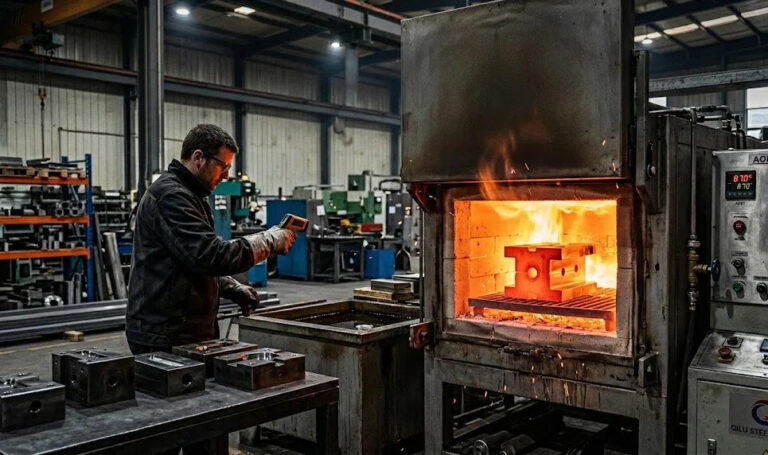
Tratamento Térmico
Heat treatment is critical for enhancing the properties of 8640 alloy steel. The most common methods include:
- Austenitizing: Heating the steel to form austenite.
- Quenching: Rapid cooling to harden the steel.
- Têmpera: Heating to a lower temperature to relieve stresses and improve toughness.
| Treatment Type | Temperature Range | Purpose |
|---|---|---|
| Austenitizing | 800-900°C | Form austenite |
| Quenching | Rapid cooling | Increase hardness |
| Têmpera | 200-600°C | Improve toughness and reduce brittleness |
Cold Working
After heat treatment, cold working processes, such as drawing or machining, are performed to achieve precise dimensions and surface finishes. This step is essential for meeting specific engineering requirements.
Finishing Processes
The final stage in the manufacturing process includes finishing processes like grinding, polishing, and surface treatment to enhance the steel’s surface properties and appearance.
- Grinding: Removes imperfections and achieves desired dimensions.
- Polishing: Enhances surface finish for aesthetic and functional purposes.
- Surface Treatments: May include hardening, coating, or corrosion resistance measures.

Aplicações de 8640 Alloy Steel
Due to its exceptional properties, 8640 alloy steel is used in various applications, including:
- Componentes Automotivos: Gears, axles, and crankshafts.
- Oil and Gas Industry: Drill collars and other downhole tools.
- Heavy Machinery: Components that require high strength and toughness.
Vantagens de 8640 Alloy Steel
- Versatile Applications: Suitable for various industries, making it a go-to alloy.
- Enhanced Mechanical Properties: Offers high strength, toughness, and wear resistance.
- Heat Treatment Flexibility: Can be tailored for specific performance requirements.
Disadvantages of 8640 Alloy Steel
- Corrosion Susceptibility: Requires protective measures for applications in corrosive environments.
- Cost: Higher material costs compared to low-carbon steels.
- Maquinabilidade: More challenging to machine than softer steels due to its hardness.
FAQ
What is the chemical composition of 8640 alloy steel?
8640 alloy steel typically contains approximately 0.40-0.50% carbon, 0.70-0.90% chromium, 0.15-0.25% molybdenum, and 1.0-1.5% nickel.
How is 8640 alloy steel heat treated?
The common heat treatment process includes austenitizing, quenching, and tempering to achieve desired hardness and toughness.
What are the main applications of 8640 alloy steel?
8640 alloy steel is used in automotive components, oil and gas tools, and heavy machinery parts due to its high strength and durability.
Conclusão
The manufacturing process of 8640 alloy steel is a complex but well-structured series of steps that transform raw materials into a high-performance alloy. From melting and casting to heat treatment and finishing, each stage plays a vital role in enhancing the properties of the final product. With its excellent mechanical characteristics, 8640 alloy steel serves a variety of applications across numerous industries, making it a valuable material in modern engineering and manufacturing. Understanding this process is essential for those looking to leverage the benefits of 8640 alloy steel in their projects.