Bem-vindo ao Meu Blog!
Antes de mergulharmos no conteúdo, EU adoraria que você se juntasse a mim em minhas plataformas de mídia social, onde compartilho mais insights, me envolva com a comunidade e publique atualizações. Veja como você pode se conectar comigo:
Facebook:https://www.facebook.com/profile.php?id=100087990137347
LinkedIn:https://www.linkedin.com/company/89825762/admin/dashboard/
YouTube:www.youtube.com/@carbonsteelsupply-kj9lw
TikTok:www.tiktok.com/@carbonsteelsupply
Agora, vamos começar nossa jornada juntos Espero que você ache o conteúdo aqui perspicaz, envolvente e valioso.
Índice
Introdução
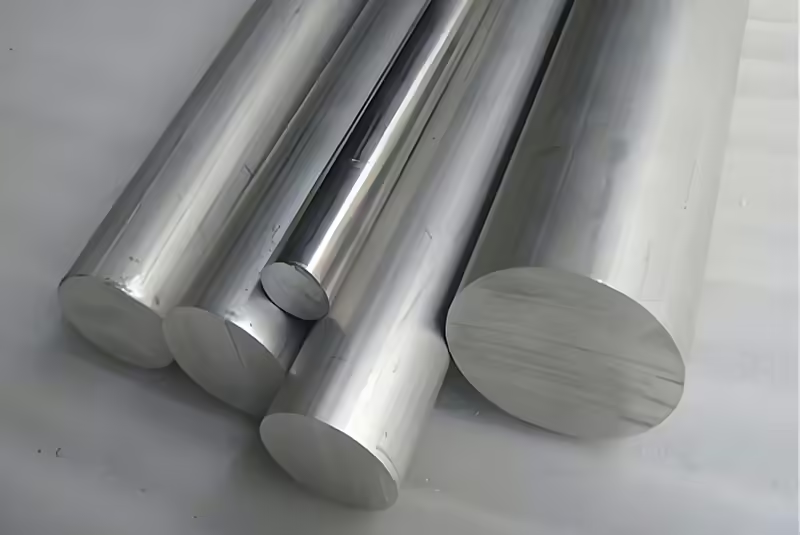
Alloy steel is a versatile material widely used in various industries due to its enhanced mechanical properties compared to carbon steel. However, when selecting alloy steel for a project, understanding the alloy steel weight is crucial. The weight influences factors like transportation costs, structural integrity, and overall project efficiency. This guide will delve into the intricacies of alloy steel weight, providing valuable insights for material selection. By understanding the weight implications, engineers and designers can make informed decisions that optimize material usage and project outcomes.
Understanding Alloy Steel Composition and Density
Alloy steel is created by adding various alloying elements to carbon steel, such as chromium, nickel, molybdenum, and vanadium. These elements alter the steel’s properties, including its density. Density, defined as mass per unit volume, directly impacts the alloy steel weight. Different alloying elements and their proportions result in varying densities. For example, steels with higher chromium content tend to have slightly higher densities. This variation in density is a key factor to consider when selecting alloy steel for specific applications, as it can significantly affect the overall weight of the final product.
Factors Affecting Alloy Steel Weight
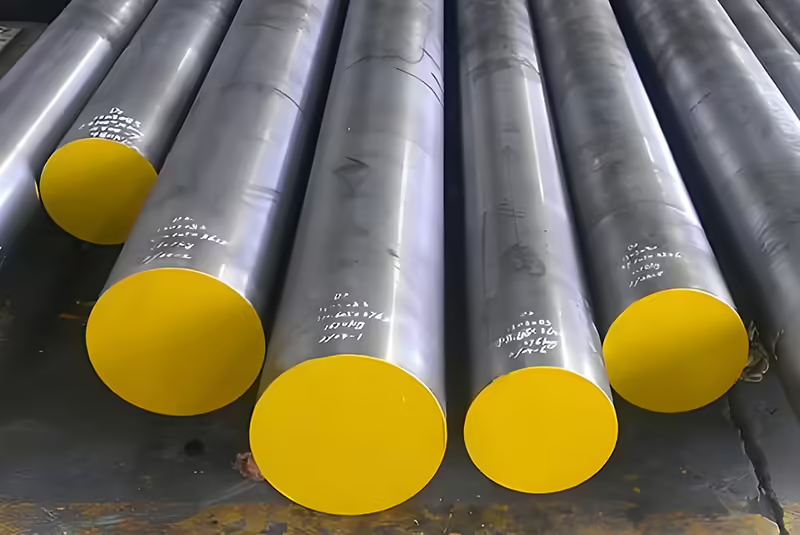
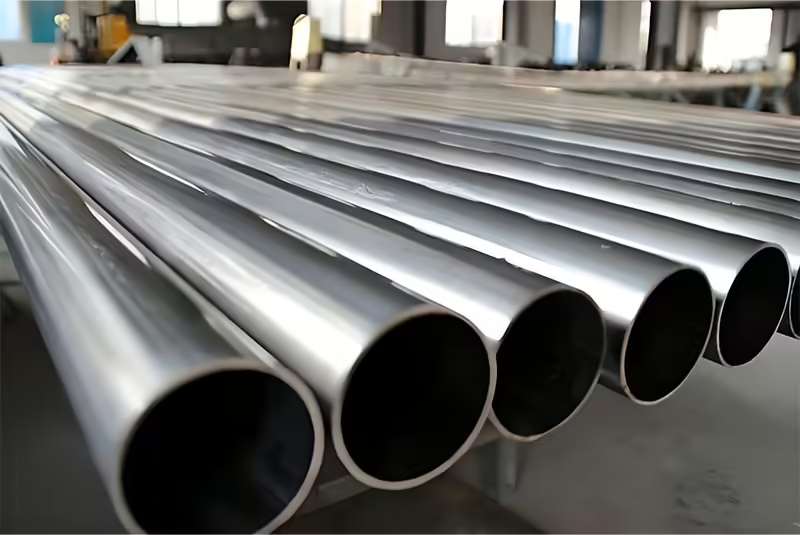
Several factors influence the alloy steel weight beyond its density.
- Alloying Elements: The type and percentage of alloying elements significantly impact density and, consequently, weight. For instance, the addition of heavier elements like tungsten will noticeably increase the density compared to lighter elements like silicon.
- Shape and Dimensions: The geometry of the alloy steel component plays a crucial role. A larger volume naturally results in a higher weight. Complex shapes with intricate designs may also affect the overall weight distribution.
- Manufacturing Process: The manufacturing method, such as rolling, forging, or casting, can affect the final density and weight. Forging, for example, can increase density by reducing porosity, leading to a heavier component.
- Temperature: Temperature variations can cause slight changes in density due to thermal expansion and contraction. While these changes are typically minor, they can become significant in extreme temperature environments or precision applications. This is especially true in applications that have very tight tolerances.
Calculating Alloy Steel Weight
Accurately calculating the alloy steel weight is essential for project planning and cost estimation. The calculation typically involves the following steps:
- Determine the Volume: Calculate the volume of the alloy steel component based on its shape and dimensions. This may require using geometric formulas or CAD software for complex shapes.
- Obtain the Density: Find the density of the specific alloy steel grade from material datasheets or industry standards. Reputable sources like ASM International or manufacturer specifications are reliable resources.
- Calculate the Weight: Multiply the volume by the density to obtain the weight. Ensure consistent units are used throughout the calculation to avoid errors. This calculated weight can then be used for material procurement, transportation planning, and structural analysis.
Common Alloy Steel Grades and Their Typical Densities
Here’s a table illustrating some common alloy steel grades and their typical densities:
| Alloy Steel Grade | Typical Density (kg/m³) |
|---|---|
| Liga de aço 4140 | 7850 |
| 4340 Liga de Aço | 7850 |
| 8620 Liga de Aço | 7850 |
| 9310 Alloy Steel | 7850 |
| D2 Tool Steel | 7700 |
| A2 Tool Steel | 7850 |
These values are approximate and may vary slightly depending on the specific manufacturing process and heat treatment. Always refer to the manufacturer’s data sheets for precise density values.
The Importance of Alloy Steel Weight in Various Applications
The alloy steel weight is a critical consideration in diverse applications:
- Aerospace: In aircraft construction, minimizing weight is paramount for fuel efficiency and performance. Lighter aircraft require less fuel to fly, reducing operational costs and environmental impact.
- Automotive: Weight reduction in vehicles enhances fuel economy and reduces emissions. Lighter vehicles require less energy to accelerate, improving fuel efficiency and reducing greenhouse gas emissions.
- Construction: Structural steel weight influences the design and load-bearing capacity of buildings and bridges. Accurate weight calculations are essential to ensure structural integrity and prevent failures.
- Manufacturing: The weight of alloy steel components affects machinery performance and energy consumption. Heavier components may require more powerful motors and consume more energy during operation.
Practical Considerations for Alloy Steel Weight Management
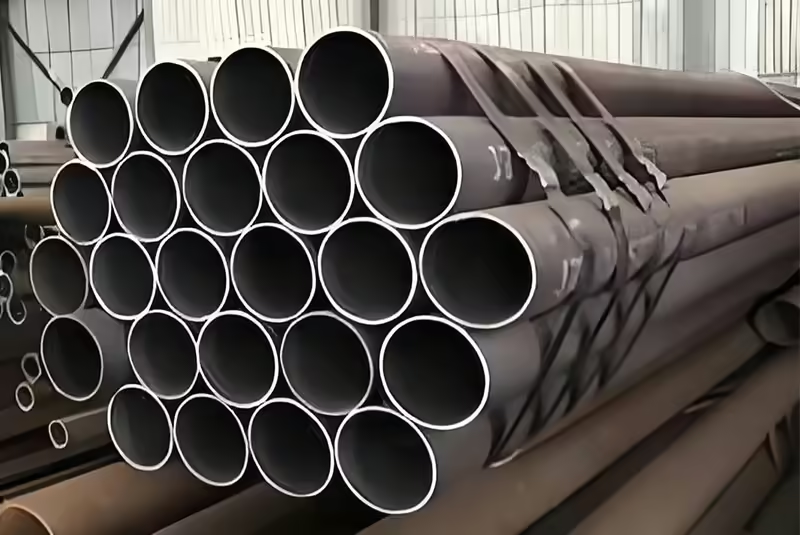
To effectively manage alloy steel weight, consider these practical tips:
- Optimize design: Use computer-aided design (CAD) software to minimize material usage while maintaining structural integrity. Design optimization techniques, such as topology optimization, can help identify areas where material can be removed without compromising performance.
- Select appropriate grades: Choose alloy steel grades with the optimal balance of strength and density for the specific application. Consider the required mechanical properties and environmental conditions when selecting the appropriate grade.
- Accurate calculations: Ensure precise weight calculations to avoid overestimation or underestimation. Inaccurate weight calculations can lead to material waste, increased costs, and potential safety hazards.
- Consider manufacturing methods: Select manufacturing processes that minimize material waste and optimize weight. Near-net-shape manufacturing techniques, such as powder metallurgy and additive manufacturing, can reduce material waste and create lightweight components.
Conclusão
Understanding the alloy steel weight is vital for successful material selection and project execution. By considering factors like composition, density, and application requirements, engineers and designers can optimize material usage and achieve desired performance outcomes. Accurate weight calculations and informed material selection can lead to cost savings, improved efficiency, and enhanced product performance. Ultimately, a thorough understanding of alloy steel weight is essential for maximizing the benefits of this versatile material.
FAQ
Q: How does alloying affect steel weight?
A: Alloying elements alter the steel’s density, which directly impacts its weight. Some alloying elements increase density, while others may have a negligible effect. For example, adding chromium can increase density, while adding silicon may have a smaller impact. The specific effect depends on the type and amount of alloying elements used.
Q: where to find alloy steel density information?
A: Alloy steel density information can be found in material data sheets provided by steel manufacturers, as well as in reputable engineering handbooks and online databases. Reputable sources like ASM International, MatWeb, and manufacturer websites are excellent resources for accurate density data.
Q: Why is alloy steel weight important in aerospace applications?
A: In aerospace, minimizing weight is crucial for improving fuel efficiency, increasing payload capacity, and enhancing overall aircraft performance. Lighter aircraft can travel further on the same amount of fuel, carry more cargo, and achieve better maneuverability. Therefore, careful consideration of alloy steel weight is essential in aircraft design and manufacturing.