Bem-vindo ao Meu Blog!
Antes de mergulharmos no conteúdo, EU adoraria que você se juntasse a mim em minhas plataformas de mídia social, onde compartilho mais insights, me envolva com a comunidade e publique atualizações. Veja como você pode se conectar comigo:
Facebook:https://www.facebook.com/profile.php?id=100087990137347
LinkedIn:https://www.linkedin.com/company/89825762/admin/dashboard/
YouTube:www.youtube.com/@carbonsteelsupply-kj9lw
TikTok:www.tiktok.com/@carbonsteelsupply
Agora, vamos começar nossa jornada juntos Espero que você ache o conteúdo aqui perspicaz, envolvente e valioso.
Introdução
Forged products play an essential role in various industries due to their unparalleled strength, durability, and versatility. The forging process involves shaping metal through compressive forces, which significantly enhances its mechanical properties. This blog explores the diverse applications of forged material in everyday manufacturing, highlighting their importance and advantages.

What Are Forged Products?
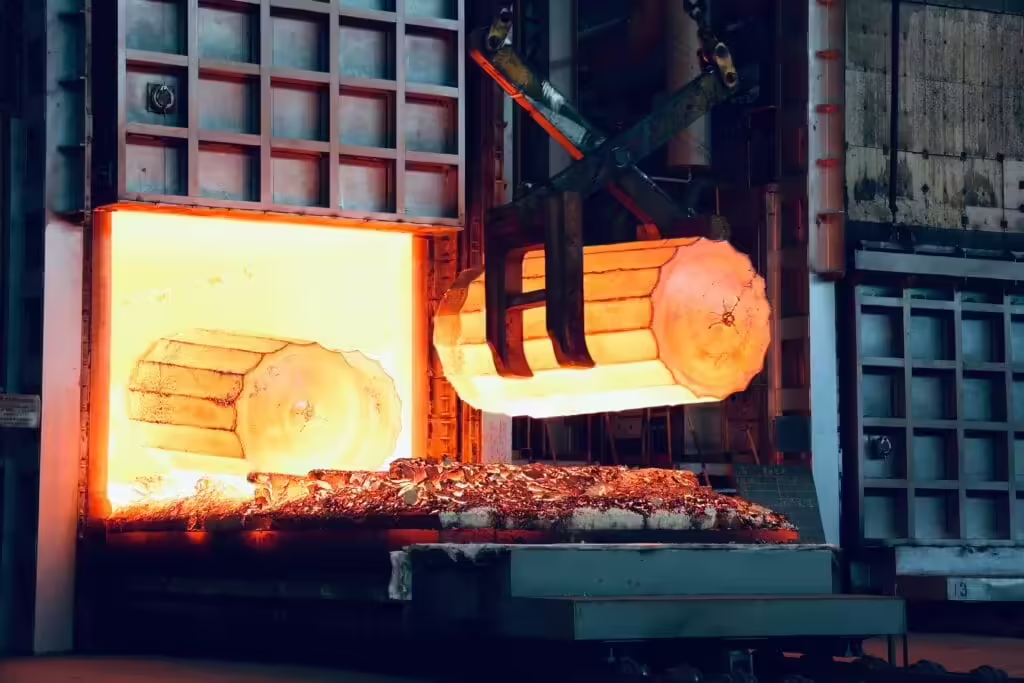
Forged products are metal components created by deforming metal under high pressure. This process increases the strength and durability of the material, making it suitable for heavy-duty applications. Forging can be done using different techniques such as open-die, closed-die, and roll forging, depending on the desired shape and purpose.
Key Characteristics of Forged Products:
- High mechanical strength
- Superior durability
- Improved resistance to fatigue and wear
- Cost-effective production for bulk manufacturing
Vantagens de Forged Products in Manufacturing
- Enhanced Strength: The forging process aligns the grain structure of the metal, improving its mechanical properties.
- Durabilidade: Forged material can withstand heavy loads and extreme conditions without deforming.
- Customizability: Manufacturers can create precise shapes and sizes tailored to specific applications.
- Sustainability: Forging uses less material compared to other processes, reducing waste.
| Benefit | Description | Example |
|---|---|---|
| Improved Strength | Grain alignment enhances load resistance. | Automotive crankshafts |
| Cost Efficiency | Bulk production reduces costs. | Industrial machinery components |
| Material Versatility | Works with steel, aluminum, and titanium. | Aerospace components |
Key Applications of Forged Products
Indústria automóvel
The automotive sector relies heavily on forged products for critical components like crankshafts, gears, and axles. Forged parts ensure vehicle safety and performance by offering high strength and reliability.
Aerospace and Defense
In aerospace, forged products are used to manufacture parts such as landing gear, engine components, and structural parts. These components must meet rigorous safety and performance standards, making forging the ideal choice.
Construction and Infrastructure
Forged steel products are widely used in construction for tools, fasteners, and heavy machinery. Their durability ensures long-term reliability in demanding environments.
Energy Sector
From wind turbines to oil rigs, forged products are critical in the energy industry. They are used in gears, shafts, and flanges, ensuring consistent performance under extreme conditions.
Medical Equipment
The medical field uses forged products for surgical instruments and implantable devices, as these require high precision and strength.

Forging Techniques and Their Applications
| Technique | Description | Applications |
|---|---|---|
| Open-Die Forging | Metal is shaped between flat dies. | Large parts like shafts and discs |
| Closed-Die Forging | Metal is pressed into a die cavity. | Complex components like gears |
| Roll Forging | Metal is shaped using rotating rolls. | Axles and tapered rods |
Future Trends in Forged Products
- Automation in Forging: Advanced machinery is making the process more efficient.
- Eco-Friendly Practices: The use of recycled materials is growing.
- Lightweight Materials: Increasing use of aluminum and titanium alloys for better performance.
FAQ
What metals are commonly used for forged products?
Steel, aluminum, titanium, and copper alloys are the most commonly used metals in forging.
Why are forged products better than cast products?
Forged material are stronger and more durable due to their aligned grain structure, which makes them ideal for high-stress applications.
Are forged products cost-effective?
Yes, especially in bulk manufacturing, forging reduces material waste and overall costs compared to other processes.
Conclusão
Forged material are indispensable in modern manufacturing, offering unmatched strength, durability, and reliability. From automotive to aerospace, their applications span a wide range of industries. As forging technology continues to evolve, it will pave the way for more sustainable and innovative manufacturing solutions.
By understanding the applications and benefits of forged products, businesses can make informed decisions to improve their operations and product quality.
Embrace the strength of forged products to power your manufacturing needs!