
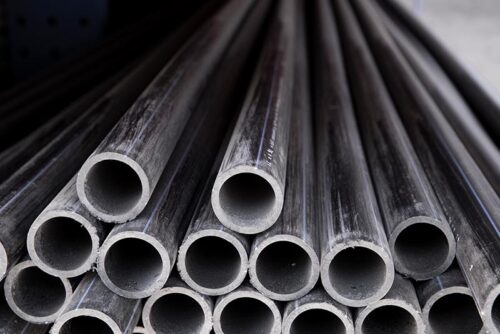
- Description
Both 304 and 304L stainless steel are regular use Austenitic stainless steel, they all have 18%Cr and 8% Ni content, which give them excellent corrosion resistance and process abilit.
304 stainless steel, as known as 18/8 stainless steel, suitable for manufacturing food processing, medicine producing, chemical industry and building decoration.
304L stainless steel is low carbon version of 304 stainless steel, it has lower carbon content(≤0.03%), which makes it hard to form carbide during welding, reduced the cracking susceptibility, especially suitable for application that has welding requirement, such as pressure vessel, heat exchanger and pipe system.
In short, although 304 and 304L have similar chemical composition, but 304L has better welding ability, whereas 304 will be a reliable choice in multiple industry and household environment.
The main difference between 304and 304L is carbon content:
304 stainless steel: Has higher carbon content. It obtains excellent corrosion resistance, good formulation and weld ability, widely used in daily necessities, kitchen equipment and construction.
304L stainless steel: Is low carbon version of 304 stainless steel. Due to its lower carbon content, it can effectively reduce the risk of intergranular corrosion that may occur after welding. Therefore, 304L stainless steel is more suitable for applications that need to be welded but can not process heat treatment after welding., such as chemical equipment. Its mechanical strength is usually lower than 304 stainless steel.
- Chemical composition
| C | Si | Mn | S | P | Cr | |
| 304 | 0.07 max | 1.00 max | 2.00 max | 0.015 max | 0.045 max | 17.5-19.5 |
| 304L | 0.03 max | 1.00 max | 2.00 max | 0.015 max | 0.045 max | 17.5-19.5 |
- Grade Specification Comparison
The following table outlines the grade comparisons for 304 and 304L stainless steels:
| Grau | AISI | JIS | DIN | EN | BS | ISO |
| 304 | 304 | SUS 304 | 1.4301 | X5CrNi18-10 / 1.4301 | 304S31 | X5CrNi18-10 |
| 304L | 304L | SUS 304L | 1.4307 | X2CrNi18-9 / 1.4307 | 304S11 | X2CrNi18-9 |
- Propriedades mecânicas
| Mechanical properties | 304 stainless steel(annealed) | 304L stainless steel(annealed) |
| Tensile strength (MPa) | 515 – 620 | 485 – 620 |
| Yield strength (0.2% Proof, MPa) | 205 – 310 | 170 – 240 |
| Elongation (% in 50mm) | ≥ 40 | ≥ 40 |
| Hardness (HB) | ≤ 201 | ≤ 187 |
- Surface Finish
2B
BA
NO.1
NO.4
NO.8
HL
- Delivery Status
Annealed
Solution Annealed / Solution Treated
Cold Drawn / Cold Worked
Cold Worked Condition(Cold Rolled;Cold Drawn)
Pickled Condition
- Features
Commons:
Good corrosion resistance: Not easy to rust in daily environment, water and most of normal chemical products.
Easy to process: Easy to bend, stretch and weld, easy o make various shapes.
Good strength and toughness: Strong and durable, not easy to break.
Hygiene: Smooth surface, easy to clean, suitable for food and medical applications.
Appearance: Available with various surface finishes (e.g., polished, brushed).
Non-magnetic: Generally non-magnetic (may exhibit slight magnetism after cold working).
Shape:
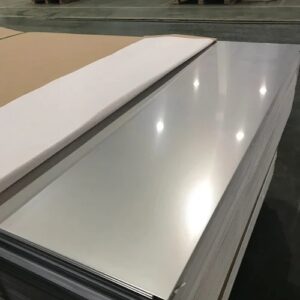
Round bars, coils, plates, flat, pipes/tubes.
- Application:
304 stainless steel: A popular choice of everyday use.
Characteristic: Better quality with competitive price, corrosion resistance, easy to process, weld ability(better annealing after welding).
Usage application:
House: Kitchen sink, pot, knife, washing machine inner drum, refrigerator door panel.
Construction: Building outer wall, elevator.
Food processing factory: Beer tank, milk tank, food pipe.
Medical: Surgery equipment, hospital equipment.
304L stainless steel: Welding-grade with improved corrosion resistance
Characteristic: Low carbon content, suitable for welding environment, but soft than 304 stainless steel.
- Usage application:
Chemical industry: Storage tanks, pipelines, and reactors involving extensive welding (as post-weld annealing is not feasible once installed).
Large food processing plants: Massive on-site welded storage tanks and piping systems.
Pharmaceutical factories: Equipment requiring welding, with strict demands on material purity.
Offshore equipment: Certain welded components exposed to highly corrosive environments.
Avaliações
Ainda não existem avaliações.