
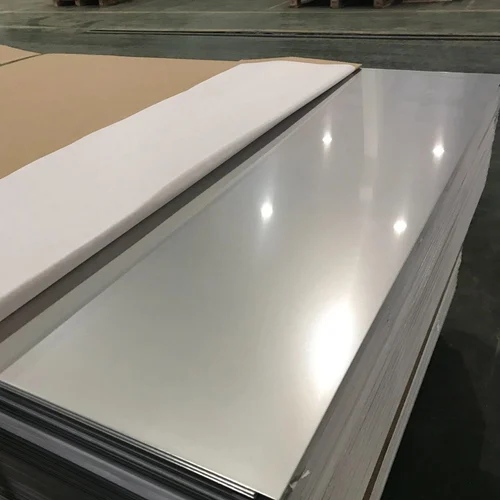
316 Stainless Steel
- Chemical composition:
| C | Si | Mn | Ni | P | S | Cr | Mo | Cu |
| ≤0.08 | ≤0.65 | 1 – 2.5 | 11 – 14 | ≤ 0.03 | ≤ 0.03 | 18 – 20 | 2 – 3 | ≤ 0.75 |
- Product Overview:
The introduction of molybdenum in the alloying process improves the corrosion resistance of 316 stainless steel. It is very similar to Type 304 and is almost as commercially popular – the main differences are that the alloy is stronger at elevated temperatures and corrosion resistance is better, especially in chloride environments. With excellent weldability, good machinability and excellent pitting resistance, 316 is used in the fabrication of pressure vessels and heat exchangers. Type 316L is a low carbon version of Type 316 which minimizes carbide precipitation due to welding.
- Mechanical properties
| Grau | Mechanical properties
|
YS (MPa) | UTS (MPa) | %EL | Hardness(HRB) |
| 316 | ASTM A240 | ≥ 205 | ≥ 515 | ≥ 40 | ≤9 |
- Physical properties
| Density (Kg/m3) | Modulus of Elasticity (GPa) | Thermal Conductivity (W/m°C) | Thermal Expansion coefficient (µm/m/°C) | Electrical Resistivity (µΩm) |
| 7980 | 193 | 16.3 | 15.9 | 0.7 |
- Product Features:
Improved corrosion resistance when compared to 304
More suitable for chloride environments
Boa maquinabilidade
316 is stronger than 304 at elevated temperatures
- Applications:
Pressure vessels, heat exchangers
Chemical containers, food preparation equipment
Furnace parts, valves and pumps

Avaliações
Ainda não existem avaliações.