In modern manufacturing, Stainless Steel Coils are not simply raw materials—they are engineered inputs that directly influence production efficiency, component reliability, and lifecycle cost. From precision stamping lines to heavy industrial fabrication, stainless steel coils must perform consistently under mechanical stress, thermal variation, and corrosive exposure.
This article explores how stainless steel coils behave during manufacturing, how performance is controlled from coil to finished part, and what decision-makers should consider to ensure long-term reliability. The focus is practical and experience-driven, aimed at engineers, production managers, and sourcing professionals responsible for material performance rather than just price.
Índice
Stainless Steel Coils as a Foundation of Continuous Manufacturing
One of the primary reasons Stainless Steel Coils dominate industrial supply chains is their compatibility with continuous and automated manufacturing processes. Coil-fed production minimizes downtime, reduces scrap, and enables tighter dimensional consistency compared to cut-sheet processing.
In high-volume operations such as appliance manufacturing, automotive components, heat exchanger fabrication, and structural panel production, coils allow uninterrupted feeding into presses, roll-formers, and laser cutting systems. This continuity reduces handling damage and improves throughput stability.
From a production control perspective, the uniformity of stainless steel coils across their full length is often more critical than nominal mechanical properties listed on a certificate.
Processing Behavior of Stainless Steel Coils During Forming
Stainless Steel Coils behave differently from carbon steel coils during forming operations. Their higher alloy content leads to greater work hardening, which directly affects tooling wear, springback, and forming limits.
Key forming characteristics include:
- Higher strain hardening rate, requiring controlled forming sequences
- Increased springback, especially in austenitic grades
- Sensitivity to tool geometry and lubrication conditions
For deep drawing or complex bending operations, softer tempers and controlled grain size distribution are often required. Coil consistency plays a major role here—variations in hardness along the coil can result in uneven part quality or increased scrap rates.
Heat Effects and Thermal Stability of Stainless Steel Coils
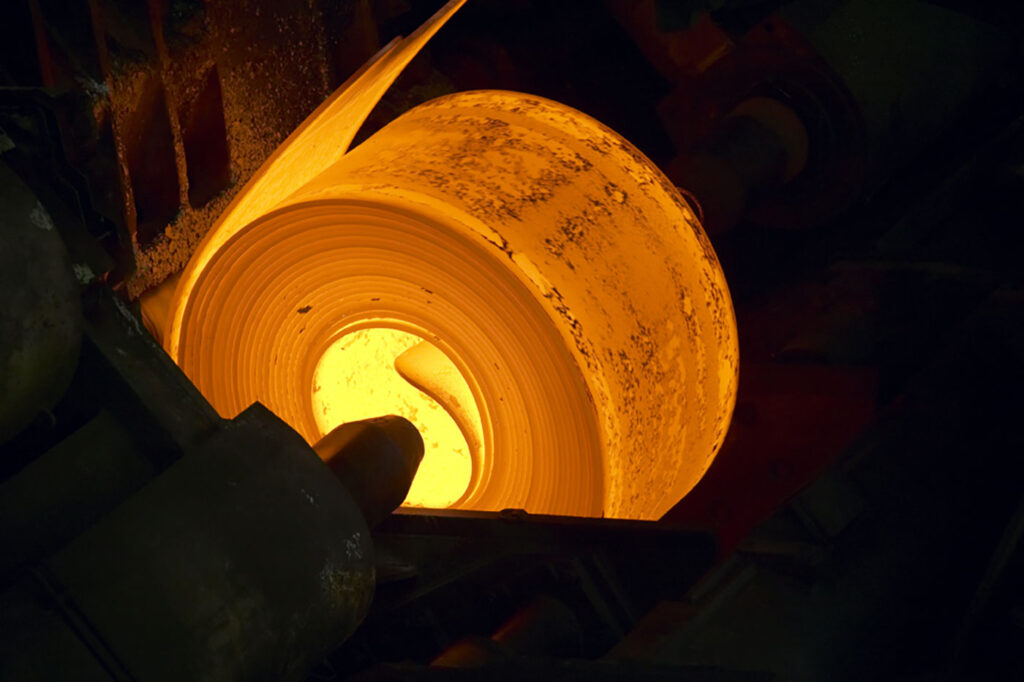
In many manufacturing environments, stainless steel coils are exposed to elevated temperatures during welding, heat treatment, or service. Thermal stability is therefore a core performance requirement.
Austenitic stainless steel coils maintain strength and ductility across a wide temperature range, making them suitable for heat exchangers, pressure components, and thermal enclosures. Ferritic and martensitic coils respond differently, often requiring tighter temperature control to avoid grain growth or loss of toughness.
Thermal cycling resistance is particularly important in applications where components undergo repeated heating and cooling. Coil chemistry, rolling history, and annealing practice all influence long-term thermal performance.
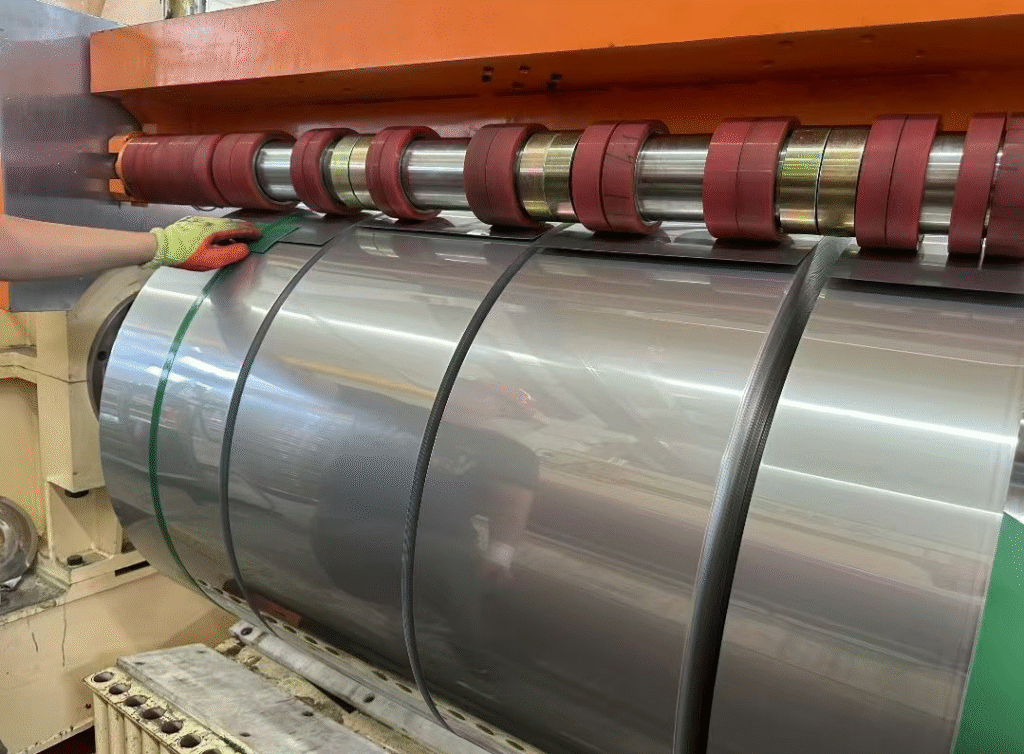
Surface Quality Control in Stainless Steel Coils
Surface condition is one of the most underestimated aspects of stainless steel coil selection. While often treated as a cosmetic factor, surface quality directly affects corrosion resistance, weld integrity, and cleanliness in sensitive environments.
| Surface Aspect | Impact on Manufacturing | Impact on Service Life |
|---|---|---|
| Surface Roughness | Affects forming friction and tool wear | Influences corrosion initiation |
| Cleanliness | Impacts welding and coating adhesion | Critical in food and medical use |
| Oxide Condition | Affects pickling and passivation | Influences long-term corrosion behavior |
| Finish Uniformity | Improves dimensional consistency | Enhances aesthetic durability |
Stainless steel coils with controlled surface finish reduce secondary processing requirements and improve reliability in automated production lines.
Stainless Steel Coils and Corrosion Risk Management
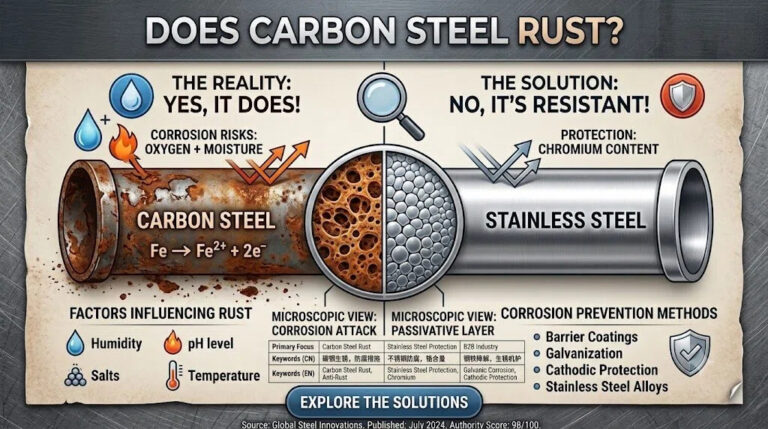
Corrosion resistance is often cited as the main reason for choosing stainless steel coils, but real-world performance depends on much more than chromium content alone.
Factors influencing corrosion performance include:
- Alloy composition and microstructure
- Surface finish and residual contamination
- Environmental exposure type and duration
- Mechanical stress combined with corrosive media
For example, chloride-rich environments increase the risk of pitting corrosion, while tensile stress combined with heat can lead to stress corrosion cracking. Selecting the correct stainless steel coil grade and finish is a risk-management decision rather than a purely technical one.
Dimensional Stability and Tolerance Control in Coil Processing
Precision manufacturing relies heavily on dimensional stability. Stainless Steel Coils used in roll forming, stamping, and laser cutting must maintain tight tolerances to avoid cumulative errors in downstream processes.
Key tolerance considerations include:
- Thickness consistency across coil width
- Flatness and edge condition
- Coil set and residual stress levels
Advanced rolling and leveling processes help minimize internal stress and improve flatness. This directly reduces corrective operations and improves assembly accuracy in finished products.
Comparing Stainless Steel Coils Across Manufacturing Environments
| Manufacturing Environment | Coil Requirements | Preferred Stainless Steel Coil Characteristics |
|---|---|---|
| High-speed stamping | Consistent hardness, smooth surface | Austenitic, cold rolled, controlled temper |
| Structural fabrication | Strength, weldability | Austenitic or duplex, moderate thickness |
| Chemical equipment | Corrosion resistance | High-alloy austenitic or duplex |
| Decorative panels | Surface appearance | Bright annealed or brushed finish |
| Thermal systems | Heat stability | Austenitic with controlled grain size |
Matching coil properties to the actual manufacturing environment ensures performance stability and reduces unplanned downtime.
Procurement Strategy for Stainless Steel Coils
From a sourcing perspective, stainless steel coils should be evaluated as part of a total cost strategy rather than a unit price comparison.
Effective procurement considers:
- Coil yield and scrap rate
- Consistency across shipments
- Technical support from the supplier
- Traceability and documentation quality
A lower-cost coil with inconsistent properties can quickly become more expensive once rework, downtime, and quality issues are accounted for. Reliable suppliers provide not only material but also process knowledge that helps customers optimize performance.
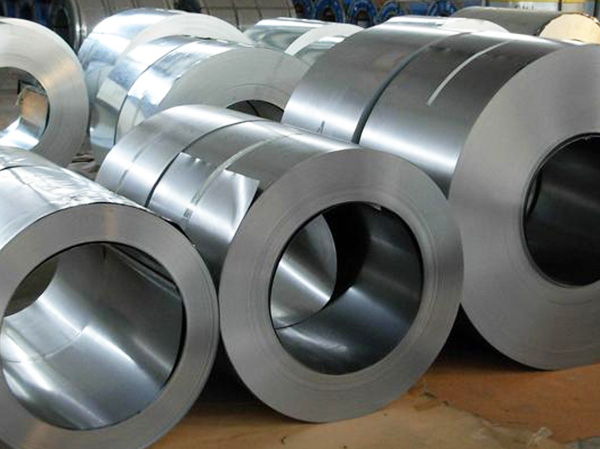
Long-Term Reliability of Stainless Steel Coils in Service
The true value of Stainless Steel Coils becomes evident over time. Components produced from high-quality coils demonstrate:
- Reduced corrosion-related failures
- Stable mechanical performance
- Lower maintenance and replacement frequency
In applications where access for repair is limited or failure consequences are severe, stainless steel coils provide a level of reliability that alternative materials struggle to match.
FAQ
How do stainless steel coils affect production efficiency?
Consistent coils reduce downtime, scrap, and tool wear in continuous manufacturing lines.
Are stainless steel coils suitable for high-temperature applications?
Yes, especially austenitic grades, which maintain stability under thermal stress.
Why is coil consistency more important than nominal strength?
Variations along the coil cause uneven forming behavior and quality defects.
Can stainless steel coils reduce long-term operational costs?
Yes, due to lower corrosion risk and reduced maintenance requirements.
How does Qilu Steel ensure coil performance consistency?
Through controlled metallurgy, precision rolling, and strict quality inspection at every stage.