
When it comes to machining high-strength alloy steels, few grades present as much of a challenge—and opportunity—as 34CrNiMo6 Steel. Known for its excellent combination of strength, toughness, and fatigue resistance, this steel is widely used in demanding applications such as heavy-duty shafts, gears, and components exposed to extreme stress. Yet, without the right process, machinists can face issues like cracking, warping, or excessive tool wear.
This guide takes you through a clear, step-by-step approach to machining 34CrNiMo6 Steel without cracking, backed by practical insights, industry experience, and proven metallurgical principles. Whether you’re an experienced machinist or new to working with this alloy, the strategies here will help you achieve consistent results and extend tool life.
Índice
Understanding the Properties of 34CrNiMo6 Steel
Before cutting begins, it’s essential to understand what makes 34CrNiMo6 Steel unique. This low-alloy steel contains chromium, nickel, and molybdenum, giving it excellent hardenability and toughness even in large cross-sections. According to metallurgical standards, its typical hardness after heat treatment ranges between 280–320 HB, with tensile strength reaching 900–1100 MPa.
These properties make it a preferred choice for high-load components, but they also mean that improper machining can lead to microcracks, thermal stress, and early tool failure. Understanding its behavior under heat and stress is the first step to success.
Step 1: Choosing the Right Tooling for 34CrNiMo6 Steel
Tooling choice is critical when machining 34CrNiMo6 Steel. Carbide tools are often recommended due to their hardness and resistance to wear, but high-speed steel (HSS) can be effective for certain finishing operations if cutting parameters are adjusted.
Key considerations include:
- Tool material with high hot hardness
- Proper edge geometry to minimize cutting forces
- High-quality coatings (e.g., TiAlN) to reduce friction
Table 1 shows how different tooling materials perform when working with 34CrNiMo6 Steel.
| Tool Material | Best Application | Advantages | Limitations |
|---|---|---|---|
| Carbide | Roughing and high-speed cutting | Excellent wear resistance, high hardness | Higher cost, brittle under shock |
| HSS | Finishing operations | Toughness, cost-effective | Lower wear resistance at high temperatures |
| Cermet | Precision finishing | Excellent surface finish | Sensitive to interrupted cuts |
Step 2: Optimizing Cutting Parameters
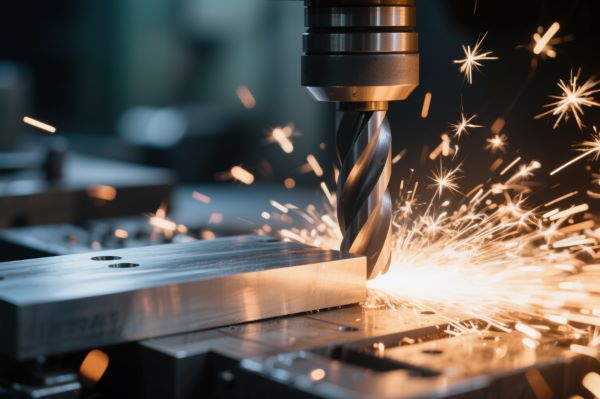
Machining parameters have a direct impact on heat generation, surface integrity, and the risk of cracking. Excessive cutting speeds can lead to thermal stress in both the tool and the workpiece. According to data from industrial machining standards, recommended cutting speeds for 34CrNiMo6 Steel in its hardened state are in the range of 40–70 m/min for carbide tools and 20–35 m/min for HSS.
Feed rate and depth of cut should also be optimized:
- Feed rate: 0.15–0.25 mm/rev for finishing, up to 0.35 mm/rev for roughing
- Depth of cut: Light passes for finishing to reduce surface stress
Always aim for consistent, stable cutting rather than aggressive removal, which can induce thermal cracks.
Step 3: Controlling Heat to Prevent Cracking
Heat is the main enemy when machining 34CrNiMo6 Steel. Without proper temperature control, surface cracking can occur, especially in heat-treated components.
Practical strategies to manage heat include:
- Using a high-pressure coolant system to flush away chips and dissipate heat
- Employing intermittent cutting to allow the workpiece to cool
- Avoiding excessive dwell time, which concentrates heat in one area
In high-precision applications, cryogenic cooling with liquid nitrogen has been successfully applied to improve tool life and prevent surface thermal damage.
Step 4: Pre-Machining Heat Treatment Considerations
Heat treatment plays a significant role in machinability. For example, rough machining is often performed in the annealed state, followed by final heat treatment and finishing. This approach reduces tool wear and minimizes the risk of cracks caused by machining stress on hardened material.
For 34CrNiMo6 Steel, the typical sequence includes:
- Annealing to 180–220 HB for easier machining
- Rough machining to near-final dimensions
- Quenching and tempering to achieve target hardness
- Precision finishing
Skipping or improperly sequencing these steps increases the likelihood of defects.

Step 5: Finishing and Surface Integrity Control
The finishing stage is where precision and surface quality are critical. At this point, the component is often close to its final hardness, making cracking more likely if stresses aren’t managed.
Best practices for finishing 34CrNiMo6 Steel include:
- Using sharp tools to minimize cutting forces
- Employing low feed rates for a smooth surface
- Checking surface finish regularly to detect early signs of microcracking
For high-performance parts, nondestructive testing such as magnetic particle inspection can be used to ensure surface integrity before the part is put into service.
Common Mistakes to Avoid When Machining 34CrNiMo6 Steel
Even experienced machinists can encounter problems with this alloy. The most common errors include:
- Using incorrect cutting speeds, generating excessive heat
- Neglecting coolant or using insufficient flow
- Attempting heavy cuts on hardened material
- Ignoring tool wear, which can introduce microfractures
Avoiding these pitfalls is as important as following the best practices.
Why Partnering with Aço Qilu Makes a Difference
Working with 34CrNiMo6 Steel requires more than just following a manual—it demands high-quality raw material and technical expertise. Aço Qilu specializes in producing premium 34CrNiMo6 Steel with exceptional purity and uniformity, ensuring consistent performance in machining.
Our advantages include:
- Precision-controlled chemical composition for optimal machinability
- Rigorous quality testing, including ultrasonic inspection
- Global supply capabilities for fast delivery
By sourcing from Qilu Steel, you eliminate variability and ensure that your machining process starts with the best possible foundation.
Conclusão
Machining 34CrNiMo6 Steel without cracking is a challenge, but with the right tools, parameters, and process sequence, you can achieve high precision and long-lasting performance. Understanding the material’s properties, controlling heat, and following structured machining steps are the keys to success. Whether you’re producing heavy-duty shafts, gears, or other critical components, careful planning pays off in both quality and cost savings.
If you want to ensure that every step of your machining process is backed by the best steel on the market, contact Qilu Steel today. Our expertise, combined with premium-grade 34CrNiMo6 Steel, will help you meet the demands of even the most challenging manufacturing projects.
FAQ
What is 34CrNiMo6 Steel used for?
It is commonly used for heavy-duty components such as gears, shafts, and high-stress parts due to its strength, toughness, and fatigue resistance.
How can I prevent cracking during machining?
Control heat with proper coolant application, optimize cutting parameters, and sequence heat treatment to reduce stress.
Is carbide always better for machining 34CrNiMo6 Steel?
Carbide is excellent for roughing and high-speed cutting, but HSS can be more economical and effective for certain finishing operations.
Can I machine 34CrNiMo6 Steel in the hardened state?
Yes, but you must use appropriate tooling, speeds, and cooling to avoid thermal cracks.
Why choose Qilu Steel for 34CrNiMo6 Steel?
We provide high-quality steel with consistent properties, ensuring reliable machinability and performance in critical applications.