Bem-vindo ao Meu Blog!
Antes de mergulharmos no conteúdo, EU adoraria que você se juntasse a mim em minhas plataformas de mídia social, onde compartilho mais insights, me envolva com a comunidade e publique atualizações. Veja como você pode se conectar comigo:
Facebook:https://www.facebook.com/profile.php?id=100087990137347
LinkedIn:https://www.linkedin.com/company/89825762/admin/dashboard/
YouTube:www.youtube.com/@carbonsteelsupply-kj9lw
TikTok:www.tiktok.com/@carbonsteelsupply
Agora, vamos começar nossa jornada juntos Espero que você ache o conteúdo aqui perspicaz, envolvente e valioso.
Índice
Introdução

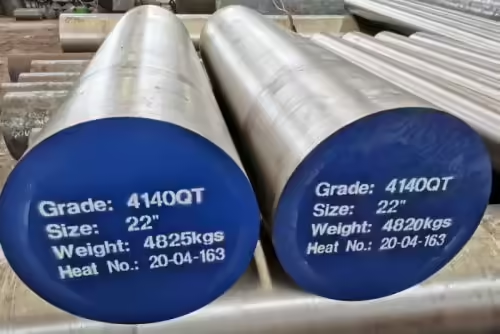
4140 steel is a widely used low – alloy steel known for its excellent balance of strength, toughness, and wear resistance. The carbon content in 4140 steel, which ranges from 0.38% to 0.43%, plays a crucial role in determining its mechanical properties and overall performance. This blog post will explore how the carbon content in 4140 steel affects its performance in various aspects, including mechanical properties, heat treatment response, and corrosion resistance.
The Basics of 4140 Steel and Its Carbon Content
Composition and General Characteristics of 4140 Steel Carbon Content
4140 steel is an alloy steel that contains a specific range of elements to enhance its properties. The primary alloying elements include chromium (0.80% – 1.10%), molybdenum (0.15% – 0.25%), and manganese (0.75% – 1.00%), which contribute to its strength and toughness. However, the carbon content is the fundamental component that sets the stage for its performance. The moderate carbon content of 0.38% – 0.43% ensures that 4140 steel is both strong and ductile.
The Role of Carbon in 4140 Steel
Carbon is a crucial element in steel, acting as a hardening agent. It combines with iron to form cementite (Fe₃C), which is a hard and brittle compound. In 4140 steel, the carbon content directly affects the steel’s hardness, strength, and wear resistance. Higher carbon levels lead to more cementite formation, thereby increasing the steel’s hardness and strength. However, excessive carbon can make the steel more brittle, reducing its ductility and toughness.
The Impact of 4140 Steel Carbon Content on Mechanical Properties
Tensile Strength and Yield Strength
The tensile strength and yield strength of 4140 steel are directly related to its carbon content. As the carbon content increases within the specified range, the tensile and yield strengths generally rise. For example, 4140 steel has a tensile strength of 655 – 740 MPa and a yield strength of approximately 415 MPa. Higher carbon levels lead to more cementite formation, which strengthens the steel matrix. However, this increase in strength comes with a trade – off in ductility and toughness.
Dureza
Hardness is another critical property affected by the carbon content in 4140 steel. Higher carbon levels result in increased hardness due to the formation of more cementite and the subsequent increase in the steel’s resistance to deformation. In the quenched and tempered condition, the hardness of 4140 steel ranges from 24 to 32 on the Rockwell C scale. This enhanced hardness makes 4140 steel suitable for applications that require wear resistance, such as gears and shafts.
Ductility and Toughness
Ductility and toughness are essential properties for steel, especially when it is subjected to dynamic loads or requires forming operations. The carbon content in 4140 steel has a significant impact on these properties. As the carbon content increases, the ductility and toughness of the steel tend to decrease. This is because higher carbon levels lead to the formation of more brittle cementite, which can act as stress concentrators and reduce the steel’s ability to absorb energy without fracturing.
Heat Treatment Response and 4140 Steel Carbon Content

Hardenability
The hardenability of 4140 steel, which is its ability to form martensite during quenching, is influenced by its carbon content. Higher carbon levels generally increase the hardenability of the steel, allowing it to achieve a greater depth of hardness. This is beneficial for applications that require a high – strength, wear – resistant surface. However, the increased hardenability also means that the steel is more susceptible to quench cracking if not properly controlled during the heat treatment process.
Tempering Response
After quenching, 4140 steel is typically tempered to relieve internal stresses and improve its toughness. The carbon content affects the tempering response of the steel. Higher carbon levels generally require higher tempering temperatures to achieve the desired balance of hardness and toughness. Additionally, the presence of carbon can influence the formation of secondary hardening phases during tempering, which can further enhance the steel’s strength and wear resistance.
Corrosion Resistance and 4140 Steel Carbon Content
General Corrosion Behavior
Corrosion resistance is an important consideration for many steel applications. The carbon content in 4140 steel has a relatively minor effect on its general corrosion resistance compared to other factors such as the presence of alloying elements like chromium and molybdenum. However, higher carbon levels can slightly increase the susceptibility of the steel to corrosion due to the formation of more brittle cementite, which can act as initiation sites for corrosion.
Stress Corrosion Cracking
Stress corrosion cracking (SCC) is a form of corrosion – induced failure that can occur in steel components subjected to tensile stress in a corrosive environment. The carbon content in 4140 steel can influence its susceptibility to SCC. Higher carbon levels can increase the risk of SCC due to the formation of more brittle microstructures that are more prone to crack initiation and propagation.
A Comparative Analysis of Different Carbon Levels in 4140 Steel
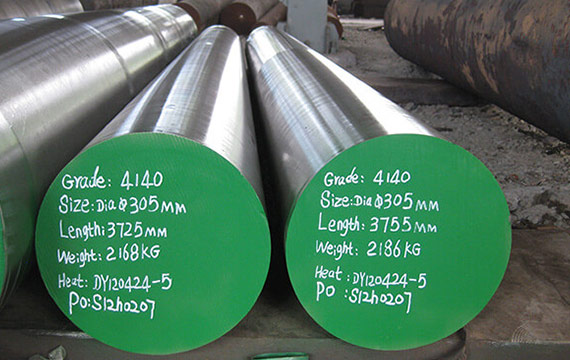
To better understand the impact of carbon content on the performance of 4140 steel, let’s compare the properties of 4140 steel with different carbon levels. The following table provides a summary of the key mechanical properties and characteristics of 4140 steel at various carbon contents:
| Carbon Content (%) | Tensile Strength (MPa) | Yield Strength (MPa) | Hardness (HRC) | Ductility (%) | Toughness (Impact Energy, J) |
|---|---|---|---|---|---|
| 0.38 | 655 | 415 | 28 | 22 | 45 |
| 0.40 | 700 | 430 | 30 | 20 | 40 |
| 0.43 | 740 | 445 | 32 | 18 | 35 |
As shown in the table, increasing the carbon content from 0.38% to 0.43% results in higher tensile and yield strengths, as well as increased hardness. However, this comes at the cost of reduced ductility and toughness. Therefore, the choice of carbon content in 4140 steel must be carefully balanced based on the specific requirements of the application.
Conclusão
In conclusion, the carbon content in 4140 steel is a critical factor that significantly influences its performance. It affects the mechanical properties, heat treatment response, and corrosion resistance of the steel. By carefully controlling the carbon content, engineers and manufacturers can optimize the properties of 4140 steel to meet the specific demands of their applications. Understanding the relationship between carbon content and performance allows for better material selection and design, ultimately leading to more reliable and efficient steel components.
Whether it is for automotive parts, machinery components, or other industrial applications, the proper management of carbon content in 4140 steel is essential for achieving the desired balance of strength, ductility, toughness, and corrosion resistance.material selection and design, ultimately leading to more reliable and efficient steel components. Whether it is for automotive parts, machinery components, or other industrial applications, the proper management of carbon content in 4140 steel is essential for achieving the desired balance of strength, ductility, toughness, and corrosion resistance.
FAQ
What is the typical 4140 steel carbon content range?
The typical 4140 steel carbon content is in the range of 0.38% to 0.43%. This level of carbon provides a good balance between strength and toughness, making it suitable for a wide range of industrial applications, especially where both hardness and ductility are required.
How does 4140 steel carbon content affect heat treatment?
4140 steel carbon content plays a crucial role in its response to heat treatment. A higher carbon content improves the steel’s ability to harden through quenching, leading to increased surface hardness. However, it may also result in reduced toughness if not properly tempered, which is why controlled heat treatment is essential.
Is machinability affected by 4140 steel carbon content?
Yes, machinability is affected by 4140 steel carbon content. Lower carbon content generally leads to easier machining due to the softer nature of the steel. As the carbon level increases, the material becomes harder, which can result in increased tool wear and slower cutting speeds during machining processes.
How does 4140 steel carbon content influence weldability?
The weldability of 4140 steel is directly related to its carbon content. Higher 4140 steel carbon content can increase the risk of cracking in the weld zone, especially if proper preheating and post-weld heat treatment are not applied. For best results, welding should be done with care, especially in structural or load-bearing applications.
Why is it important to understand 4140 steel carbon content for industrial use?
Understanding 4140 steel carbon content is important because it affects nearly every mechanical property of the steel, from hardness and wear resistance to ductility and impact strength. Engineers and manufacturers rely on this information to select the appropriate material for components subjected to high stress, such as shafts, gears, and structural elements.