Bem-vindo ao Meu Blog!
Antes de mergulharmos no conteúdo, EU adoraria que você se juntasse a mim em minhas plataformas de mídia social, onde compartilho mais insights, me envolva com a comunidade e publique atualizações. Veja como você pode se conectar comigo:
Facebook:https://www.facebook.com/profile.php?id=100087990137347
LinkedIn:https://www.linkedin.com/company/89825762/admin/dashboard/
YouTube:www.youtube.com/@carbonsteelsupply-kj9lw
TikTok:www.tiktok.com/@carbonsteelsupply
Agora, vamos começar nossa jornada juntos Espero que você ache o conteúdo aqui perspicaz, envolvente e valioso.
Índice
Introdução
When you refer to carbon content of carbon steel, you’re talking about a defining feature that determines how steel behaves in real-life use. Carbon content influences strength, hardness, weldability, and durability—critical factors whether you’re building structures or manufacturing precision parts. For a seasoned steel manufacturer like Qilu Steel, getting carbon levels right means delivering products that meet performance expectations reliably.

How carbon content affects steel properties
As carbon increases in carbon steel, several mechanical properties shift notably:
- Tensile strength and hardness improve: Higher carbon steels can reach up to ~900 MPa in ultimate tensile strength, compared to ~400–550 MPa in mild steel.
- Ductility drops: Steels exceeding ~0.6% carbon become significantly less ductile and more prone to brittleness.
- Weldability decreases: Above ~0.25% carbon, special preheat or post-heat treatments become necessary to avoid cracking.
- Machinability peaks then falls: Medium-carbon steel (~0.2%) tends to machine easiest; higher carbon makes cutting abrasive and slower.
These trends reflect trade-offs: more carbon means more strength but less flexibility—and more care in handling.
Aço carbono categories by carbon content
| Grau | Carbon Content (%) | Strength Range | Ductility | Typical Uses |
|---|---|---|---|---|
| Low-carbon steel | ~0.05–0.25 | Low–Medium | Alto | Structural fabrication, welding |
| Medium-carbon steel | ~0.25–0.60 | Médio | Moderado | Gears, axles, shafts, forged parts |
| High-carbon steel | ~0.60–1.20+ | Alto | Baixo | Cutting tools, springs, blades |
Low-carbon steels are weldable and formable, making them ideal for beams, panels, or plates. Medium-carbon steels strike a useful balance between strength and machinability. High-carbon grades excel in wear resistance and edge retention—but are less forgiving to shape or weld.
Heat treatment and carbon content synergy
How carbon steel responds to heat treatment depends heavily on its carbon level:
- Medium-carbon steels can be effectively quenched and tempered to form martensitic structures, enhancing hardness without excessive cracking.
- High-carbon steels benefit even more from heat treatments, but require careful tempering to avoid brittleness.
- Low-carbon steels cannot be transformed deeply through heat alone, and typically rely on mechanical work for hardness.
This synergy is central to selecting the right carbon level for components that need both wear resistance and toughness.
Real-world relevance of carbon content in construction and industry
In structural fabrication, low-carbon steels (≤0.25%) dominate due to their weldability and flexibility. They reduce crack risk in welded joints and tolerate field modifications.
In mechanical and automotive sectors, medium-carbon steels (~0.4–0.6% carbon) are common for shafts, gears, and crank parts—offering strength and fatigue resistance along with acceptable machinability.
High-carbon steels are often reserved for springs, blades, wire rope, and cutting tools—where hardness and edge retention trump formability.
Microstructure: how carbon changes performance at a microscopic level
Carbon affects the steel’s internal grain structure:
- Low-carbon steel mainly comprises ferrite and pearlite—both relatively soft and ductile.
- Medium- and high-carbon steels develop more cementite and martensite—hard, wear-resistant phases.
- Lean higher-carbon steels produce martensitic microstructures under proper heat treatment, trading ductility for hardness.
Scientific studies demonstrate yield strength and ultimate tensile strength both rising with carbon content, while elongation (a measure of ductility) falls dramatically. Martensite formation is more pronounced at higher carbon levels, boosting hardness but risking brittleness if not tempered properly.
Factors to consider when selecting carbon steel
When specifying carbon steel, evaluate the following:
- Required mechanical performance: Load-bearing vs wear resistance vs fatigue service.
- Formability and welding needs: Lower carbon is easier to work with and join.
- Manufacturing processes: Machining, forging, stamping etc.
- Corrosion exposure: Carbon content doesn’t inherently improve corrosion resistance—additional alloying or coatings may be necessary.
- Heat treatment plan and thermal cycle: Determines final hardness, grain size, and residual stresses.
Qilu Steel partners with clients to match carbon levels to application requirements—ensuring steel delivers the intended performance while managing cost and manufacturability.
Quality control: verifying carbon content
Quality assurance is key. Carbon content should be confirmed using spectrometric or chemical analysis methods. Even small deviations can shift ductility or weld cracking risk. Complementary tests like hardness checks, tensile tests, and metallography ensure the steel meets intended mechanical standards.
Visualizing performance differences with carbon content
From steel data:
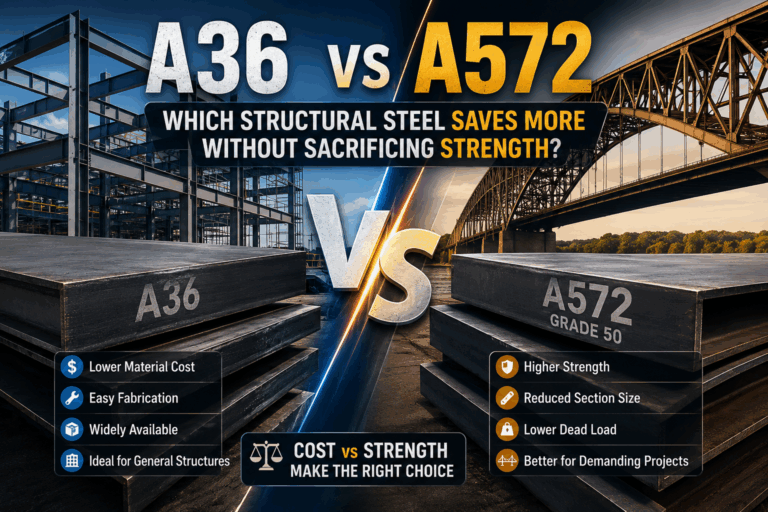
- Low-carbon structural steel (e.g. A36 grade): yield strength ~250 MPa, ultimate tensile ~400–550 MPa
- Medium-carbon AISI 1040 (~0.40% carbon): yield ~350 MPa, tensile ~620 MPa, elongation ~15%
- Low-carbon AISI 1020 (~0.20% carbon): yield ~250 MPa, tensile ~420 MPa, elongation ~25%
These differences reflect predictable shifts in strength and formability tied to carbon level.


Why alloyed steels can deliver strength without excess carbon
High‑strength low‑alloy (HSLA) steels keep carbon content low (~0.2%) but achieve strength through alloy elements like copper, vanadium, or niobium. This gives strength benefits while maintaining weldability and toughness—an important alternative when high carbon is undesirable.
Conclusão
Understanding carbon content of carbon steel is not academic—it’s fundamental to performance in use. Qilu Steel’s five decades of production expertise enables us to deliver steel grades matched precisely to structural, mechanical, or wear-critical roles. Whether you need weldable fabrication steel or wear-resistant spring steel, the carbon percentage makes all the difference.
Wrong carbon levels can lead to brittle failure, welding defects, or premature wear. With Qilu Steel, you get tailored grade advice, verified testing, and support at every step to ensure reliability.
Contact us today to discuss how we can recommend the optimal carbon content and grade for your application—ensuring performance you can count on.
FAQ
What is the typical range of carbon content in carbon steel?
Most carbon steels contain between 0.05% and 2.1% carbon, with common structural and engineering grades under 1%.
How does increasing carbon content affect ductility?
More carbon increases strength but reduces elongation—higher carbon steels are less able to bend without cracking.
Does high carbon make steel harder to weld?
Yes—above around 0.25% carbon content, weld cracking risk increases, and pre- or post-weld thermal treatments are often needed.
Which carbon level gives best machinability?
Medium-carbon steel (~0.20–0.25%) offers the sweet spot for machining—easier life for cutting tools compared to high-carbon variants.
Can higher carbon steel be heat treated for toughness?
Yes—quenching followed by proper tempering balances hardness and ductility effectively if done well.